Bioengineer, PhD in applied biological sciences and professor of food science at the Vrije Universiteit Brussel (VUB), Frédéric Leroy kindly agreed to give us some of his precious time to answer our questions. In this interview, he sets out his view of the nutritional and cultural role of animal-sourced foods and of fermented food traditions, and offers some criticisms of the EAT-Lancet report and of Nutri-Score. Faced with obesity and metabolic disease, he defends a “Nourishment Table” based on nutrient density and the degree of processing, rather than simplistic scores or a single dietary model.
The European Scientist: You trained as a bioengineer and hold a PhD in applied biology. Could you introduce yourself and walk us through the main stages of your career?
Frédéric Leroy: I graduated in bioengineering from Ghent University in 1998 and obtained my PhD in “applied biological sciences” at the Vrije Universiteit Brussel (VUB) in 2002. As a professor of food science and head of the Transdisciplinary Agrifood Studies research group, I now teach nutrition, sustainable agrifood systems, food chemistry and microbiology, and the technology of animal-sourced foods.
I am also president of the Belgian Society for Food Microbiology and of the Belgian Association of Meat Science and Technology, and a member of several scientific boards (for example those of the World Farmers’ Organization, the FAO Sub-Committee on Livestock, and the European Parliament’s “Sustainable Livestock Intergroup”).
In 2020 I launched the ALEPH2020 initiative (Animal-sourced foods and Livestock: Ethics, Planet, Human health), a website that brings together scientific data on the role of animal-sourced foods in the broadest sense. I am also a co-founder of the Dublin Declaration of the Societal Role of Livestock (2022) and of the Denver Call for Action (2024).
My path has taken me from technical expertise in food science toward a broader reflection on the place of animal products in healthy, ethical and sustainable diets, against discourses that are often simplistic or ideological.
TES.: In your research you have specialised in fermented foods and food traditions. What led you to these topics, and what lessons do you draw from them today?
FL: Fermented foods perfectly illustrate the link between innovation and tradition: they are constructions that are both technological and social, combining know-how, time, place and cultural meaning. Fermented cured meats, for example, are among humanity’s greatest gastronomic achievements. They make it possible to preserve meat — a precious but vulnerable food — while remaining rooted in ancient practices. In parallel, my membership of the Social and Cultural Food Studies research group had led me to explore the historical, cultural and traditional dimensions of food.
Today I draw several lessons from this. These traditions remind us that humans have always transformed their foods in a pragmatic way, without an absurd dichotomy between “natural” and “processed”. Faced with calls to abandon animal products, fermented traditions show the richness and robustness of omnivorous diets anchored in history. They are a useful counterpoint to purely technocratic or “plant-based” approaches that neglect culinary and nutritional heritage.
TES.: You regularly emphasise the nutritional value of meat products. What, in your view, are the main scientific arguments in their favour?
FL: The arguments are many and solid. From an evolutionary perspective, the human species adapted to a diet that regularly included red meat and animal fats. That helped brain development, alongside a reduction in gut size and in the capacity to digest fibrous plants. Many anatomical and metabolic adaptations also followed (preferential absorption of heme iron, dependence on choline, B12, long-chain omega-3s, and so on).
Nutritionally, animal-sourced foods provide high-biological-value proteins and a high density of essential micronutrients that are often limited in purely plant-based diets (iron, zinc, calcium, choline, preformed vitamin A, vitamins D and B12, DHA/EPA…). They are especially important for groups with high needs: children, pregnant or breastfeeding women, older people. Restricting these foods, especially among the young, carries documented risks.
Evidence of a major danger from red or processed meat at reasonable intake levels remains weak, context-dependent geographically, and based on observational studies with a massive healthy-user bias. The role of the proposed biochemical mechanisms (saturated fats, cholesterol, and so on) has been largely overstated. Finally, traditional omnivorous diets, rich in lightly processed animal and plant foods, are associated with good metabolic health when they are not dominated by ultra-processed products. The nutrient density and satiety that meat products provide remain major assets against malnutrition and obesity.
That said, there are of course also lower-quality meat products that are better avoided. This is an extremely heterogeneous family of foods. Unfortunately, studies and dietary recommendations ignore or underestimate that important nuance. The same goes for dairy products and cheeses.
TES.: You do not hesitate to take a public stance, including criticism of certain NGOs and of initiatives such as the EAT-Lancet report. What are the main points of disagreement you want to highlight?
FL: The EAT-Lancet report and related agendas — pushed by some agri-food giants, lobbyists from the “vegan-tech” world, activist NGOs, prestigious research centres, and bodies at the epicentre of transnational power such as the WEF and the United Nations — rest on fragile scientific premises and a technocratic approach. They propose a near-vegetarian global diet, with a drastic cut in red meat and animal products, presented as the unique solution for health and the planet (what has been called the “Great Food Transformation”). Yet this model underestimates the complexity of food systems, cultural diversity, agronomic realities and differentiated nutritional needs.
Claims of health benefits are overstated, while risks of deficiency (especially in vulnerable groups) are minimised. The environmental approach often suffers from tunnel vision that neglects the co-benefits of livestock systems (biodiversity, soils, use of non-arable land, and so on). The proposed alternatives (ultra-processed “plant-based” products, cultivated meat, precision fermentation) remain unproven at scale, are often rejected by markets, and may be problematic for public health and wellbeing.
Some influential NGOs and coalitions use these frameworks to push interventionist policies that risk harming farmers, creating nutritional deficits and imposing an elitist vision disconnected from local realities. The Dublin Declaration and the Denver Call for Action recall that livestock systems are too precious to be sacrificed to simplification or ideological zeal. We need flexible, regional solutions grounded in robust data — not unique, virtual, heavily prescriptive models.
TES.: You are also highly critical of Nutri-Score. Do you challenge the scientific foundations of that algorithm? If so, what are its main limits in your view?
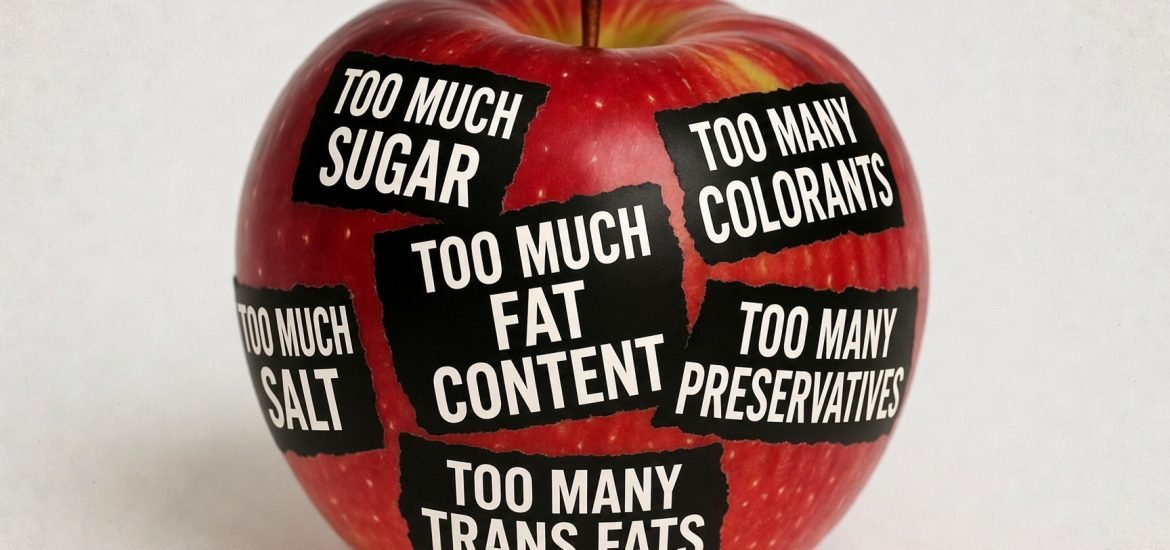
FL: Yes, I strongly challenge the use of Nutri-Score. This nutrient-profiling algorithm, based on a limited selection of nutrients (energy, sugars, saturated fats and salt on one side; fibre, protein, fruit/vegetables on the other), reduces the complexity of nutrition to a simplistic and arbitrary score. It captures neither overall micronutrient density, nor the food matrix, nor the degree of processing, nor the context of the overall diet.
Its limits are many. It excessively penalises traditional and nourishing foods (cheeses, cured meats, meats) while allowing the “health-washing” of ultra-processed products (added fibre, sweeteners, and so on) that get good scores despite mediocre or frankly poor intrinsic quality. Concrete examples show drinks or snacks almost devoid of real nutrients scoring well, while whole milk or certain traditional animal products are poorly ranked. The algorithm has been modified several times under pressure, which reveals its political as much as scientific character. Nutri-Score’s creators talk of a boycott by Big Food, but in reality the tool was quickly co-opted by some food multinationals.
It encourages a reductionist view (“good” vs “bad” food) that can divert attention from the real problems (ultra-processing, insufficient nutrient densities) and serve as an alibi for industrial reformulations with no real health benefit. The scientific foundations are too narrow to justify such a powerful public-policy tool. Nutrition cannot be reduced to a points algorithm.
TES.: If Nutri-Score is not a satisfactory answer in your eyes, what alternatives do you propose to improve people’s diets? More broadly, what role should public policy play in the face of rising obesity and metabolic disease?
FL: Rather than simplistic scores or paternalistic dietary recommendations, we have proposed the Nourishment Table. It is about balancing nutrient density (favoured by a significant share of animal-sourced foods — ideally 25–30% of calories, or at least half of protein) and the level of processing (prefer lightly and moderately processed foods; strongly limit the ultra-processed). This framework respects the flexibility of omnivorous diets, cultural traditions, and the needs of individuals or specific populations.
On the principles of the Nourishment Table, public policies should be less prescriptive, more humble in the face of scientific uncertainty, and rooted in local and cultural realities rather than in reductionist models such as EAT-Lancet or Nutri-Score. Faced with obesity and metabolic disease, the emphasis should be on a return to real foods that are satiating and rich in essential nutrients, rather than on labels that mask the insidious nature of junk food. Public authorities certainly have a role in education, in supporting agriculture that produces nourishing foods, and in regulating food environments — but that must be done with common sense.
read also
“Evolution: There is a Tendency Toward Homo – A Paradigm Shift” Vincent Fleury (Exclusive Interview)
This post is also available in:
Leave a Reply