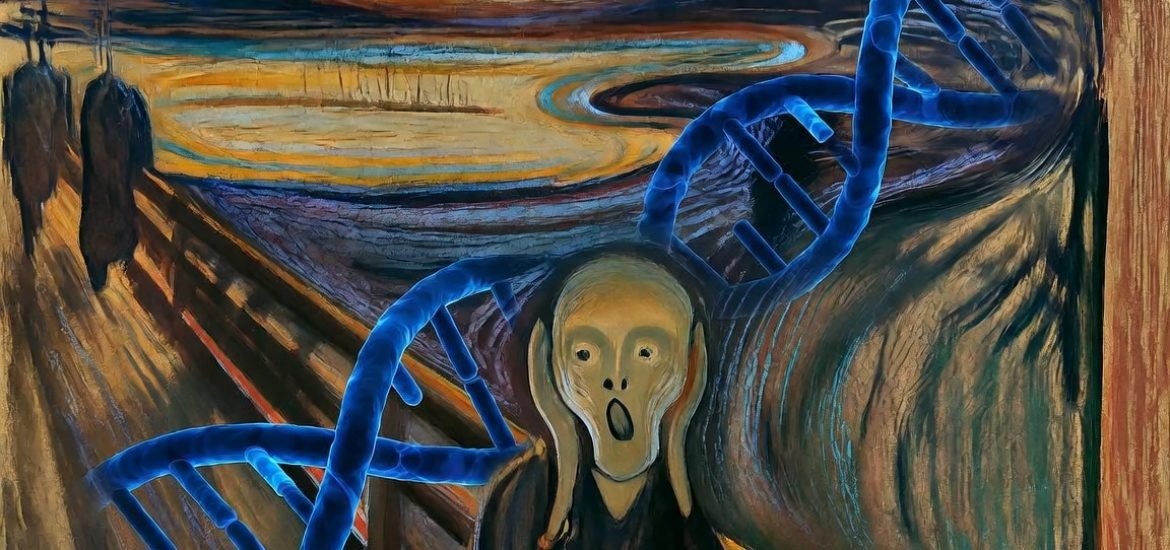
In Why We Die, Nobel laureate Venki Ramakrishnan untangles the science of longevity from the fantasies of immortality. A welcome antidote to Silicon Valley's transhumanist intoxication.
If you are looking for a book that brings you up to speed on the science of longevity and the quest for immortality, get hold of Why We Die: The New Science of Ageing and the Quest for Immortality by Venki Ramakrishnan without delay. This Nobel Prize winner in Chemistry, recognised for his work on the structure and function of the ribosome, has also headed a research group at the MRC Laboratory of Molecular Biology in Cambridge and served as President of the Royal Society (the British Academy of Sciences) from 2015 to 2020. He is without doubt one of the scientists of his generation best qualified to address this subject.
In this short volume, published in 2024 by the British imprint Hodder Press, he offers non-specialists an accessible synthesis of what biology currently knows about this much-hyped topic — and dispatches the more nebulous theses doing the rounds.
A word of warning to fans of transhumanism: you are about to take a proper thrashing.
Four plans in the face of the inevitable
After an Egyptian curtain-raiser and a reminder of humanity's peculiarity — the only living being aware of the inevitability of death — the biologist cites the arguments of the philosopher Stephen Cave, who distinguishes four plans: plan A, living as long as possible; plan B, grounded in reincarnation; plan C, the immortality of the soul; and plan D, relying on what we leave behind, whether our work or our biological descendants.
For centuries, civilisations clung to these plans by developing various forms of religious belief (plans B and C). With the Enlightenment, the focus shifted to plans A and D. Modern science has allowed us to concentrate on plan A, and in particular on the wish to extend life expectancy as far as possible. Questions of stretching that expectancy — or even abolishing ageing itself — have come to the fore. The advances of modern biology make it possible not only to improve our health, but also to push back the limits of our lifespan.
In the past ten years, more than 300,000 scientific studies have been published, and more than 700 start-ups have poured tens of billions of dollars into trying to fight ageing… This has unleashed a wave of utterly wild hopes among Silicon Valley billionaires, the author observes, as he questions the soundness of the movement: 'Is it arrogant to think that we can cheat death using science and technology?'
A large question indeed — one that prompts the author to recall that one of his own main scientific discoveries is that ageing is bound up with the way the organism regulates the production and destruction of proteins. Ramakrishnan therefore sets out to take stock of the situation and of the avalanche of books on the subject, which are a decidedly mixed bag: ageing and mortality are multifactorial; while we may imagine prolonging life by aiming for better health, immortality itself remains entirely illusory. Here, then, is a synthesis of the points he develops to make his case.
Living organisms are not machines
One is grateful to the biologist for recalling what is specific about living organisms, drawing on notions that are almost finalist: first by daring the analogy between a cell and a city, then by reminding us that death shows itself as the disintegration of a whole… Those in the know will think of the French philosopher Raymond Ruyer's remark that none of our living cells has ever known anything but life, for millions of years, since they derive, by division or fusion, from other living cells, themselves derived from prevital molecules. While germline lineages persist, somatic cells are destroyed, Ramakrishnan reminds us.
The author quickly moves on to Darwin and evolution: natural selection eliminates lethal genes while still leaving individuals enough time to reproduce and contribute to the continuation of the species. Ageing is therefore indeed a Darwinian process. The Nobel laureate also proposes a taxonomy of the lifespans of living organisms according to two criteria — size and metabolism — and draws a general rule: the smaller and faster animals are, the more readily they tend to disappear, and vice versa. But of course there are many exceptions. As for humanity, the average has risen considerably with the progress of medical science; yet maximum age appears to be stagnating (the author cites Jeanne Calment's world record, still unsurpassed to this day), while according to Gompertz's law the risks of mortality grow exponentially with age.
Repairing DNA to slow death?
Damage to cells (of which DNA is the command centre) is the process responsible for our death: the system charged with repairing our cells goes awry, and genomic instability increases. The author then turns to the options open to us for slowing this process, beginning with telomeres, whose shortening leads to the halt of cell division; one option might be to lengthen telomeres in order to rejuvenate tissues. He also considers what epigenetics, cloning and induced pluripotent stem cells have to offer — approaches that show living organisms can be 'partially reprogrammed'. Protein recycling matters too: ageing and the onset of neurodegenerative diseases are partly linked to its malfunction. In chapter 7 the author notes that certain experiments on yeast, worms, flies and mice have shown that eating less can lengthen life (setting aside, of course, malnutrition). A similar phenomenon is observed with rapamycin, a drug that allows one to eat less without chronic hunger. Ramakrishnan offers a tour of the solutions developed from discoveries by biologists: for example, creatures such as the worm C. elegans appear to possess a gene that extends life. From this have come solutions such as metformin, resveratrol…
Transhumanists face the reckoning
While the first ten chapters are devoted essentially to advances in scientific knowledge and to technical problems, the last two open the debate more widely to 'science fiction' and to philosophy — notably chapter 11, entitled 'Crackpots or Prophets?', in which the biologist takes the transhumanists' — in his view — nebulous theses to task, starting with cryopreservation. The idea is not new, but it gained a new lease of life in the 1970s thanks to Robert Ettinger's foundation, which persuaded more than a hundred people to pay $28,000 to have their bodies preserved in containers filled with nitrogen. Several such firms exist today. Alcor is the best known. Ramakrishnan mentions the transhumanists who want only their brain preserved — and, since it is the seat of memory, to upload that memory onto a machine once the technology is mature. According to the biologist, there is little chance that this technology will ever work. By the time the body is cryogenised just after the individual's death, its cells may already have degraded irreparably… The technologies imagined for restoring the brain's configuration, such as connectomics, are in the author's view remarkably naïve, and above all they rest on no evidence or feedback from experience. Besides the fact that these transhumanists seem to ignore that the brain is intimately linked to the body, they tend to treat it as a machine only a little more advanced than a computer made of silicon.
The author then turns to Aubrey De Grey — an upper-class British eccentric — who is credited with the idea that the person who will live more than 1,000 years has already been born, because according to his 'escape velocity' thesis life expectancy rises steadily by several years with each passing year and describes a kind of exponential. To that end we must follow a seven-step plan (revitalise cells, remove senescent ones, prevent mitochondrial mutations…). De Grey's SENS programme has drawn heavy criticism from more than fifty experts in geriatrics, but he has thoroughly dismissed their replies.
Despite the many critical positions taken by experts in geriatrics, numerous commercial enterprises have plunged into the life-extension business. Yet Ramakrishnan recalls that eliminating all the causes of ageing linked to death could not increase life expectancy by more than about 15 years; the hope of eternal life is therefore as illusory today as it has always been. Whether antioxidants, telomere lengthening, hormonal supplements, calorie restriction, rejuvenation, or the cloning and replacement of damaged cells… all these techniques must be put into practice with the greatest caution. But such appeals from the scientific community have not stopped the anti-ageing business from prospering.
True, remarkable progress has been made; but one problem is that it is hard to say which treatments work without being able to run RCTs (randomised controlled trials)… given that this kind of trial seems impossible to conduct, and that it is difficult to claim one can improve what one cannot measure. Finally, while ageing is often a cause of disease, it is not itself a disease. Ramakrishnan then turns to a concept of the gerontologist James Fries: that we should all die young after a long life — which amounts to the compression of morbidity, resting on two assumptions: that we can delay the ageing process so as to postpone the onset of age-related disease, and that the length of life is fixed.
Live long, yes — immortal, no
The final chapter is an almost philosophical framing of the question. First, even if we succeeded in slowing ageing, we would not prevent other causes of mortality (accidents, pandemics, violence…). Next, one can already see that the rise in average life expectancy has consequences for society that are not necessarily positive (pension problems, inequalities, costs for social security). A world of people who live longer would have to face the emergence of a form of conservatism, with a kind of inertia in power and in ideas, which would generate inequalities and conflicts between generations… wisdom, according to the author, therefore consists in settling for living as long as possible in good health, rather than aiming for eternal life.
One does not remain indifferent on reading this book, which describes what is specific to living organisms and denounces the paradigm that would confuse them with a machine that need only be fully reprogrammed, on the assumption that the whole in question equals the sum of its parts. The underlying philosophical question raised by the quest for immortality is that of the limits of what modifications of the living are possible. Yet in the AI revolution we are living through, fascinated by the all-powerfulness of LLMs and their apparent ability to pass the Turing test with flying colours, we tend to establish a continuum between the machine and the living organism. That fact is far from established. Experts working on these subjects ought, moreover, to ask themselves a prior question about the means of reaching that goal: is it easier to 'vitalise the inanimate' (imagine an android robot with all the qualities of a living individual and capable of replacing it — which is what I do in my novel Siliclone, for example) or to 'mechanise the living' (imagine reprogramming an individual as one programmes a machine)? The answer to that preliminary puts the sought-after objective and the path to it into perspective, and makes one aware of how far we still have to go.
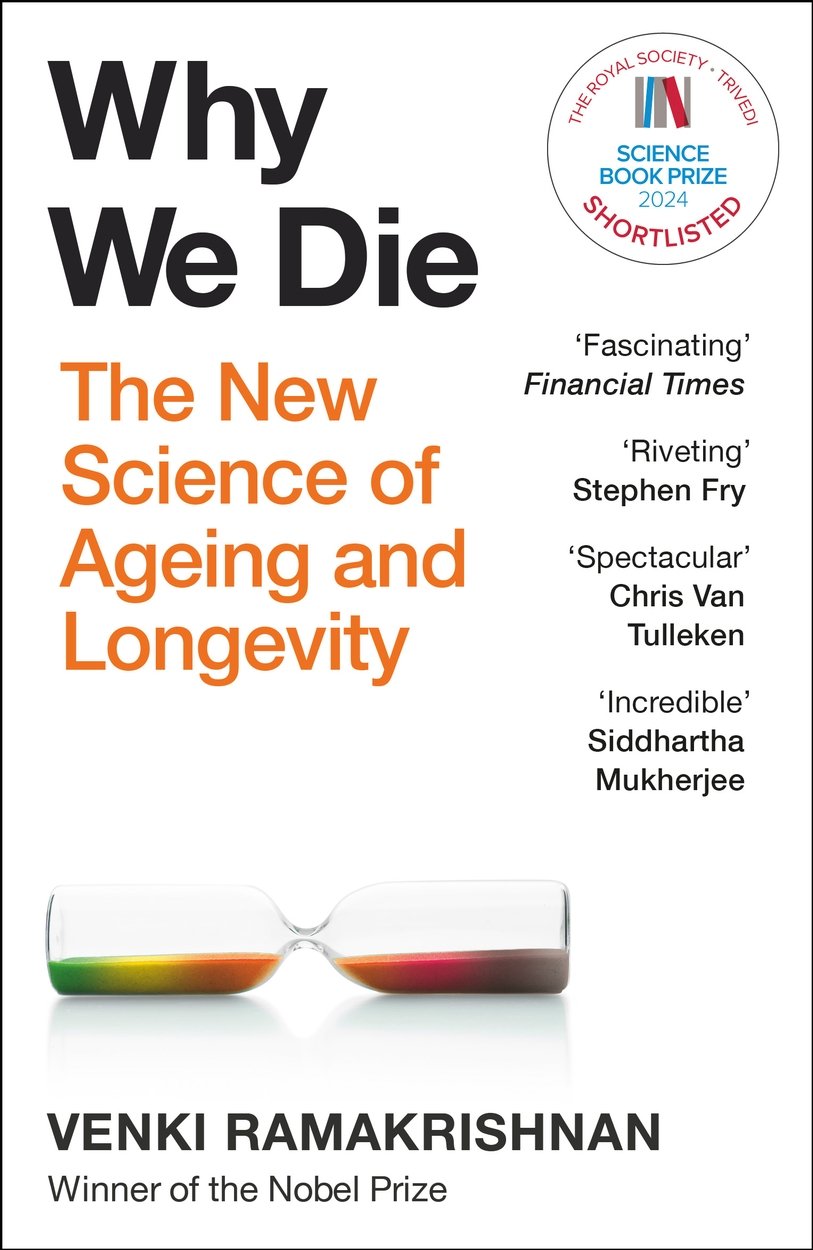
Why We Die: The New Science of Ageing and the Quest for Immortality
Venki Ramakrishnan
Hodder Press, 2024
Further reading
- « To live a thousand years is easy, but you have to survive the intergenerational conflicts. » — L. Alexandre, A. Tsicopoulos
- The Singularity and teleportation: Hollywood sci-fi vs. European scepticism?
- Properly used, AI could pave the way for a new renaissance
- Anti-ageing gene rewinds age by ten years
- A small trial suggests drugs could reverse the epigenetic clock
- The immortal life of trees: How does the Gingko biloba tree live so long?
This post is also available in:
Leave a Reply