What keeps NMR metabolomics out of everyday medicine is not the magnet but the lack of shared standards, argues neuroscientist Dr Pinar Sengul.
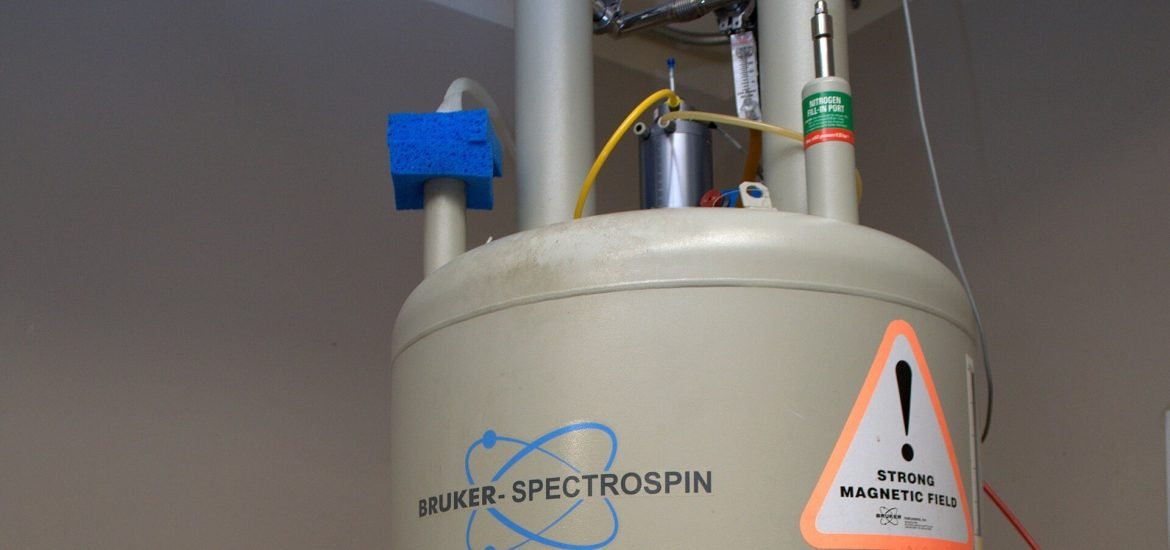
A small tube of serum or cerebrospinal fluid can reveal a remarkably detailed chemical portrait inside an NMR spectrometer. What keeps this technology out of everyday medicine is not the magnet but the lack of shared standards, argues neuroscientist Dr Pınar Şengül in this op-ed.
A narrow glass tube of serum or cerebrospinal fluid (CSF) looks unremarkable on a laboratory bench. Place it in the magnetic field of a nuclear magnetic resonance (NMR) spectrometer, however, and it yields a remarkably detailed chemical profile. Each metabolite leaves a characteristic signal, from which concentrations, structures and molecular relationships can be inferred.
The method is reproducible, quantitative and rich in information. An obvious question therefore arises: why is NMR-based metabolomics still not part of routine clinical practice? Apart from a handful of targeted applications, such as NMR-based lipoprotein testing, it remains largely a research tool.
The short answer is that the instrument is not the real problem.
From a good spectrum to a clinical decision
NMR has several qualities that make it attractive for clinical research. Measurements can be highly reproducible and quantitative, samples often need comparatively little preparation, and the analysis leaves the sample intact (Emwas et al., 2019). NMR is, however, less sensitive than many mass spectrometry techniques. The two technologies are therefore better seen as complementary than as rivals: to some extent, they answer different questions.
My own work on serum and CSF metabolomics has made me acutely aware of how many decisions are made before a sample ever reaches the spectrometer. When was it collected? How long did it sit before processing? How was it stored? Which medicines, dietary habits or coexisting conditions might be affecting metabolism? A technically excellent spectrum can still give a poor answer to a biological question if the pre-analytical chain has not been controlled.
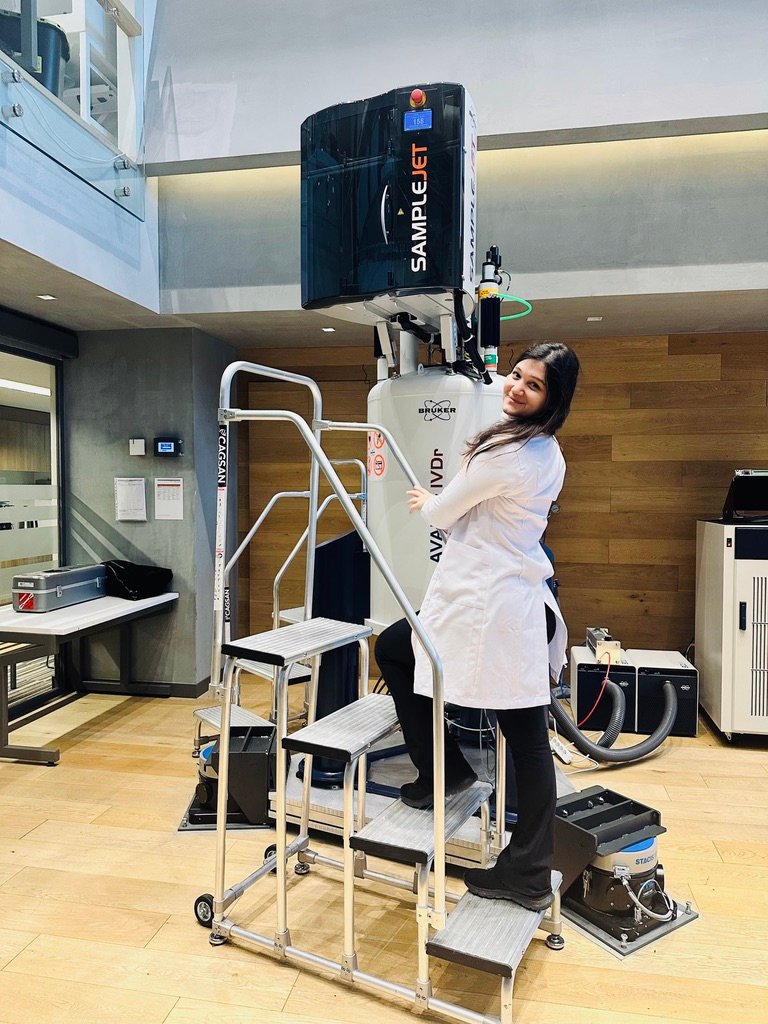
Recent recommendations for NMR-based blood metabolomics emphasise precisely these issues: age, sex, diet, lifestyle, health status and sample handling can all affect measurements. Standardisation therefore starts with the patient and the sample tube, not with the magnet.
Reproducibility: the unfinished business
In 2025, the NMR Special Interest Group of the Metabolomics Association of North America (MANA) published a call for standardised reporting. It built on a review of NMR metabolomics papers published in 2010 and 2020, which found that essential details of study design, experimental parameters, data processing and statistical analysis were often missing or incompletely reported – with only modest improvement over the decade.
An international survey published in May 2026 confirmed the picture. Among 75 respondents from academic laboratories, clinical laboratories and core facilities, 86% said their laboratory had standard operating procedures, yet deviations were common and often undocumented. Only 24% routinely used internal chemical shift standards, and fewer than 10% routinely deposited their spectral data in public repositories. The authors identified methodological inconsistencies, insufficient reporting and limited infrastructure as barriers to reproducibility and data sharing.
This may sound less exciting than a more powerful magnet or a new artificial intelligence (AI) algorithm, but it is decisive for translating research into clinical practice. A biomarker becomes relevant to patient care only when its results hold up not just in a single laboratory, but across instruments, sites and patient groups.
Clinicians need decisions, not just patterns
Metabolomics can produce complex patterns, but clinicians must be able to act on them. Is further investigation needed? Is a change in treatment justified? How large is the risk of error? What does a given threshold mean for this particular patient?
The more complex a metabolic signal, the greater the risk of mistaking statistical discrimination for clinical usefulness. A model may separate groups neatly in a research sample and still be too fragile for everyday hospital use.
Bringing the technology into the clinic therefore requires prospective validation, external cohorts, robust quality control, standardised reference materials and transparent analytical pipelines. Above all, it requires a clear definition of how the result should change a clinical decision.
What about artificial intelligence?
AI is often presented as a shortcut: feed in large datasets and out comes a clinical answer. In NMR metabolomics, machine learning can indeed help with spectral processing, pattern recognition and classification. But no algorithm can retrospectively turn poor metadata into good science.
When samples are collected in different ways, parameters are poorly documented and datasets are not interoperable, AI may, at worst, simply automate inconsistency.
A shared scientific language
The future of clinical NMR metabolomics is therefore likely to depend less on a single technological breakthrough than on something far less glamorous: a shared methodology.
Stronger magnets will help. More sensitive probes will help. Better software will help. But the decisive step from spectrum to clinical decision can only be taken when laboratories speak the same scientific language.
Sources
1. Johnston T. et al. (2025). Securing the Future of NMR Metabolomics Reproducibility: A Call for Standardized Reporting. Analytical Chemistry 97(38): 20655–20666.
2. Powers R. et al. (2024). Best practices in NMR metabolomics: Current state. TrAC Trends in Analytical Chemistry 171: 117478.
3. Johnston T. et al. (2026). Procedural Rigor and Reproducibility in NMR Metabolomics: Community Practices and Challenges. Critical Reviews in Analytical Chemistry, published online 22 May 2026.
4. Emwas A.-H. et al. (2025). Recommendations for sample selection, collection and preparation for NMR-based metabolomics studies of blood. Metabolomics 21: 66.
5. Emwas A.-H. et al. (2019). NMR Spectroscopy for Metabolomics Research. Metabolites 9(7): 123.
6. Matyus S. P. et al. (2014). NMR measurement of LDL particle number using the Vantera Clinical Analyzer. Clinical Biochemistry 47(16–17): 203–210.
About the author
Dr Pınar Şengül is a neuroscientist and neuropsychologist who received her PhD in Neuroscience from Acıbadem Mehmet Ali Aydınlar University in Istanbul, where her doctoral research applied NMR-based quantitative metabolomics to cerebrospinal fluid and serum in multiple sclerosis. Her work spans clinical biomarkers and neuroinflammatory and neurodegenerative diseases. She is lead author of a 2025 targeted ¹H-NMR serum metabolomics study in possible early-stage multiple sclerosis published in the Journal of Molecular Neuroscience, and of the 2026 International Journal of Molecular Sciences paper, “Serum Metabolomic Profiling Across Five Oligoclonal Band (OCB) Patterns: A Targeted ¹H-NMR Study in Serum.”
This post is also available in:
Leave a Reply