
A self-taught entrepreneur with twenty years in finance, Christophe Hecker has long been passionate about energy. In 2015 he co-authored, with Alexandre Andlauer, Gaz et pétrole de schiste : rvolution planétaire et déni français [Shale gas and oil: a planetary revolution and French denial], before founding NaturalHy, a financial and strategic advisory firm dedicated to natural hydrogen. Spokesman for earth2 — the European subsurface-hydrogen programme led by the AVENIA cluster — and Operating Partner at the European deeptech fund Calderion, he argues in this interview that confirmed natural hydrogen could combine decarbonisation, abundance, competitiveness and sovereignty. Europe, he says, has the geology, the skills and promising basins, yet still lags on regulation, science, drilling and capital; France already has a Mining Code framework since 2022 and five exclusive exploration licences, but administrative delays remain too long and financing too thin.
The European Scientist: You are one of the pioneers of natural hydrogen in France. Could you take us through your background?
Christophe Hecker: My path is rather atypical: I am an unapologetic autodidact. I started my own business at 22 in finance, a sector in which I have worked for 20 years.
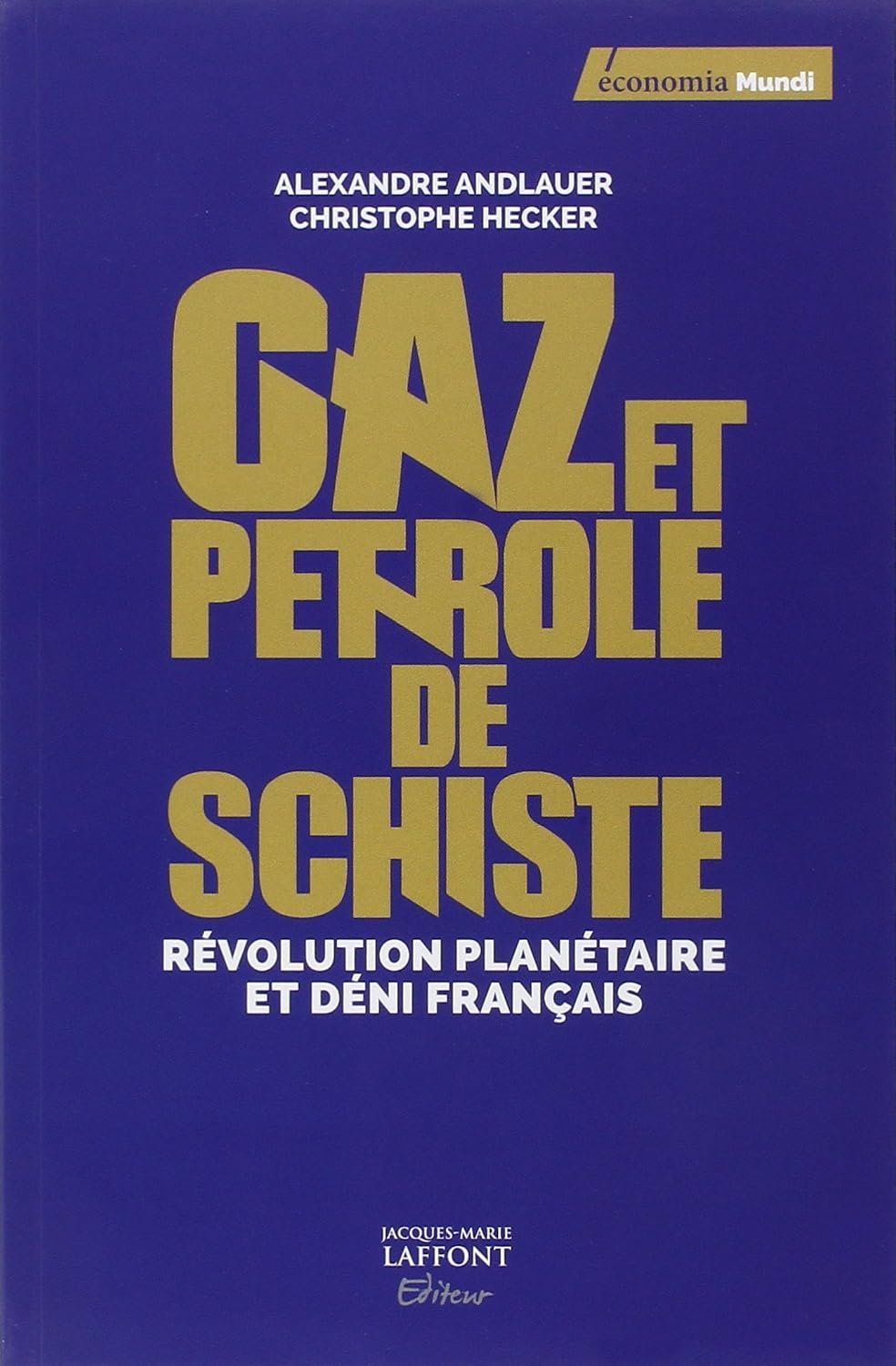
Alongside my professional activity, I became passionate about energy questions from 2014 onwards, because I see energy as sitting at the crossroads of almost every major challenge: the economy, industry, geopolitics, sovereignty and the environment. That is what led me to publish, in 2015 with Alexandre Andlauer, the book Gaz et pétrole de schiste : révolution planétaire et déni français.
A few years later, in 2023, I began to take an interest in natural hydrogen. I found in it exactly what had fascinated me about the American unconventional-hydrocarbons revolution: an innovation coming from the subsurface, long underestimated, capable of upending established energy and geopolitical balances.
I then chose to devote myself to it professionally, combining my passion for the subject with my financial skills. That is how I created NaturalHy, a financial and strategic advisory firm devoted exclusively to natural hydrogen. My work consists in particular in supporting exploration companies on the fundraising side, and investors interested in the topic on the other. I am also spokesman for earth2, the European programme on subsurface hydrogen led by the AVENIA cluster.

TES: In 2015 you wrote Gaz et pétrole de schiste : révolution planétaire et déni français. What were the main ideas of that book?
CH: The central thesis was that the American unconventional-hydrocarbons revolution was not merely a technological evolution within the oil sector: it would profoundly alter global economic and geopolitical power balances.
At the time, the United States was still widely seen as a major energy consumer and importer. I argued that shale oil and gas production would allow them to become the world’s leading oil producer and a major gas exporter, with considerable consequences for their industry, their trade balance and their strategic autonomy.
The second idea was that France had largely reduced the debate to “for or against shale gas”, whereas the real question was much broader: what policy do we want towards our subsurface and our energy sovereignty?
Ten years on, that question strikes me as even more important. And it is precisely one of the reasons natural hydrogen interests me. It is not about rebuilding a hydrocarbon industry in France, but about recovering a culture of the subsurface, of geology and of exploration, with environmental standards that match twenty-first-century requirements.
TES: Samuel Furfari argues that what we are seeing is more an energy addition than a transition. What is your conception of the energy transition?
CH: One must begin by looking at the figures rather than the intentions. Globally, new energies have so far not simply substituted for the old ones: they have very largely been added to them. The IEA itself notes that in 2025 demand for each of the three major fossil fuels continued to rise, even though low-carbon energies covered nearly 60% of the increase in world demand. It is therefore a more complex situation than a simple replacement.
This is also explained by a fundamental reality: world energy demand continues to grow. Billions of human beings rightly aspire to more mobility, housing, industry and comfort. Asking them to reproduce our pathway simply by consuming less energy is not realistic.
For me, a successful energy transition must therefore reconcile four imperatives: decarbonisation, abundance, competitiveness and sovereignty. An energy that is decarbonised but far too expensive will not spread fast enough. A cheap but heavily carbonised energy does not solve the climate problem. And a clean energy on which we depend entirely on third countries creates a new vulnerability.
It is precisely from this angle that natural hydrogen interests me: if it confirms its potential, it could bring these four qualities together.
TES: Could you give us a state of play on the place of hydrogen in general — or rather of “the” hydrogens — in this transition, and in particular the place of white hydrogen?
CH: It should first be recalled that hydrogen is a particularly interesting molecule for sectors that are hard to electrify directly: chemicals, fertilisers, steelmaking, certain high-temperature applications and certain synthetic fuels or heavy-mobility uses — sectors in which it could substitute for natural gas in particular.
Today we produce more than 100 million tonnes of hydrogen a year worldwide, but this production remains overwhelmingly of fossil origin (grey hydrogen). Low-carbon hydrogen still represents a very small fraction of the market.
The colour reading of hydrogen is fairly straightforward:
- Grey is competitive but heavily carbonised.
- Blue seeks to reduce grey’s footprint through CO₂ capture and storage.
- Green is extremely interesting from a decarbonisation point of view when it uses genuinely low-carbon renewable electricity, but its problem remains its cost and the enormous quantity of electricity required.
And then there is natural hydrogen, which changes the conceptual picture: one no longer manufactures hydrogen; one produces it from a geological resource. Hydrogen then moves from the status of an energy carrier to that of a primary energy source.
I do not think, moreover, that the various hydrogens should systematically be set against one another. We will need several pathways. The relevant question is rather: for each use and each territory, which pathway supplies the hydrogen offering the best economic, environmental and strategic compromise?
TES: Why does natural hydrogen remain the outsider of the roadmaps?
CH: The reason is fairly simple: public policy got ahead of geological knowledge.
When the major hydrogen strategies were drawn up around 2020, hydrogen was still essentially thought of as a molecule that had to be manufactured. The debate was therefore structured around the mode of manufacture: grey, blue or green.
Since then, our understanding of the subsurface has evolved considerably. We now know that the Earth generates hydrogen naturally, that several mechanisms can explain it, and that geological systems can allow its migration and accumulation. The USGS even published in 2025 the first prospectivity map for the continental United States.
But regulations, taxonomies and financing mechanisms have considerable inertia. Natural hydrogen therefore arrives after the rules of the game have been built.
Our work with earth2 consists precisely in correcting this mismatch, notably by securing its full recognition as low-carbon hydrogen at European level.
TES: We have seen many green-hydrogen projects collapse recently once subsidies were cut. Does white hydrogen have more competitive opportunities?
CH: I would be a little more measured: green hydrogen has not “collapsed”.
Projects continue to advance, and more than $110 billion was committed to more than 500 clean-hydrogen projects worldwide in 2025. But there has undeniably been a phase of rationalisation. The IEA brought the potential of low-carbon projects announced for 2030 down from 49 to 37 million tonnes between its 2024 and 2025 editions, with electrolysis projects accounting for more than 80% of that reduction. The causes are well known: high costs, difficulty securing offtakers, complex regulation and insufficient infrastructure.
The potential advantage of natural hydrogen is fundamental: a large part of the energy work is done free of charge by geology.
To produce green hydrogen, one must generate electricity, transport it, build and power an electrolyser. In the case of natural hydrogen, if you find an accumulation that is sufficiently concentrated, productive and accessible, you drill, produce, possibly separate the other gases, then distribute a clean and economical molecule.
Exploration companies are indeed targeting costs around €1 per kilogramme — some 6 to 8 times less than green hydrogen. But one must be rigorous: that figure is today an objective or a techno-economic estimate, not yet an industrially demonstrated large-scale cost.
TES: Your comparison (carbon intensity, water, energy, land footprint) places geological hydrogen well ahead of electrolysis and SMR±CCS. What concretely explains such a low impact — and what do you say to those who fear H leaks, subsurface disturbance or a “new extractivism”?
CH: The physical intuition is fairly simple: the fewer industrial steps you have, the less energy, infrastructure and resources you mobilise.
Electrolysis requires a great deal of electricity, and therefore power-generation assets, grids, an electrolyser and water. SMR requires natural gas; with CCS, one must add the infrastructure for CO₂ capture, transport and storage.
For a favourable natural-hydrogen deposit, the bulk of the industrial impact is potentially concentrated in drilling, separation/purification, compression and transport. A scientific review published in 2026 thus concludes that natural hydrogen can have a carbon footprint far lower than grey and blue hydrogen and consume markedly less water than electrolysis.
An essential point must be recalled here: natural hydrogen is not clean by decree; it will have to be demonstrated project by project according to the geological characteristics of the production zones.
H₂ leaks must be measured and controlled. Hydrogen is not itself a direct greenhouse gas like CO₂, but its presence in the atmosphere can have indirect climate effects; the tightness of the production chain is therefore a real issue.
As for “new extractivism”, my answer is that every energy has a physical footprint. A wind turbine, a solar panel, a battery, a nuclear plant or a well all require materials and infrastructure. The right question is not “extraction or no extraction”, but: what energy service do we obtain for what overall footprint?
Our ambition must precisely be to build in Europe a new model of subsurface exploitation: measured, transparent, controlled and environmentally exemplary.
TES: The Earth could contain more than 5,600 billion tonnes of natural H₂; 2% recovery = ~200 years of needs. What has changed in our understanding of hydrogen generation in the subsurface — and what remains speculative?
CH: The USGS study published in Science Advances estimates a most probable value of about 5.6 × 10⁶ million tonnes, i.e. 5,600 billion tonnes of hydrogen present in the global subsurface. But the model’s uncertainty range is immense. The authors say explicitly that the bulk will probably be inaccessible or uneconomic. They nevertheless estimate that a fraction of the order of 2% would suffice to cover about 200 years of projected hydrogen demand in a net-zero scenario.
One must therefore avoid turning a “theoretical world resource” into an “exploitable reserve”. That would be exactly the error we denounce when an indication or a geological estimate is presented as a jackpot.
What has changed is our understanding of the hydrogen system. We know several generation mechanisms: water–rock redox reactions, notably serpentinisation; radiolysis of water; maturation of organic matter, to which other mechanisms are added. We also better understand the notions of source, migration, reservoir and seal.
What remains to be demonstrated is just as important: the precise location of accumulations, recoverable volumes, flow rates, purity, possible recharge of the systems, their behaviour over time and, finally, their economics.
There are currently around a hundred exploration projects worldwide, some of them very advanced in the United States, Canada and Australia, from which answers to these questions are expected in the next 3–4 months.
TES: What place do you see for France? What are the opportunities? Given the administrative difficulties and sometimes the social acceptability issues faced even by quarries — since there are no longer mines in France — how do you envisage the industrial exploitation of this natural resource? With the presidential election approaching, are there candidates taking an interest in the subject?
CH: France enjoys a rather exceptional situation.
First, we have recognised scientific expertise in the geosciences: IFPEN, BRGM, CNRS, universities and specialised companies.
Second, we have several geologically interesting zones: the Aquitaine Basin, the Pyrenean foothills, the Grand Est, and also certain overseas territories.
Third, we were among the first countries to write native hydrogen explicitly into the Mining Code, as early as 2022. At present, five exclusive exploration licences have already been awarded in France. Exploration work is under way.
We therefore have a rather rare window of opportunity: France potentially has both the resource and the skills to look for it.
We do, however, face two brakes:
- The first is administrative time. It takes 18 months to obtain an exploration licence in France, against 3 to 6 months in Germany — and a few weeks in the United States.
- The second is the financial community’s weak appetite for subsurface resources in the broad sense. Yet these are CAPEX-hungry activities. An exploration well can cost between €10 and €20 million. Access to private capital is crucial for natural-hydrogen exploration companies. They manage it, but not without difficulty.
On these two brakes, the recent OPECST report on natural hydrogen recommends in particular €50 million in repayable advances (€10 million for each of the five permits granted to date) for advanced exploration wells and a simplification of procedures.
On acceptability, the method must change. For decades we gradually removed the subsurface from the French collective imagination. Yet the energy transition is bringing us back to it: geothermal energy, lithium, copper, storage, natural hydrogen…
We must therefore rebuild a culture of the subsurface. That means presenting the benefits but also the risks, publishing environmental data, involving territories very early, and demonstrating concretely that a project can create jobs, economic activity and sovereignty with a controlled footprint.
As for the 2027 presidential election, I would be cautious about names. At this stage I prefer to speak of a political interest that is becoming cross-cutting rather than claim that any particular candidate has appropriated the subject. The most significant signal is perhaps institutional: OPECST devoted a specific note to native hydrogen in July 2026, and Emmanuel Macron publicly described it in May 2026 as an “axis of effort”. He had also stated in December 2023 that “we cannot leave this resource dormant.”
The subject is therefore beginning to enter the national energy debate. It would be desirable for the presidential campaign to go further on a wider question: what do we want to do with the French subsurface in the twenty-first century?
TES: What about the EU? You lead earth2 (~50 members) hosted by the AVENIA cluster, and NaturalHy has contributed to the first specialised European investment fund. Faced with the US DOE and extractive majors already positioned, what must Europe still do — regulation, R&D, capital — for natural hydrogen to be a pillar of sovereignty and not merely a conference topic?
CH: Europe presents a rather extraordinary paradox: it has geologists, research institutes, subsurface technologies, exploration companies and promising geological basins. But it risks seeing the economic value of this industry created elsewhere for want of capital and a regulatory framework that is fast enough.
In the United States, ARPA-E has committed $20 million to projects devoted to geological hydrogen, including research on stimulating generation and managing reservoirs. The DOE is also funding the development of a life-cycle assessment methodology via the GREET model.
Meanwhile, an American company such as Koloma has been able to raise several hundred million dollars on its own. The European problem is therefore not primarily scientific. It is regulatory and financial.
With earth2, we are working precisely on this change of scale.
The initiative led by AVENIA brings together the scientific and industrial ecosystem in order to build shared knowledge, make projects emerge and carry the subject to European decision-makers.
For my part, I have also helped specialised financial tools emerge: I am today Operating Partner at Calderion, a European deeptech fund devoted to low-carbon molecules and in particular to natural hydrogen.
For me, Europe must now act on three levers.
The first is regulatory. Natural hydrogen must be explicitly recognised as low-carbon hydrogen when it meets emissions thresholds across its full life cycle. The Union has since 2025 a methodology to qualify low-carbon hydrogen on the basis of a reduction of at least 70% in emissions relative to the fossil reference; natural hydrogen must be allowed to demonstrate its eligibility within that framework.
The second is scientific. Geology, geophysics and above all drilling must be funded. A geological model will never replace a well. The next step for this industry is less a new conference than a massive data-acquisition campaign.
The third is financial. European capital capable of assuming exploration risk is needed. The danger would be that European companies discover the resources, but that when they need to finance the wells their capital is gradually taken over by foreign investors for want of European financing.
It is a point I often sum up thus: a resource present in the European subsurface is truly sovereign only if Europe also retains scientific, industrial and capital mastery of its exploitation.
And that is probably where natural hydrogen goes beyond the energy question alone. It poses a much more fundamental question: does Europe still want to explore, produce, take industrial risks and exploit its own resources responsibly — or does it only want to consume resources and technologies produced elsewhere?
For me, that is one of the great sovereignty challenges of the coming decades.
Further reading
- Energy addition, still not transition: fossil fuels remain the backbone of progress
- Why is industrial hydrogen produced from natural gas and not by water electrolysis?
- The lost thread of a hydrogen industry
- Hydrogen, a century-old idea and still windy
- Hydrogen strategy to nowhere
- Sustainable energy requires a large-scale hydrogen technology boost
This post is also available in:
Leave a Reply