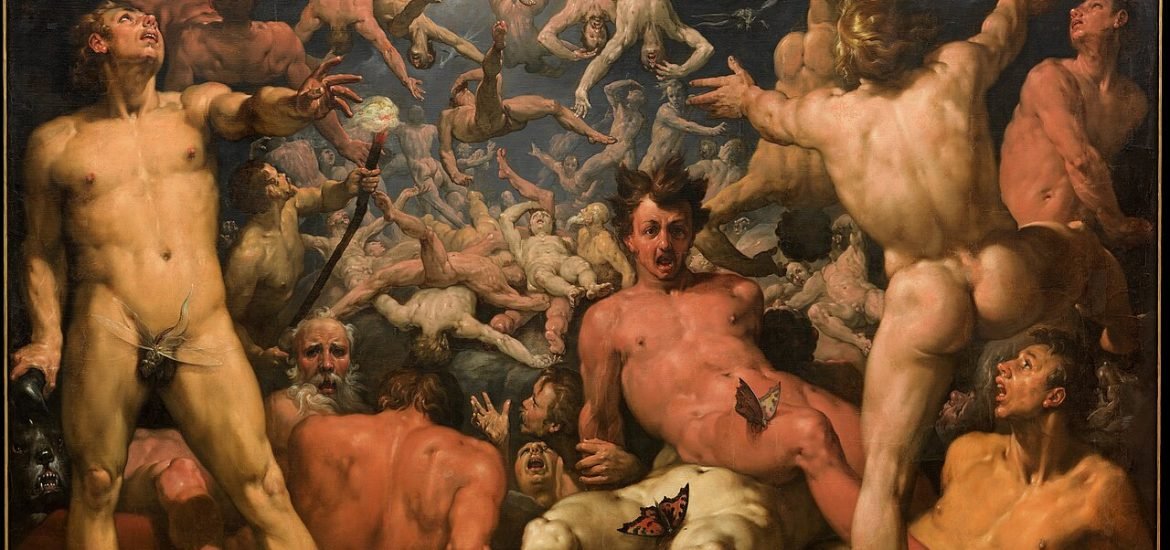
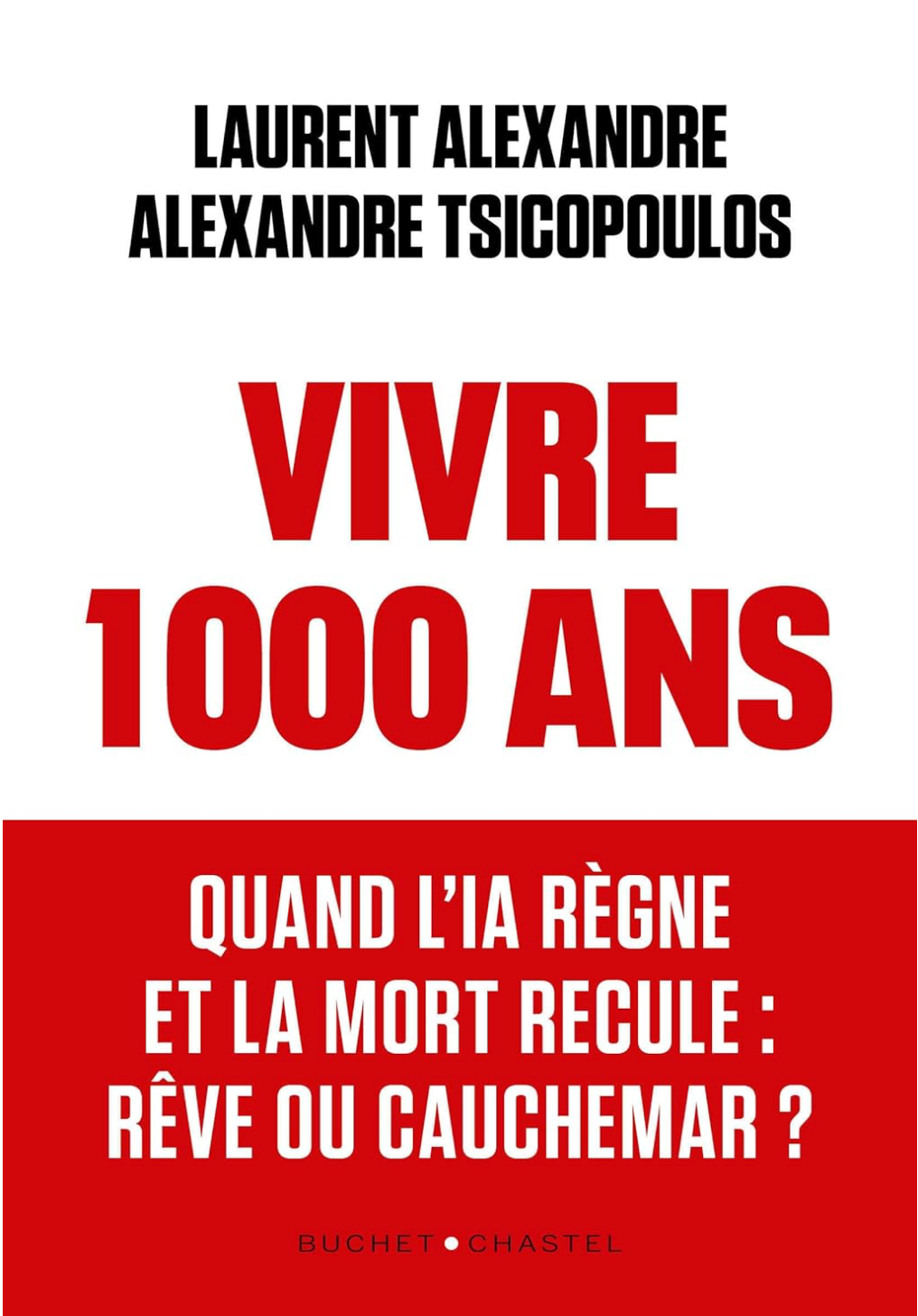
Laurent Alexandre and Alexandre Tsicopoulos have just published “Vivre 1000 ans, quand l’IA règne et la mort recule : rêve ou cauchemar?” * (“Living 1,000 Years: When AI Reigns and Death Recedes – Dream or Nightmare?”) with Buchet Chastel. In this four-handed work, a generational conflict unfolds around a disturbing question: with the power of AI, the body becomes malleable and pushing back death is increasingly no longer a dream. If this objective — long considered a transhumanist fantasy — were to be achieved, the problems we would face would then be political in nature: what arguments increasingly support the idea of the death of death, how to manage gerontocracy, what to do with the younger generations, how to help them enter the job market, the nullity of politicians, how to save the human species, what to think of the papal encyclical… The two authors have taken time out of their busy schedules to answer our questions.
European Scientist @ Laurent Alexandre : You are publishing your third book entirely dedicated to the death of death. The second insisted that LLMs were making this transhumanist ideal a reality. What motivated this new essay? Hadn’t you already exhausted the subject?
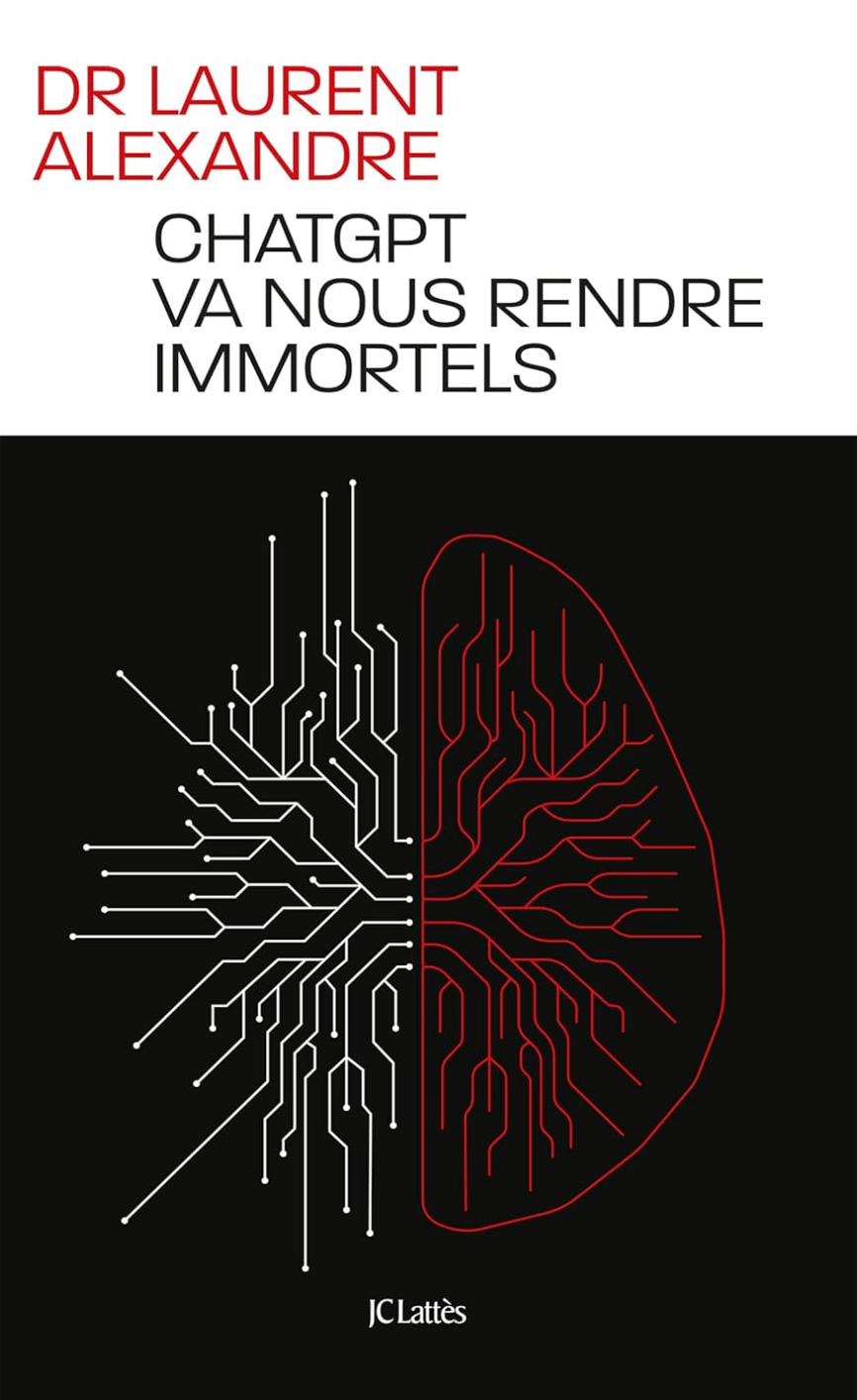
Laurent Alexandre : The subject is not exhausted because the object itself has changed. In 2011, when I published “La Mort de la mort”, we were still in the realm of biomedical anticipation. In 2024, with “ChatGPT va nous rendre immortels”, I argued that LLMs had finally given a cognitive engine to the transhumanist dream: AI would multiply scientific productivity, accelerate biology, and ultimately transform medicine into engineering. But in 2026, the problem has become much broader. It is no longer just about asking whether we will live longer. We must analyze what a civilization becomes when two central scarcities disappear at the same time: the scarcity of intelligence and the scarcity of time.
This new book is born from this double shift. Intelligence is becoming abundant, industrial, and almost free. And death is beginning to move out of the realm of destiny and into that of technical negotiation. It is an anthropological shock. The first time, I described a possibility. The second, I showed the engine. This time, with Alexandre Tsicopoulos, we are looking at the human, political, moral, and generational consequences of that engine.
The other novelty is personal. I no longer look at the death of death from the same place. I am 65 years old. I am probably part of the last generation that will die before medicine truly becomes regenerative. Alexandre, at 25, likely belongs to the first generation that will see death recede massively. This asymmetry changes everything. I see an oasis a hundred meters away and fear dying of thirst before reaching it. He sees a society at risk of being thrown into a future without an instruction manual. This book is therefore not a simple transhumanist essay. It is a confrontation between the impatience of an old technophile and the lucid anxiety of a young man who will have to live in the world we are building.
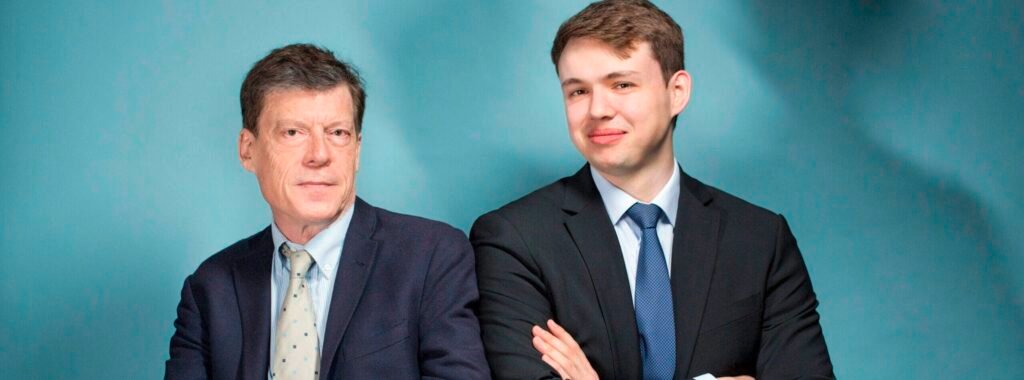
TES @ Alexandre Tsicopoulos: Could you briefly introduce yourself? How did you meet Laurent Alexandre? What motivated you to write with him on this subject?
Alexandre Tsicopoulos: I am 25 years old. I studied law and belong to a generation that grew up with the idea that studies, diplomas, effort, and specialization would open up a future. That promise is now cracking. AI is arriving at the exact moment my generation is entering adult life. We thought we would have to compete with other young graduates. We are discovering that we will mainly have to compete with systems capable of reading, writing, reasoning, diagnosing, coding, and deciding faster than us.
I met Laurent through our discussions on AI, longevity, and the political consequences of these technologies. What struck me about him is that he doesn’t speak about the future like a cautious academic, but like someone who thinks the future is already devouring us. I was also struck by his brutal optimism. Laurent deeply believes that technology can save lives, defeat diseases, extend existence, and democratize intelligence. I also see the possible price: the downgrading of the young, the disappearance of qualified work, gerontocracy, biological secession of the rich, and loss of reference points.
I agreed to write with him precisely because I am not his clone. I didn’t want to write a disciple’s book. I wanted to carry the voice of a generation that is not hostile to progress, but that wonders if it won’t simply become an adjustment variable in the great acceleration. Laurent is afraid of dying too soon. I am afraid of living a very long time in a world that has become unlivable. The book is born from this disagreement.
TES @ LA and AT: How did you collaborate? Did you write with an AI? Can you explain the structure of the book, which is not really a dialogue but rather a series of monologues?
LA: No, we did not use AI. An intellectual who subcontracts his thinking to AI is already preparing our vassalization by intelligent machines.
AT: Moreover, AI has neither Laurent’s age nor my anxiety. It does not have his relationship to death or my relationship to the future. It cannot be a moral author.
LA: The structure of the book is deliberately hybrid. It is not a theatrical dialogue where each person politely responds to the other every ten lines. We preferred an alternation of major analytical sequences and personal statements. Why? Because classical dialogue pacifies conflicts too quickly. It creates the illusion that everything can be resolved through a nice conversation. But our subject is not peaceful. It pits two biological horizons, two relationships to time, and two experiences of AI against each other. There is a gap between us.
AT: The monologues allow each voice to follow its logic to the end. Laurent can push his technological optimism without me interrupting him immediately. I can express my generational fear without being reduced to the role of the anxious young man. The reader is not witnessing a polite conversation, but a slow collision between two ways of inhabiting the future.
TES @ LA and AT: Where do we really stand on the death of death? Has it become something other than a Silicon Valley billionaire’s fantasy? Aren’t there more serious subjects to address first, such as Alzheimer’s or Parkinson’s, where we don’t seem to be making much progress?
LA: The death of death is no longer a provocative slogan. No one is promising biological immortality tomorrow morning. On the other hand, it would be equally absurd to say that nothing is happening. The biology of aging has changed status. Age is no longer seen as a metaphysical fatality, but as a set of processes: chronic inflammation, epigenetic dysregulation, cellular senescence, mitochondrial dysfunction, immune decline… Each mechanism is becoming a target.
AI adds a decisive breakthrough. It accelerates protein analysis, the identification of therapeutic targets, molecule design, patient stratification, and biological simulation. We are not yet at immortality. We are in the transition from reparative medicine to biological maintenance medicine.
Regarding Alzheimer’s and Parkinson’s, the objection is legitimate but does not contradict our thesis — it confirms it. Alzheimer’s and Parkinson’s are not subjects “before” the death of death. They are at its core. Dying slowly from one’s brain is precisely one of the cruelest forms of mortality. Progress has been frustrating, slow, and sometimes disappointing. The first anti-amyloid treatments for Alzheimer’s are not miracles. They modestly slow progression and raise issues of safety, cost, and patient selection. Parkinson’s still largely lacks truly disease-modifying treatments. But this is exactly why AI is changing the landscape: it allows us to attack multifactorial diseases with multidimensional tools. If I had Parkinson’s today, I would have hope… Ten years ago, I would have been in despair!
AT: I am more cautious than Laurent. The risk is confusing three things: scientific progress, industrial promise, and real access for patients. A technology can be biologically fascinating and socially insignificant if it remains reserved for a few thousand rich people. The question is therefore not only: Can we slow Alzheimer’s? It is: “Who will be able to benefit from early diagnostics, biomarkers, expensive treatments, and prevention protocols?”
LA: This is why the death of death is no longer a billionaire’s fantasy, but it could become a billionaire’s privilege if we do nothing. That is the real debate.
TES @ LA and AT: Each of your exchanges highlights the paradox raised by the death of death. This is clear, for example, in the chapter on the succession of generations — a natural phenomenon made impossible by a gerontocracy that would not give up its place.
LA: For millennia, death brutally solved a political problem: rotation. People my age eventually left. Positions, assets, powers, and reputations were freed up. It was cruel, but it made generational succession work. If death recedes, this mechanism disappears. We will have to invent rotation without death.
The problem is not that old people live longer. It would be madness to present longevity as a moral fault. The problem is that they could hold onto positions of power for too long. A society where people live 200 years but keep the same chair, the same mandate, the same company, and the same symbolic capital for a century becomes a suffocating society. Longevity therefore requires a new ethic of exit. Leaving a position must become a noble act, not a defeat. Transmission must become a mark of prestige.
AT: My generation is not asking for the old to disappear. It is asking them not to occupy all the space. The fear of the young is not only economic. It is existential. If studies are worth less, if AI takes over qualified tasks, if the old live longer, work longer, own longer, and decide longer, then the future becomes a closed corridor.
LA: We will therefore have to separate longevity from confiscation. One can live longer without ruling longer. That is even the moral condition of longevity.
AT: Exactly. The real question is not: “Should we prevent the old from living?” It is: “How do we prevent a society from becoming a museum administered by its curators?”
TES @ AT: You seem frightened by the future. You question the value of your diploma and wonder if you will have a job. Laurent Alexandre, on the contrary, has a very optimistic discourse on these subjects. Has he managed to reassure you?
AT: No, he hasn’t reassured me. And that may be the most useful thing he has done. Laurent is not a manufacturer of lullabies. He didn’t tell me: “Don’t worry, everything will be fine.” Instead, he forced me to look the problem in the face. My diploma has less value in a world where legal, administrative, writing, and analytical intelligence becomes automatable. It’s not pleasant to hear, but it’s true.
What he gave me was not consolation, but a method: Don’t deny AI. Don’t take refuge in resentment. Don’t believe that status will protect you. Learn to work with machines before being replaced by those who know how to work with them. Understand that competence will no longer be just about knowing, but about piloting, verifying, arbitrating, interpreting, and deciding.
I remain worried. But I am less passive. Laurent has a very brutal way of telling young people: “The world will not wait for you.” It’s harsh. It’s sometimes unfair. But it’s less dangerous than the opposite discourse, the one from institutions that continue to sell diplomas as if we were still in 1995.
LA: Alexandre Tsicopoulos is right to be worried. I am optimistic about technology, not about institutions. I think AI will create extraordinary possibilities, but I do not believe at all that our universities, administrations, and politicians will spontaneously protect the young. Young people who wait to be saved by the system will be crushed. Those who understand very early that AI is their cognitive exoskeleton will have a chance.
AT: That’s it. He didn’t reassure me, but he armed me. He lubricated my thinking. It’s not the same thing.
TES @ LA: You denounce the nullity of politicians on the theme of AI, including intelligent politicians. Aren’t you being too categorical? I know at least one politician who has a sensible discourse on the subject.
LA: I am willing to believe that there are intelligent politicians with a correct discourse on AI. Fortunately. But a sensible discourse does not make a historical strategy. My judgment concerns the political class as a system, not this or that individual. The French and European problem is not the total absence of brilliant people. It is the collective inability to turn a few intuitions into power.
On AI, politicians still think in terms of charters and regulation. Meanwhile, the Americans are building data centers, securing energy, attracting talent, funding models, buying GPUs, and integrating AI into defense, research, health, and industry. China is doing the same with its own brutality. Europe produces texts. The others produce power.
When I say that even intelligent politicians are useless on AI, I mean they underestimate the nature of the shift. They think they are talking about an economic sector. In reality, they are talking about the transfer of global cognitive capacity to private industrial infrastructures. Whoever controls computation, energy, models, and data will control medicine, education, defense, research, finance, and soon part of public decision-making.
So yes, there are sensible politicians. But history will not be made by the fine words of a few elected officials. It will be made by those who organize power. And on this point, Europe remains dramatically below the challenge.
There are a few politicians who understand AI: Jérôme Guedj, Gabriel Attal, Laurent Wauquiez, Sarah Knafo, and Valérie Pécresse… Only one has made it a pillar of his presidential program: Gabriel Attal.
TES @ LA and AT: You evoke the secession of long lives, short lives, the augmented, and the left-behind. Isn’t the problem of immortality more of a civilizational order?
LA: Absolutely. Immortality is not first and foremost a medical problem. It is a civilizational problem. Medicine creates the possibility. Society decides whether this possibility becomes a shared progress or a weapon of secession.
The real danger is not that some live longer. The real danger is that lifespan becomes the ultimate marker of social class. Today, the rich have better doctors, better schools, and better lawyers. Tomorrow, they could have a better body, a better brain, better immunity, and better longevity. Inequality would no longer concern only wealth, but the biological version of the human being. That would be a major anthropological rupture.
AT: For my generation, this question is central. Income inequality is already hard to accept. But an inequality of time would be explosive. If some have 40 years of healthy life while others have 180, we are no longer talking about classical social justice. We are talking about different social species inhabiting the same territory.
LA: This is why access must be thought through very early. Prohibition will not be enough. The rich will go to California, Singapore, Switzerland, or China. European bio-conservatism will produce exactly what it claims to combat: a global privatization of human enhancement. If we want to avoid biological apartheid, we must organize public access to prevention technologies, rejuvenation, neuroprotection, and therapeutic enhancement.
AT: Civilization will be decided there. Not in the slogan “for or against immortality,” but in the question: do we want common longevity or a biological aristocracy?
TES @ LA and AT: You highlight the dangers of post-humanist ideology. Isn’t it as dangerous as the ecologist ideology? Both have in common the desire to get rid of humanity. (2)
LA : There is indeed a paradoxical convergence between certain radical ecologists and certain post-humanists. The former sometimes dream of a world where man withdraws to let Gaia breathe. The latter dream of a world where man would be surpassed by his digital creatures. In both cases, humanity becomes a problem. For some, it pollutes. For others, it slows down intelligence.
This is why Jean-Paul Oury is right to draw the link between Gaia and AI. Contemporary anti-humanism has two faces. A green face: man is an ecological nuisance. A digital face: man is an obsolete version of intelligence. These two imaginaries may seem opposed, but they share a common point: they no longer place man at the center.
AT: I would nevertheless make a distinction. Not all ecology is anti-humanist, and not all transhumanism is post-humanist. Protecting the conditions of human life is not wanting to suppress man. Treating Alzheimer’s, repairing a heart, extending healthy life — this is not wanting to replace man with a machine.
LA: Of course. Therapeutic transhumanism remains a humanism. It wants to save man from his vulnerabilities. Post-humanism, on the other hand, can become a religion of substitution. It no longer wants to improve the human being — it wants to prepare its successor. That is where Silicon Valley becomes dangerous when it no longer dreams of an enhanced man, but of an intelligence that no longer needs man.
AT: The decisive point is there. We are not against technological power. We are against the moment when technological power ceases to serve humanity and begins to judge it insufficient.
TES @ LA and AT: What solutions do you propose to face this exponential acceleration of technological progress that makes adaptation almost impossible? How do we escape the neo-Luddites?
LA: Neo-Luddism is an understandable temptation and a suicidal strategy. You can smash machines in your village, but you won’t stop a global revolution. If Europe slows down alone, it will not slow down AI. It will only slow down Europe. Models will continue to progress in the United States and China. Biotechnologies will continue elsewhere. Autonomous weapons will continue elsewhere. Longevity therapies will continue elsewhere. Local refusal of the future does not eliminate the future. It excludes you from its governance.
The solution is therefore not to brake, but to build shock absorbers. We need civilizational anti-G forces, just as airplane pilots have anti-G suits to withstand acceleration. These anti-G forces are well known: massive AI training from school onward, energy sovereignty, European access to computation, biomedical industrial policy, university reform, protection of professional transitions, algorithm audits, right to explanation, right to disobey automated decisions, and above all, reconstruction of politics around scientific power.
AT: I would add a more intimate dimension. We must learn to live in instability. My generation will probably have to change careers, professional identities, and lifestyles several times. It will have to learn not to confuse its diploma with its value. It will have to accept that competence is temporary. This is psychologically very hard. I will add that I cannot imagine loving the same person for 1,000 years.
LA: This is why adaptation cannot be only individual. Telling people “adapt” while destroying their reference points is socially explosive. We need institutions of transition: rights to retraining, powerful training accounts, periods of discontinuous activity, guarantees of access to AI tools, and preventive health systems.
AT: Escaping neo-Luddites requires not despising their fear. People do not become anti-technology because they are stupid. They become so when they feel that technology enriches others, monitors them, replaces them, and then humiliates them. The best antidote to Luddism is not a progressive sermon. It is the real sharing of the gains of progress.
TES @ LA and AT: The Pope has published an encyclical on AI. Is that his role? How can we be the good servant in the Parable of the Talents? Knowing that if we make our talents bear fruit to live 1,000 years and more, we risk all becoming bad servants who live off universal income.
LA: The Pope had the courage to publish an encyclical on AI. And yes, it is his role. If the Church had something to say about the social question at the time of the Industrial Revolution, it obviously has something to say at the time when Artificial Intelligence is transforming work, war, medicine, truth, education, and soon humanity itself.
I do not share all the Roman cautions. I am an atheist who is much more technophile than the Vatican. But the Church asks a question that Silicon Valley avoids: in the service of what are we putting this power? The Parable of the Talents does not say that we must bury human capacities out of fear of risk. On the contrary, it says that voluntary sterility is a fault. Not developing AI, not fighting Alzheimer’s, not seeking to extend healthy life — that would be burying the talents of humanity.
AT: But the parable does not justify any headlong rush either. Making one’s talents bear fruit is not turning the world into a technological casino. The good servant is not the one who maximizes blindly. It is the one who answers for what he has received. Responsibility is at the heart of the parable.
LA: On universal income, I am divided. In a transition period, we will probably have to invent radically new redistribution mechanisms. If AI produces an abundance of goods and services with less human labor, we will have to redistribute part of that value. But a society of biologically extended rentiers, living a thousand years in idleness subsidized by machines, would be an anthropological nightmare. Jean-Paul Oury is right to warn against this temptation of technological Cockaigne.
AT: Living long should not mean being exempt from contributing. If we live 150, 200, or 1,000 years, we will have to invent multiple active lives: learn, work, transmit, stop, start again, serve differently. The problem is not universal income in itself. The problem would be turning humanity into a population of spectators maintained by machines.
LA: Being the good servant in the age of AI therefore means refusing two cowardices. The first is reactionary: burying technological talents out of fear of the world to come. The second is post-humanist: making power bear fruit until man is forgotten. Between the two, there is a demanding path: using AI to heal, educate, free people from absurd work, extend healthy life, but without accepting that man becomes useless in his own civilization.
AT: The real spiritual question is not: “Do we have the right to live longer?” It is: “What will we do with this gained time?” If we use it to consume, vegetate, and collect a rent, we will be bad servants. If we use it to learn more, transmit more, love more, and create more, then longevity will not be a flight from death. It will become an additional responsibility.
Further reading
This post is also available in:
Leave a Reply