Artificial intelligence is quietly entering the services we take for granted, starting with the water that comes out of our taps. We asked Xylem Vue what that means for the networks that keep our cities running — and for people at home. David Torres Toro, Head of AI at Xylem Vue, answers four questions from The European Scientist.
Artificial intelligence is quietly entering the services we take for granted, starting with the water that comes out of our taps. We asked Xylem Vue what that means for the networks that keep our cities running — and for people at home. David Torres Toro, Head of AI at Xylem Vue, answers four questions from The European Scientist.
The European Scientist: In plain words, what is an AI agent, and what does it actually do inside a water utility?
David Torres Toro: An AI agent is an AI model plus everything around it that connects it to the utility's systems and allows it to take actions, while keeping those connections and actions under control. The model (a large language model, the same kind of technology behind well-known chatbots) is the brain: it understands a request, decides which steps to take and which tools to use, and explains the result in plain language. On its own, though, it knows nothing about the utility and cannot reach any of its systems. What surrounds it is what makes it useful and safe: the water and utility knowledge it is given, its memory of the conversation, the connections to the utility's systems so it can perform tasks, the instructions that tell it how to do each job, and the controls that define who can ask for what, require approvals, and keep a record of everything it does. In technical terms, this surrounding layer is called the "harness". The brain does not calculate or store anything by itself: the numbers come from the utility's existing applications and algorithms, and the memory is kept by the surrounding system.
Inside a utility, an agent is a set of instructions and water knowledge, together with controlled access to the utility's systems, so it can carry out water-related tasks. It gives operators the insight they need at the right moment, in a flexible way that adapts to each person.
Take a leak detection specialist who reviews every DMA one by one, looking at the water balance for behavior that could indicate a leak. When a DMA looks suspicious, she checks the condition and likelihood of failure of its pipes, decides which area is the most likely, and raises a work order to install acoustic sensors overnight to locate the leak. An agent can be described in natural language to do exactly these steps. Given the water knowledge (for example, what a leak looks like in a water balance) and access to the data (water balance time series, DMA characteristics, asset condition), it can run the whole sweep, calling the same algorithms the specialist already trusts, and leave a work order prepared. She stays in control: nothing is created until she approves it.
TES: What will change for people at home: safer water, lower bills, fewer leaks, better resilience to droughts?
David Torres Toro: For people at home, the change is mostly indirect but real: faster, better-informed decisions inside the utility. Even with software that brings together data from several systems, gathering and cross-checking information takes operators time, and during an incident it sometimes takes more time than they have. With agents working in parallel, an operator who is on a call with a customer can see the context of that customer's area in real time and give a precise answer instead of promising a call back.
Safer water and fewer leaks follow from the same shift. Routines that used to be checked only periodically, such as night-flow analysis in every district, can run every night, so anomalies are found earlier and leaks are repaired sooner, losing less water.
Resilience to droughts and floods improves because scenario analysis becomes much cheaper. Running a what-if used to require a specialist to configure the hydraulic model and run each scenario by hand. Now an agent with the right water know-how can define and run many scenarios on the utility's existing models and digital twins (practically unlimited, up to token consumption limits), compare the results, find patterns, and propose mitigation plans for engineers to review. The mathematics are still done by the validated models; the AI removes the manual effort around them.
On bills, more efficient operations mean lower operating costs, and over time part of those savings can reach customers. That is a mid-term effect, not an automatic one.
TES: Water is a vital service. Why should we trust a machine with it, and who stays in control when something goes wrong?
David Torres Toro: Trust should not depend on the machine behaving well. It has to come from how the system around the model is built, and accountability always stays with people. Transferring responsibility for a bad action to an AI is not acceptable. Humans will rely more and more on intelligent systems, but the accountable person remains accountable. That has four practical implications.
First, humans stay in the loop for every action. Reading data can be broad, as long as permissions scope it. Writing is different: an email to a customer, a maintenance work order, or a change to a set point is shown in full before it runs, and nothing executes until a person approves it. Over time, as evidence builds, the accountable person may decide to delegate some low-impact actions within limits they define, with full traces and the ability to take that delegation back. Even then, the accountability does not move.
Second, good traces are necessary. Knowing the reasoning process, the tools executed, the data inputs considered, and the approvals given makes the system auditable and measurable, especially when something goes wrong.
Third, solutions need an evaluation system, both during implementation and in production. It should give numerical KPIs for accuracy, correctness, and latency on a representative set of water-specific cases, and it should re-run whenever the model, a prompt, or a tool changes. This stops operators from guessing the system's performance and gives them verified values.
Fourth, a governance layer with guardrails prevents the system from going beyond the limits we set. For example, the AI can be allowed to write proposed pump or valve set points only to a secondary time series used for visualization, and be prevented from writing to the real series that is transferred to SCADA.
No architecture eliminates the risk of a wrong answer completely, but it can be contained structurally. The numbers come from deterministic applications rather than from the model, so a wrong answer is caught or cannot cause harm.
TES: Looking ten years ahead, will our water networks be run by humans assisted by AI, or by AI supervised by humans?
David Torres Toro: I think they will be run by AI and supervised by humans, and well before ten years from now. But "run" needs a precise meaning. The AI will do most of the observing, investigating, and preparing, around the clock. People will keep the decisions that matter, and final responsibility will stay with them. That is not a transitional phase: in critical infrastructure, human oversight has to remain a permanent design obligation.
Two operating modes will coexist. In the first, the control room operator speaks to the AI on demand, in plain natural-language voice, about the information they need in real time. The AI answers by voice and displays the related data on the control room screen in dashboards or maps. No mouse click or keyboard is touched.
In parallel, the same operator will have configured a set of agents to run in the background in "automate" mode, providing insights and suggesting actions and changes to the system based on their findings in real time. Each suggestion comes with a full reasoning trace. The operator can switch at any time to the "on demand" mode to dig deeper into any suggestion until they have enough information to decide.
The operator's role changes accordingly: from reading dashboards to supervising agents, providing them with context, and making the final decisions.
Interview conducted by The European Scientist.
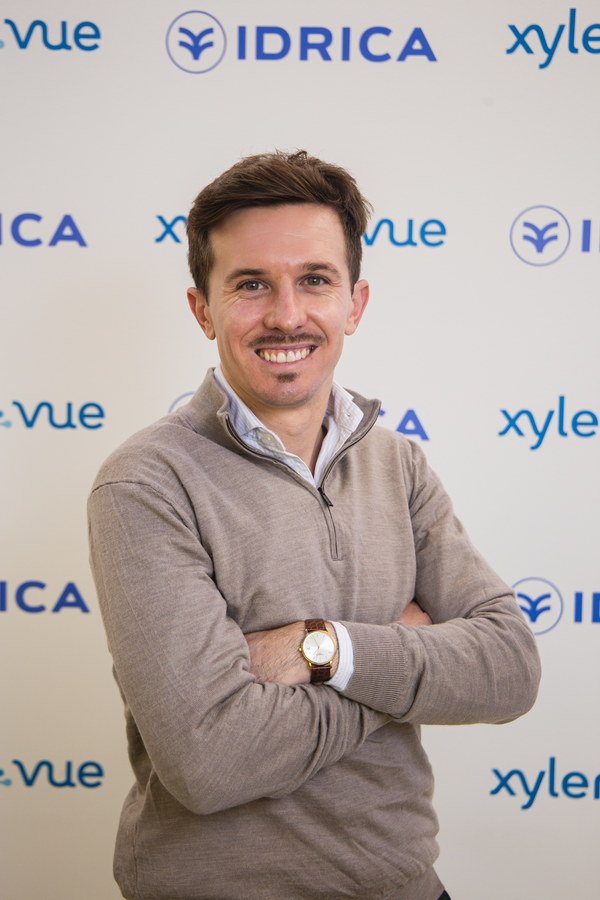
David Torres holds an MSc degree in Industrial Engineering from the Polytechnic University of Valencia (Spain) and an MSc in Economics from the National University of Distance Education. He has received training in Data Science and Machine Learning. He has developed his professional career within the water sector, serving as a key member of the Asset Management team at Global Omnium (utility) for over 5 years. In 2023, he transitioned to Idrica, where he applies his industry expertise as Product Owner, driving the evolution of GOAigua. He is currently Head of AI at Xylem Vue, the analytics and software platform resulting from the partnership between Xylem and Idrica.
Read also
- The Bayesian Imperative for Agentic AI
- “AI is first and foremost applied mathematics, not the magic we are led to believe” Axel Cypel (interview)
- The superpower will simulate the world
- What AI is – and what it is not
- How does drought propagate along a European river? Lessons from the Danube
Leave a Reply