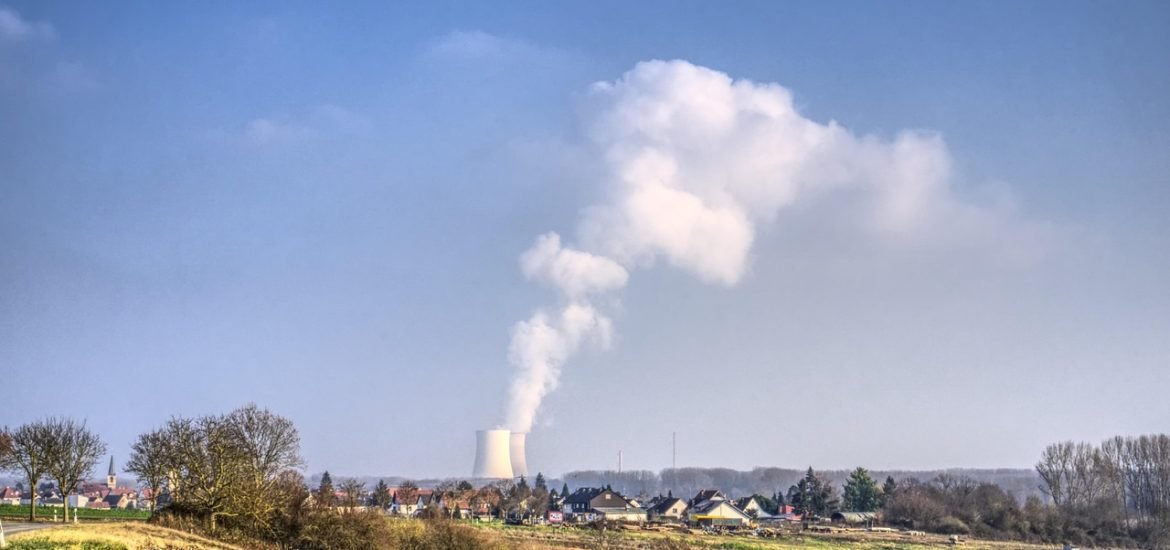
Finland’s capital may one day be kept warm by a small nuclear reactor. Helen Ydinvoima, the nuclear arm of Helsinki’s municipal energy company, has launched an environmental impact assessment for a small modular reactor (SMR) at one of three possible sites in and around the city. The move, announced on 5 November, is the formal start of a years-long process that could see nuclear heat flowing into Helsinki’s district heating network by the 2030s.
Heating a City Without Carbon
Helen already supplies Helsinki with heat, electricity and cooling, and it has set itself the goal of carbon-neutral energy by 2040. The problem it is trying to solve is a familiar one in the Nordics: how to heat a cold northern city through long, dark winters without burning fossil fuels. For decades, that job was done largely by coal and gas. Nuclear heat is now being floated as a weather-independent, low-emission alternative.
The idea of using reactors purely to produce heat rather than electricity is not new in Finland, where district heating pipes already run under most towns and cities. An SMR, being far smaller than a conventional nuclear plant, can in principle be dropped into an urban setting and plugged straight into that existing network.
Three Sites, Five Options
The newly published EIA programme puts three locations on the table: the Salmisaari and Vuosaari power plant areas within Helsinki, and Norrberget in neighbouring Östersund. In total, the assessment weighs five possible scenarios, depending on the technology and site chosen, plus the standard “do nothing” option in which the project never goes ahead.
The scenarios split between two types of plant. A heat-only plant would generate warmth alone, with a thermal capacity of 600 megawatts. A combined heat and power plant producing both electricity and heat would be larger, with 700 MW of heat and 500 MW of electricity, drawn from a reactor of up to 1,400 MW. The cogeneration option is only being considered at Vuosaari and Norrberget, because producing electricity requires extra infrastructure such as cooling-water systems and transmission lines, and the Salmisaari site is simply too cramped to fit it. Helen stresses the final plant could end up smaller than these maximum figures as the design matures.
What an Environmental Assessment Involves
An EIA is a legal requirement in Finland for projects of this scale, and it is designed to flush out the effects on the environment, people and society before any firm decisions are taken. Crucially, it is also a public process: authorities, local residents and other interested parties get access to the information and a chance to have their say.
The assessment runs in two stages. The newly published programme sets out what will be studied and how. The findings will then be gathered into a full environmental impact report, due to be published in 2028, which will itself be opened up for public comment. Sweden-based engineering and advisory firm AFRY is acting as the consultant, and is also helping Helen study potential sites and reactor technologies.
Helen’s nuclear siting manager, Melina Laine, said the company deliberately started the assessment early so the project’s impacts and feasibility could be examined thoroughly before detailed planning begins. The firm’s aim is to settle on a location in 2028.
Energy Security as the Bigger Prize
Beyond cutting emissions, Helen frames the project as a matter of energy security. A local reactor, it argues, would ease the strain on electricity transmission links and bolster the self-sufficiency of both Helsinki and Finland as a whole. Helen Ydinvoima’s chief executive, Pekka Tolonen, said low-emission, weather-independent nuclear power could help smooth out swings in energy prices and keep supplies steady in all conditions, a pointed argument in a region acutely aware of the risks of energy dependence on unreliable neighbours.
None of this is imminent. A decision on the site is years away, construction further still. But Finland, already among Europe’s most enthusiastic adopters of nuclear power, is once again testing where the technology can go next — this time, into the heart of its capital.
World Nuclear News (2026). *Helen to assess environmental impacts of SMR in Helsinki*. 5 November 2026. https://world-nuclear-news.org/articles/helen-to-assess-environmental-impacts-of-smr-in-helsinki
Helen — Helsinki’s municipal energy company and nuclear programme: https://www.helen.fi/