Founder of IRCAD (Research Institute against Digestive Cancer), established in Strasbourg in 1994, Professor Jacques Marescaux is one of the world’s pioneers of minimally invasive and robotic surgery. On 7 September 2001, he performed Operation Lindbergh, the first transatlantic remote surgical procedure.
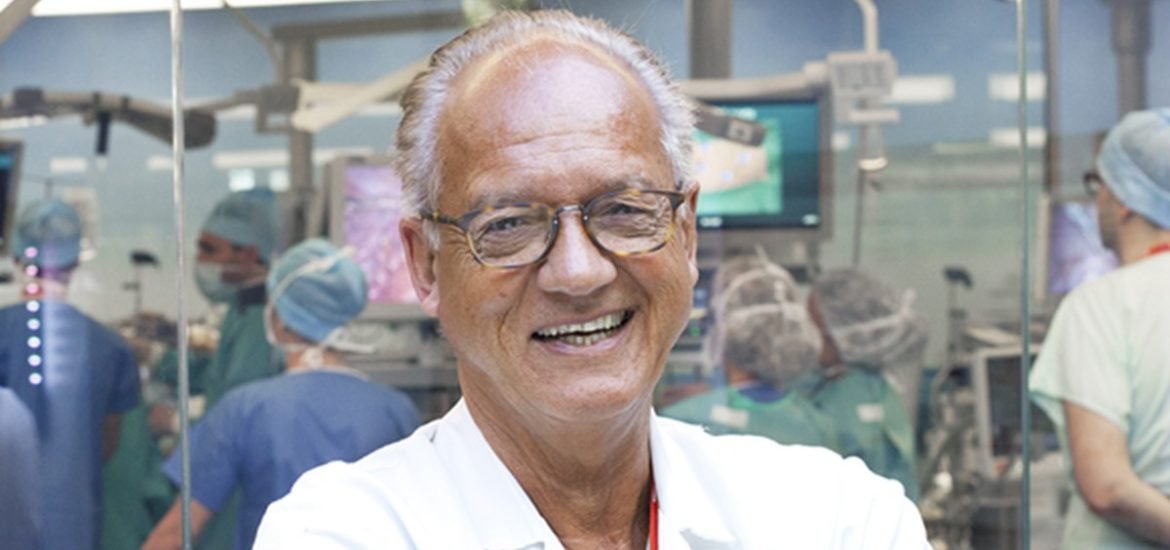
Founder of IRCAD (Research Institute against Digestive Cancer), established in Strasbourg in 1994, Professor Jacques Marescaux is one of the world’s pioneers of minimally invasive and robotic surgery. On 7 September 2001, he performed Operation Lindbergh, the first transatlantic remote surgical procedure.
From that historic breakthrough to the prospects opened up by artificial intelligence, digital twins and autonomous robotics, he looks back on more than thirty years of innovation. He also discusses the changes under way in surgical training, access to care and the future of the public hospital.
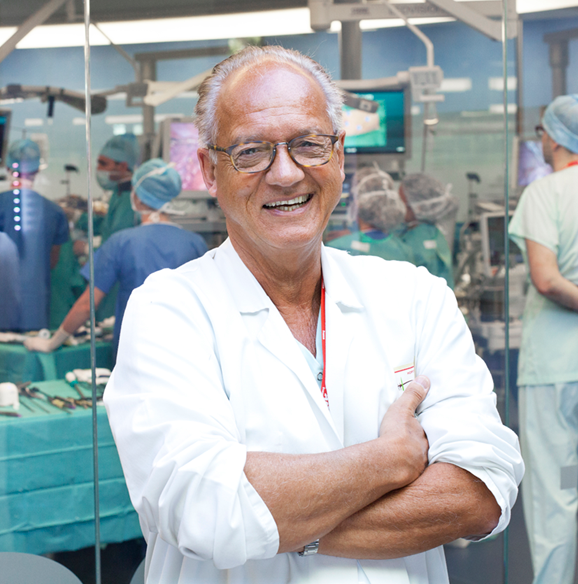
The European Scientist: You founded IRCAD in 1994 and are behind several world firsts in surgery. What has your career path been?
Jacques Marescaux: I was lucky enough to be appointed professor very young, at 31. At first I pursued a fairly conventional career as a general surgeon. Then, in 1991, I attended a lecture that profoundly changed my view of surgery.
It was given by a US Army colonel, himself a surgeon, who set out a vision of what surgery might look like thirty-five years later. He was already talking about surgical robotics, artificial intelligence, virtual reality… Absolutely visionary concepts for the time!
That lecture was a real turning point. It gave me the idea of creating an institute devoted to these technologies and their application to surgery. That is how IRCAD was born, with the ambition of developing these three major areas of innovation.
The European Scientist: How did IRCAD come into being, and how did you manage to perform the first transatlantic surgical operation?
Jacques Marescaux: At the time, I divided my work between surgery, research and scientific publishing. I wanted to create a structure entirely devoted to computer science applied to surgery.
I submitted my project twice, and both times it was ranked last! In 1992, these ideas seemed completely unrealistic. They were considered more science fiction than medicine.
So I decided to approach a major American medical device company directly: United States Surgical Corporation, in New York. I sent a fax to its chairman, Leon Hirsch. I had been warned, though, that there was practically no chance of getting a reply.
To my great surprise, I received one the very next day! Leon Hirsch invited us to New York, with Concorde tickets and helicopters to take us to his company’s headquarters. It was he who provided the first million dollars needed to set up IRCAD.
We gradually built up our research around virtual reality, three-dimensional reconstruction of medical images, and robotics.
One of the challenges that fascinated me was telesurgery: being able to operate on a patient remotely with the same precision and the same safety as if the surgeon were at their side.
We launched the European MASTER project, with France Télécom and two robotics companies. Our ambition was to perform a surgical procedure between New York and Strasbourg.
At the time, we had neither the right robots nor the necessary telecommunications infrastructure. To guarantee the precision of the surgeon’s movements, we had in particular to keep the transmission delay below 200 milliseconds.
It took us several years of research, experimentation and technological development. Finally, on 7 September 2001, we performed Operation Lindbergh in 45 minutes. The results were published, among other places, in Nature.
It was a world first, made possible by the commitment of many partners, France Télécom in particular.
But telecommunications costs were enormous at the time. Leasing the infrastructure required for transcontinental connections could cost up to a million dollars. So it was impossible, back then, to envisage routine use of telesurgery.
From telesurgery to teleproctoring: towards global access to expertise
The European Scientist: Twenty-five years after Operation Lindbergh, where does telesurgery stand?
Jacques Marescaux: It took nearly twenty-five years for long-distance surgical procedures to really start to take off, notably in China and between different countries.
Today, technological progress makes much broader applications conceivable.
At our world congress of robotic surgery in 2025, we organised remote procedures, including in cardiac surgery, with teams located in the United States, China, Morocco and other countries.
The main technological barrier has been overcome. There nevertheless remain organisational, regulatory and human challenges.
In particular, we presented our vision of telesurgery to the World Health Organization (WHO). These discussions led to a memorandum of understanding and to the establishment of an international programme aimed at facilitating access to surgical expertise in the countries that need it most.
World-renowned surgeons have agreed to volunteer some of their time to this programme.
It is now conceivable for a surgeon to perform a procedure entirely remotely. But in my view, the most promising solution is active teleproctoring.
The principle is simple: a local surgical team performs the procedure with a robot, while a remotely connected expert supports them. The expert can advise and guide the team and, if necessary, temporarily take control of the instruments.
It is a major advance, because the patient benefits from the expertise of an international specialist while the local team is gradually trained. We treat patients and pass on skills at the same time.
Developing these programmes does, however, require strong political commitment.
In Brazil, for example, we inaugurated a new building entirely devoted to robotics. The country’s highest authorities were present. A fortnight later, the programme was declared a national priority, with a budget of ten million dollars.
It is precisely this kind of mobilisation that can bring about a lasting transformation in access to care.
Telecommunications: fibre and 5G rather than satellite?
The European Scientist: Are advances in telecommunications, notably 5G and satellite networks such as Starlink, changing the game?
Jacques Marescaux: What matters above all is latency, that is, the time needed to transmit the surgeon’s movement to the robot and receive the visual feedback.
In telesurgery, it is essential to keep this latency below a certain threshold, generally set at around 200 milliseconds. Beyond that, precision may be compromised, with potentially serious consequences for the patient.
Today, 5G delivers excellent results, with latencies that can be around 150 milliseconds, depending on the infrastructure and the distances involved.
But the stability of the connection must also be guaranteed. A sudden fluctuation may require remote control to be interrupted and the procedure to be taken over by the local team.
Hospital buildings also present particular difficulties. Some modern glazing, which contains metallic particles, can interfere with signal propagation. Suitable networks therefore have to be provided inside the facilities.
As for satellites, they are an interesting prospect, but their reliability has yet to be demonstrated for these extremely demanding applications.
Low-Earth-orbit networks such as Starlink offer promising performance. However, unpredictable variation in latency remains a problem. In surgery, a fast connection is not enough: it must be perfectly stable.
For the time being, the combination of optical fibre and 5G seems to me the most suitable solution.
Scarless surgery: an innovation that transformed robotics
The European Scientist: You have also been a pioneer of scarless surgery. What advances has this approach made possible?
Jacques Marescaux: As part of the Anubis project, we explored the possibility of operating through natural orifices, without making any visible incision in the skin.
After around 800 experimental procedures, we performed the first operations on female patients.
In particular, we studied approaches for removing the gallbladder via the stomach or transvaginally. But we soon found that these procedures were often longer and more complex than conventional minimally invasive techniques.
We concluded that, for certain indications, a very small scar was a better compromise.
On the other hand, this research triggered a genuine technological revolution!
To operate through natural orifices, we had to devise new instruments and new surgical platforms.
Conventional endoscopes, used in particular in gastroenterology, did not offer the freedom of movement essential for surgical manoeuvres. We needed to develop systems that would restore triangulation between the instruments.
We therefore designed mechanical devices, then worked on the first flexible endoscopy robots.
These innovations paved the way for new therapeutic approaches, notably for certain rectal tumours, which can now be treated transanally, without systematically resorting to much more extensive surgery.
They also contributed to the development of endovascular robotics, which makes it possible to guide catheters inside the arteries to reach areas that are extremely difficult to access.
One of the most promising applications is the treatment of strokes.
Notably, a remote procedure was carried out in Panama to remove a blood clot from the brain of a patient hospitalised in a rural area, some 200 kilometres from Panama City.
The procedure could be started very quickly and the patient made a good recovery.
It is an extraordinary prospect: enabling patients far from major specialist centres to benefit from treatments that, until now, have been difficult for them to access.
For me, it is one of the finest applications of telesurgery and a key focus of our collaboration with the WHO.
Artificial intelligence is revolutionising diagnosis and treatment
The European Scientist: You argue that artificial intelligence and robotics are converging. How is this already transforming surgery?
Jacques Marescaux: AI is completely transforming surgery, particularly in a field I know especially well: digestive surgery.
Two major developments are under way.
The first concerns the diagnosis of cancers of the digestive tract: oesophagus, stomach, colon and rectum.
Artificial intelligence is now built into some endoscopy systems. It can automatically draw the gastroenterologist’s attention to very small lesions, which are sometimes difficult to distinguish with the naked eye.
This is a fundamental advance, because the earlier a tumour is detected, the more feasible it becomes to offer limited treatment, without having to remove a large part of the organ.
In some situations, the lesion can thus be removed directly by endoscopy, with no external scar.
The development of these technologies will transform the management of digestive tumours diagnosed at an early stage.
The second major development concerns tumours of solid organs, notably the liver, kidney and lung.
Thanks to AI, we are making considerable progress in detecting small lesions on CT scans and ultrasound.
When certain tumours are identified at a very early stage, it becomes possible, depending on their nature and location, to destroy them using ablation techniques that rely on heat or cold, rather than performing a surgical resection.
We are therefore witnessing a profound shift: from open surgery to laparoscopic and then robotic surgery, and now towards increasingly percutaneous and interventional approaches.
The goal remains the same: to treat the patient with maximum effectiveness and minimum trauma.
This transformation will also change the way doctors are trained.
The boundaries between surgeons, gastroenterologists and interventional radiologists will become increasingly porous.
Gastroenterologists will no longer confine themselves to diagnosis: their work will become ever more interventional. Surgeons, for their part, will have to master technologies once reserved for other specialties.
It is precisely this shift that we are supporting at IRCAD.
Artificial intelligence enters the operating theatre
The European Scientist: The inventor and futurist Ray Kurzweil speaks of the “law of accelerating returns”, according to which technological progress will accelerate at an unprecedented pace. Do you share this view?
Jacques Marescaux: Absolutely. We are witnessing an extraordinary acceleration.
I am regularly in contact with many medical technology companies around the world, notably in China and India. Innovations are following one another at an impressive speed.
Artificial intelligence is already transforming the operating theatre environment.
Built into surgical robotic systems, it is becoming capable of automatically recognising certain anatomical structures that must be preserved during a procedure: blood vessels, nerves and other sensitive structures.
Imagine that, during the operation, the system could alert the surgeon to a vessel with an unusual course, or warn them that they are approaching a danger zone.
That is a considerable aid to safety and to surgical precision.
Robotics is also transforming the organisation of the operating theatre.
In particular, we are working with Kawasaki on humanoid robots capable of automating certain logistical tasks related to the preparation and management of surgical instruments.
Depending on the type of procedure, the surgeon’s preferences and the patient’s characteristics, these systems could identify the instruments needed, organise their preparation and make them readily available.
This is one possible answer to staff shortages and to the growing constraints facing healthcare facilities.
Another spectacular development is the gradual automation of certain surgical tasks.
Experimental robotic suturing systems already make it possible to define a starting point and an end point, and then leave the robot to carry out the suture.
These technologies are not yet in clinical use, but they perfectly illustrate the direction research is taking.
The pace of progress is such that it is becoming almost impossible to keep up with everything new!
Augmented reality and digital twins: planning the procedure before operating
The European Scientist: IRCAD has also been at the forefront of augmented reality and digital twins. How can these technologies transform surgical practice?
Jacques Marescaux: The principle of the digital twin is fascinating: it consists in creating a three-dimensional representation of a patient’s organ from their medical images.
Take the example of liver cancer.
On a conventional CT scan, the surgeon has to interpret a series of two-dimensional images. It can be difficult to grasp precisely the relationships between the tumour, the vessels and the various structures of the organ.
Thanks to the technologies we have developed, notably with the start-up Visible Patient, it is now possible to reconstruct a personalised three-dimensional model.
The surgeon can then visualise the tumour, the arteries, the veins and the surrounding anatomical structures. He or she can analyse different operative strategies and simulate the procedure before performing it.
That is what the digital twin is.
We have been working on this concept since the late 1990s. An article published in 1998 in the Annals of Surgery already presented this approach.
At the time, the Chairman at Stanford compared our work to that of a film director, who shoots several versions of a scene, selects the best ones and assembles them to produce the ideal film.
In virtual surgery, we apply the same principle.
We can simulate a manoeuvre, observe its consequences, go back, and then start again until we identify the best strategy.
Ultimately, the ambition is to be able to transfer this planning to a robotic system capable of performing these manoeuvres automatically.
Ultrasound, the new frontier of augmented reality
The European Scientist: Are these technologies available only in Strasbourg?
Jacques Marescaux: No, the solutions developed by IRCAD are available, notably, in Europe and the United States.
But we are working on a new stage: using artificial intelligence to reconstruct an organ in three dimensions no longer from a CT scan, but directly from an ultrasound scan.
The stakes are considerable. Unlike CT, ultrasound can be used in real time during a procedure.
AI could thus make it possible to visualise the internal structures of an organ, locate vessels and tumours, and then superimpose this information on the surgeon’s view.
This is one of the great challenges we have been pursuing for thirty years: to see, as it were, through tissue in order to operate with greater precision.
Our first results are extremely encouraging.
Towards autonomous surgical robots?
The European Scientist: Today, surgical robots operate mainly under the direct control of the surgeon. In twenty years’ time, will the surgeon still be at the console, or will he or she have become a supervisor of autonomous robots? And who will be responsible if something goes wrong?
Jacques Marescaux: Today, most surgical robots operate on the basis of what is known as a “master–slave” relationship.
The surgeon controls the instruments and the computer system optimises his or her movements, notably by filtering out tremor and improving the precision of movements.
The technology is extraordinary, but the robot does not itself decide on the procedure.
We are gradually entering a new phase, that of semi-autonomous robotics.
Certain simple, repetitive tasks, such as suturing, will be able to be performed automatically once their parameters have been set by the surgeon.
In the longer term, artificial intelligence will be able to learn from very large quantities of surgical videos and anatomical data.
But we must distinguish between what is technologically possible and its actual application in patients.
When Elon Musk claims that all surgery will soon be performed automatically by robots, I think he considerably underestimates the complexity of the surgical act and of the regulations that govern it.
A surgical procedure is never entirely predictable.
Every patient is different, every disease has its own particularities, and unexpected situations can arise at any moment.
So I do not believe that fully autonomous surgery will become widespread in the next twenty years.
We will advance step by step, validating each innovation with the utmost rigour.
I have always believed that surgery needs two kinds of practitioners: innovators, capable of imagining bold approaches, and more conservative surgeons, who are indispensable for assessing the risks and cautiously guiding their adoption.
Innovation is essential, but patient safety must always remain the priority.
The European Scientist: So the question of liability remains fundamental?
Jacques Marescaux: Absolutely. Two procedures on the same organ can be very different.
For an autonomous system to respond correctly to every situation, it needs immense quantities of data covering the full diversity of anatomies, pathologies and possible complications.
These data would also have to be annotated and validated by the best specialists.
That is a considerable scientific, medical and regulatory challenge.
Kawasaki and IRCAD: teaming up with a leading industrial partner
The European Scientist: Kawasaki has just opened its European centre at IRCAD. You often say that, when it comes to robotics, you have to “marry a giant”. Why?
Jacques Marescaux: In medical research, it is not enough to invent a remarkable technology. You also have to be able to develop it, certify it, manufacture it and market it.
That requires considerable resources.
In surgical robotics, investments can run to several hundred million, or even several billion, euros.
At IRCAD, we are capable of designing prototypes and developing innovative technologies. But to move on to large-scale industrial and clinical use, you have to rely on partners with the necessary skills and resources.
That is what I call “marrying a giant”.
Everyone must stick to their own trade: innovation for the researchers; development, production and distribution for industry.
Our collaboration with Kawasaki is a perfect illustration of this approach.
The company has exceptional experience in industrial robotics. Its technologies have played a major role in automating many factories, notably in the automotive industry.
Today, it has know-how that can help transform medical robotics.
We have built a relationship of trust with its leadership, founded on a shared vision of innovation.
For me, working with partners of this calibre is an extraordinary opportunity.
IRCAD: training surgeons from all over the world
The European Scientist: Training is also one of IRCAD’s core missions. What is the scale of its international activity today?
Jacques Marescaux: When we founded IRCAD in 1994, we trained about 200 surgeons a year, mainly in digestive surgery.
Since then, we have gradually extended our activity to all surgical specialties.
In 2025, we trained more than 13,000 surgeons from 150 countries, around 7,000 of them in person and 6,000 remotely.
Strasbourg has thus become one of the largest international training centres for minimally invasive and robotic surgery.
In 2000 we also created WebSurg, a virtual university dedicated to surgical education, available free of charge and in several languages.
Today it has some 600,000 members worldwide.
Being free is one of its main strengths: it allows surgical knowledge to spread far beyond geographical and economic borders.
Our development then continued internationally, with the creation of training centres in Taiwan, Brazil, Lebanon, Rwanda, India, China and, most recently, Charlotte, in the United States.
Each site reflects the same ambition: to bring surgical training closer to healthcare professionals and to promote access to the most advanced technologies.
Rwanda is a particularly strong example of this determination to develop surgical excellence in Africa, with the support of the national authorities.
In the United States, our presence in Charlotte also reflects the international recognition IRCAD has earned.
This global network is based on a model that combines academic research, medical training and industrial partnerships.
Without these collaborations, it would be impossible to have the infrastructure, robots and equipment needed to keep pace with the rapid evolution of surgical technologies.
Public hospitals: how to reconcile innovation and access to care?
The European Scientist: How do you view the French public hospital system? How can technological excellence be reconciled with access to care for all? And what advice would you give the candidates in the 2027 presidential election?
Jacques Marescaux: I have deeply loved the public hospital. For a long time, becoming a university professor and hospital practitioner was, for us, a real achievement.
I knew a time when hospitals had more resources to develop their projects.
Today, the financial situation is much more difficult. Resources are limited and investment choices are becoming increasingly complex.
Yet new surgical technologies require expensive equipment.
In our university hospital, we have two surgical robots, whereas some large American hospital groups may have several dozen.
This difference in resources raises a fundamental question: how can we guarantee all patients equitable access to innovation?
Political choices therefore have to be made and priorities clearly defined.
For my part, I believe that health should occupy a much more important place in public investment decisions.
The European Scientist: Can we nevertheless imagine that these technologies, despite their initial costs, might help reduce healthcare spending?
Jacques Marescaux: Absolutely. You have to look beyond the purchase cost of the equipment.
In surgery, what is extremely expensive is, above all, complications.
A complication can lead to a further operation, prolong the hospital stay, require additional care and sometimes prevent the patient from returning to work for a long time.
If a technology makes it possible to avoid these complications, its medical and economic benefit becomes considerable.
There is also another essential area: the appropriateness of the surgical indication.
You can perform a technically perfect operation and still obtain a poor result if the initial treatment strategy was not the right one.
Artificial intelligence could play a major role here.
By integrating international guidelines, medical data and the specific characteristics of each patient, it will be able to help teams identify the most appropriate treatment strategies.
We will thus be able to improve the quality of medical decisions and avoid certain unnecessary or inappropriate procedures.
This is a major prospect, both for patients and for healthcare systems.
Finally, in a context of budgetary constraints, I believe it is essential to strengthen collaboration between the public sector, research and industry.
Scientific independence must of course be preserved, but partnerships have become indispensable for continued innovation.
This model is based on trust, transparency and a shared long-term vision.
It is this philosophy that has enabled us to develop IRCAD for more than thirty years.
Interview conducted by The European Scientist.
This interview was republished by the Polish magazine Wszystko co najważniejsze: “Sztuczna inteligencja całkowicie zmienia chirurgię”.
Read also
- Europe turns to AI to heal hearts: the CHAIN network takes the stage
- New system to reduce the number of unnecessary surgeries to prevent strokes and heart attacks
- New AI Tool Could Transform Treatment for Cancer Patients After a Heart Attack
- AI can identify breast cancer earlier and more accurately than current methods
- Medical innovations at the ESC Digital and AI Summit in Germany
This post is also available in:
Leave a Reply