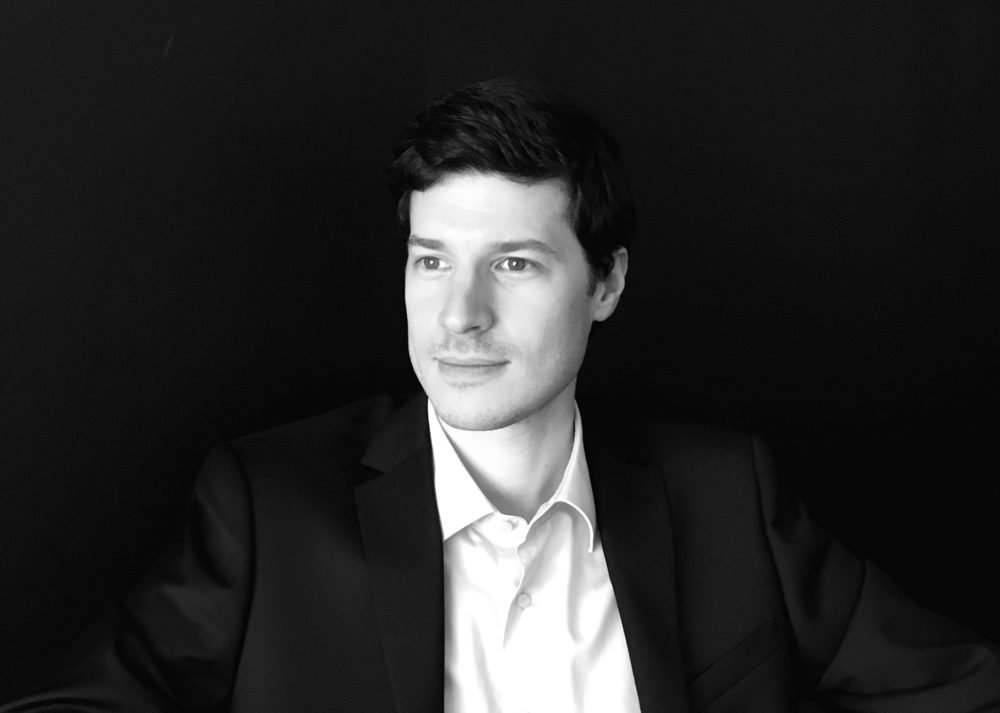
An engineer by training, Axel Cypel has worked exclusively on corporate artificial intelligence projects for more than ten years. Head of AI strategy at a major French bank, he is also editor-in-chief of the Revue des Ingénieurs des Mines. After Au cœur de l’intelligence artificielle (2020), he published Voyage au bout de l’IA in October 2023, a demanding work of popular science that won the 2024 Prix Roberval in the general-public category. From ChatGPT to the “stochastic parrot”, from agentic AI to fantasies of superintelligence, from AI in banking to European sovereignty, he tells The European Scientist what AI really is, and what it is not.

Introduction
The European Scientist: Could you introduce yourself? You are head of AI strategy at a major French bank and also editor-in-chief of the Revue des Ingénieurs des Mines. At a time when everyone claims to talk about AI, what can you tell our readers to convince them of your absolute mastery of the subject?
Axel Cypel: Absolutism is not for me… If I had to plead my case, I would say, and this will no doubt clash with a good deal of what one hears, that I am an engineer, that I have a scientific background, that I have worked in industry for more than ten years exclusively on artificial intelligence projects and that, unlike the overwhelming majority of people, I have nothing to sell. The field is prodigiously complex and it moves fast: anyone claiming to master all its aspects (technical, mathematical, computational, sociological, ethical, to name only the serious words ending in “-al”) would by definition be a pure charlatan. Humility is the wiser course here.
Fundamentally, then, I am an engineer, which means I am interested in physical phenomena, mathematics and machines. I often say that my understanding of AI is a physicist’s: not a developer’s, nor that of a researcher in applied mathematics, since I am neither, but that of someone who has a sound grasp of the underlying principles and who constantly questions that understanding, to make sure it matches the reality of a discipline that is moving fast, that is currently enjoying its hour of glory, or perhaps only the beginning of its glory…
This led me to write two popular-science essays on the subject and a number of articles. Alongside my work at a major bank, where I organise these AI matters for the company, I have developed a parallel activity as an author and speaker, to which a little teaching has since been added. And since my curiosity is not reserved for AI but extends more generally to subjects of interest to our society, I agreed to become editor-in-chief of the Revue des Ingénieurs des Mines, the quarterly publication of the three alumni networks of Mines Paris, Nancy and Saint-Étienne.
From 2020 to today
TES: Voyage au bout de l’IA (“Journey to the End of AI”), winner of the 2024 Prix Roberval, is your second book on the subject. What changed between 2020 and 2023? Likewise, can you tell us what has changed since the book came out, given that it covered the whole subject at the time? And what does this academic recognition say about the need for more rigorous discourse on AI in France?
A.C.: When big data and AI burst onto the scene, I quickly noticed that the literature consisted either of highly technical books, in English, aimed at data scientists, or… let’s say there was a void. I read up, began to think about the subject and soon found myself compiling a good deal of knowledge, but also of opinions. All that remained was to organise them into a book, a popular-science essay published in October 2020 and, very originally, entitled Au cœur de l’intelligence artificielle (“At the Heart of Artificial Intelligence”). My real question lay rather in the subtitle: Des algorithmes à l’IA forte (“From Algorithms to Strong AI”). This charming tome of nearly 500 pages enjoyed, I believe, a succès d’estime.
In autumn 2022, I had lunch with my publisher, who told me he was considering a second edition. I replied: “I’ve got something better for you: let’s do a second book!” And this is where I answer your question: what happened between 2020 and 2023? One tiny pivot in time, very precisely located at the end of 2022: the public release of ChatGPT. I told my publisher that, with what was coming, a great many things would be turned upside down, that it was important for the widest possible public to understand this technology, how it works and what it implies, and that we had to move on from the succès d’estime of the first book to something with a much wider readership. That is how Voyage au bout de l’IA was born.
It is still a popular-science essay, but its structure is leaner and centred on generative AI. Being the second, it is also probably better crafted, even if the first is in fact more complete and richer in ideas; its problem is that it does not cover generative AI, whereas Voyage obviously does. Published in October 2023, it seems almost old today, and yet, and this says something important about the current frenzy around AI, it is in no way obsolete! Of course, in fewer than 200 pages, it does not deal with what interests companies today: so-called agentic AI in particular, RAG or AI coding tools. It does not specifically discuss Anthropic, nor our mathematicians’ dithering over the proofs recently produced by OpenAI. That is because it is a popular-science essay, which means, as with Au cœur de l’intelligence artificielle for that matter, that what it says will always be true. The examples are bound to date, and even that is not certain: looking at those in the first book, I’m not so sure they have!
Receiving the Prix Roberval for this second essay, and in the flagship (general-public) category at that, was a great joy and is one of the things I am proudest of. The prize is organised by the Université de technologie de Compiègne and its selection is extremely demanding. Its jury is not a club of sales and marketing people from the big AI companies, but an academic jury called upon to judge works across a wide range of scientific fields. What does this recognition say about the demand for science communication on AI? I couldn’t tell you… The reviewers and the jury were probably sensitive to the style, carefully crafted to make enjoyable an explanatory and pragmatic approach to AI, one that is not confined to the sciences alone and that takes account of its limitations, always swept under the carpet by those who have something to sell you, and of its risks, for much the same reasons. With this book, we are clearly a long way from the sensationalism journalists are usually so fond of, and from the marketing of fear, whose effectiveness I observe without being able to fully understand it. (Let’s say I have one or two clues.)
Getting your hands dirty
TES: Who is this essay for? Some parts are clearly accessible to non-experts, but you have not spared the reader the technical side of the subject, which sometimes resists popularisation. I am thinking in particular of the chapter on machine learning. Yet readers who make the effort to get through that part are grateful to you afterwards, because they better understand the workings of what some would like to pass off as Zauberkraft (magic). Can you talk about AI without getting your hands dirty?
A.C.: The question of the target readership is fundamental in publishing. My aim was to reach the widest possible audience, but there is obviously a filter: these readers have to be interested in technical subjects, not be allergic to a scientific approach and be prepared to make the effort of buying and reading a book. Out of 70 million people, how many have we lost? Joking aside, while the book is definitely meant to popularise, the kind of popularisation I chose is accessible but demanding. Like everyone who is demanding of themselves, I am demanding of others: I do not want to proceed solely through metaphors or oversimplification, but to be able to explain difficult concepts, not by going around them as water flows around a wall, but by splitting the wall at the right spot!
The chapter you are alluding to is the third. It is true that, technically speaking, it is the hardest in the book. It doesn’t much matter if readers feel a little rusty as they read it: as you say, if they make the effort to follow me, they will benefit from a number of insights that will help them understand that AI is first and foremost applied mathematics, not the magic we are led to believe.
Can you talk about AI without getting your hands dirty? Yes, I think anyone can talk about it, as long as they do so in an informed way. You don’t need to be a data scientist, a researcher, a computer scientist or an engineer: all it takes is a little patience and a sound understanding of things. Nothing very rare, all things considered. On the other hand, being completely ignorant of how it works is not, in my view, compatible with saying anything interesting about AI. That is why I wrote this book: I want to give people enough understanding of the subject to judge the technology for themselves, not to fall into the traps of marketing and not to give in to the fear that the media take a perverse pleasure in stoking (perhaps because their own understanding of it is limited?).
Defining AI
TES: How would you define AI today? What concepts do you need to understand and master to get an overall, and as comprehensive as possible, view of it? In particular, you point out the fundamental difference between the deterministic and the probabilistic approach: could you explain it to us? Finally, President Trump recently insisted on using the term “superintelligence”. What do you make of that?
A.C.: Defining AI has become difficult. You can of course describe it as a scientific discipline at the crossroads of mathematics and computer science, but for the general public, AI is, roughly speaking, ChatGPT. Since the release of LLMs, the large language models underlying so-called generative AI, they have become so ubiquitous that AI is now almost identified with them. It can generate content (text, images, sound, video) and it seems capable of reasoning: does it not solve highly complex mathematical problems? Today’s AI marks the triumph of machine learning, that is, of building models learnt through optimisation on immense datasets.
This concept of machine learning is the most important one to grasp if you want to understand what is distinctive about this way of doing computing. It differs fundamentally from the classic design of programs, which consists in coding explicit rules into the computer. Even more than the deterministic/probabilistic opposition, it is the explicit/implicit opposition that drives this paradigm shift, a point I developed much further in my first book than in Voyage, although I do refer to it there. In machine learning, the model, that is, the rule governing the phenomenon you are trying to model, is learnt implicitly from the data. This approach draws on statistical induction and therefore rests on probabilities. The outputs this AI gives you are themselves drawn from a probability distribution, which in fact constitutes the model. The answer becomes probably true, which is very different from a deterministic certainty resulting from the mechanical application of a rule. Of course, once learnt, the model itself becomes a mechanical, and therefore deterministic, rule, except when randomness is deliberately introduced, as in LLM-based chatbots, to obtain a semblance of creativity.
As for “superintelligence”, it is a fantasy I find rather ridiculous, a marketing term with no scientific basis, squarely in the transhumanist tradition. Transhumanism believes in an exponential improvement of AI technologies that would give rise to a superhuman intelligence, capable of rendering us invaluable services, should it be so inclined, or of destroying us all. Some big names in the field have even put a 10% probability on the latter; how is that figure calculated? Your guess is as good as mine…
Good AI tools give their users great capabilities, enabling achievements that would ordinarily call on what we are accustomed to calling “intelligence”. That is, incidentally, one of the definitions of AI. These tools already outperform most human beings… Does that make them superintelligent? I very much doubt it. Are our fellow human beings superintelligent? Perhaps President Trump has an opinion on that too.
The stochastic parrot
TES: You do not hesitate to use the expression “stochastic parrot” to describe LLMs, even though some people have been sharply criticised for doing so. Can you justify your use of it?
A.C.: If I remember rightly, I used it in order to explain it, in the light of how LLMs are known to work, not necessarily because I fully subscribe to it, even if that is, at bottom, my position. To me, the opposite position amounts to a kind of magical, and rather foolish, belief on the part of computer scientists in the intelligence, or even the consciousness, of their creature, which would arise through “emergence”. A word that explains nothing. It is one of the questions I will address in my next book…
Agentic AI and cybernetics
TES: While one may have some reservations about a machine that claims to think for us, agentic AI is a different matter, don’t you think? Having a team of robots at your beck and call is quite impressive. Isn’t this where we find the old project of cybernetics, that is, the empowerment of humanity imagined by Ada Lovelace and Charles Babbage, as opposed to the Frankenstein AI of Mary Shelley and Lord Byron?
A.C.: Ah, agentic AI… You mention cybernetics and you are probably right, because agentic AI is an old computing pipe dream brought back into fashion. In the corporate world, it has been a buzzword for more than a year, even though most people have no idea what it means; but it is the fashionable thing to talk about… And I would certainly not define it as an army of robots at your beck and call. If anything, it is the opposite. Today’s agentic AI incorporates LLM-based models that make decisions “autonomously”, that is, without anyone programming explicit rules for them to reach a goal. That goal is given to them, so in reality there is absolutely no autonomy in these AIs. You don’t control much, you can get quite a few surprises in the results, not to mention their utter inefficiency in terms of energy consumption. Some results, on the other hand, are impressive: the latest mathematical findings recently put forward by OpenAI bear witness to that.
I haven’t read Babbage or Lovelace, but, who knows why, I have read Mary Shelley… I believe the whole point of progress is to “empower” people, but since progress is human, it is inextricably bound up with a Frankenstein side! It is depressing, but if the creators of technology in general, and of AI in particular, were a little more aware of this instead of taking themselves for gods, things might go better.
That is why I firmly reject the classic analogy of the knife, which can be used to cut bread as well as to kill, to illustrate the supposed neutrality of technology. Technology is never neutral: it is designed in a specific context and inevitably comes, for others, with negative externalities, sometimes even built into the aims of those who created it, and proportional to the power it confers.
AI in banking
TES: In concrete terms, what works today in a large banking network, and what is still at the demonstration stage?
A.C.: The banking industry has the particularity of holding a vast wealth of data, which makes it an interesting place to do AI. This mainly means two things: introducing automation into processes where it makes sense, which has always been done and now continues by incorporating the agentic capabilities we talked about; and improving employees’ operational efficiency, in particular through secure generative AI assistants.
I’m tempted to tell you that “everything works”: all it takes is the will and the resources. The real question is: to do what? Banks are major players in the economy and a sensitive link in the chain. Banking processes must run without error; so what does that mean when you use a probabilistic model? What are the implications? Automating everything with tools that are only 99% effective means that one time in a hundred there will be a problem, and if you are fully agentic, it will be hard to predict. In a bank, caution is therefore the order of the day, because of data security requirements, and fully autonomous automation cannot be accepted without adequate supervision.
That is why observability is one of the major undertakings for every industry that wants to use AI (not sell it, use it!). But retrieving information after the fact, once the operation has been carried out, is not quite what you want, because reputational risk also matters a great deal to these players, and the slightest operational error can have serious consequences. Why could OpenAI afford to unleash on the world a ChatGPT that churned out cows’ eggs? Because this chatbot was not critical to any system (only to the naive people who took it for their therapist, some of whom have died as a result…).
Even in your personal life, now that an agent can book you an entire trip, would you give it your credit card number? You don’t trust it? You’re right. AI has to be kept within bounds, and I am not even talking about regulation, so that it is used where it will create value and where its errors will be manageable. There are many examples in banking: writing assistants, image analysis to create seamless, 100% digital customer journeys, RAG, voice commands, automatic payments (yes, sir!)…
Myths and fantasies
TES: Your book is also an excellent antidote to all the phantasmagoria surrounding AI. In it, you deconstruct a series of myths. Often drawn from science fiction, they give rise to countless fantasies. But those who promote them often dispense with any definition of consciousness, free will or the soul. The height of irony is that, while denying these concepts to humans, they readily grant them to machines. How do you explain that?
A.C.: It’s a paradox, but you are absolutely right! It is hard to tell apart the discourse, which is grotesque marketing, from the private convictions of those who peddle it. Communication around AI is steeped in permanent sensationalism, in science-fiction fantasies and, above all, in libidinal fantasies, which seem to please most of those who voice them as much as those who listen to them. Roughly speaking, playing God is supposed to bring a demiurgic pleasure. For who is the creator of these machines that are allegedly superior to humans? Humans themselves… Ah!
If you take this question seriously, you will talk about materialism, but a crude materialism, which holds that humans, as an assemblage of atoms, are nothing more specific than the neighbouring assemblage of atoms that makes up a machine; one can then already say that the two are the same and are both machines… Your fellow human has no soul, that’s normal: this unsightly, surplus being is at best your employee, at worst your slave; with your child, it is perhaps already less so. But the machine you created, since it was you who created it, must surely have one. There’s another explanation for the paradox you point out.
Overfitting
TES: You consider overfitting to be one of the limitations of AI. Can you explain it to us?
A.C.: Machine-learning AI generates a model from data. These data, finite in number, form a sample of the phenomenon under study, on which the model is trained. Statistical induction is the act of faith that consists in postulating that the learnt law holds for the whole population, that is, that it truly represents the phenomenon that generated the data, and not just the data themselves. How do we know? Well, if the model works, if, for example, it has decent predictive power, we consider that we were right. This is called generalisation. Conversely, if the modelling has merely learnt the training set by heart, we have overfitting: the model fits the data it has seen perfectly, but it has no predictive power, since it has not learnt the underlying phenomenon.
That is obviously a limitation of AI systems. But there is an even more serious one: even when the model appears correct on unseen data, how can you know whether the answer it provides really reflects the whole of reality, or only a small part of it? Machine-learning AI is an empirical science, of the “so far, so good” variety. And these are the instruments that industries want to introduce everywhere, motivated solely by the same old refrain of productivity gains!
The risks
TES: You devote your final chapter to the risks of AI. Which seem to you the most serious, and which are overestimated?
A.C.: My last remark makes an excellent transition! One of the most serious and insidious risks, precisely because most people, including those we call “decision-makers”, understand very little about AI, is that these models will be introduced everywhere and will make decisions in all sorts of everyday processes. The real danger is not that these decisions cannot be explained, but that they are bad and that nobody takes responsibility for disengaging these systems and getting to work by hand, so to speak. Will people even be capable of it? By constantly delegating cognitive tasks to machines, what will they have left after such a surrender? That is another major danger of AI. I won’t dwell too much on the consequences of digitalising the world, which will create a kind of normative digital straitjacket that will channel what is possible, and of which Big Brother will have been only a foreshadowing, brilliant to be sure, but one that never got beyond its infancy. Humans will recreate spaces of freedom for themselves, but they will be rarer and harder to maintain.
The extreme risks some people talk about are a jobs apocalypse and, of course, the existential risk that the very designers of these solutions warn us about, in keeping with the paradox we discussed earlier. I have never believed that work will disappear, even if I obviously accept that this form of advanced automation will have many impacts on whole swathes of the economy. I believe we must not let ourselves be locked in by the suppliers of these solutions: after all, who has ever properly calculated the return on investment of IT? As for the existential risk, if our species is foolish enough to place things that are truly dangerous for humanity in the hands of opaque probabilistic systems serving oligopolies, that is a pity, and it is society that will pay the price.
It must be acknowledged, however, that these almost free tools give anyone who wants to use them, including for harmful purposes, significant capabilities that would previously have required considerable resources. The cybersecurity risks are therefore considerable, but that is hardly news: everyone is perfectly aware of it. It is amusing to see that AI, on which we might have relied so much for cybersecurity, is more of an offensive weapon than a defensive asset… And after that, some will still claim that technology is neutral…!
Transhumanism and ethics
TES: What do you make of the transhumanist promises made by some tech players? Does the pace of progress in AI seem to you as exponential as is claimed, or is it rather slowing down?
A.C.: As I wrote in Voyage, while transhumanism carries what is to me a noxious mindset, one has to acknowledge that technical progress affects not only our condition but also our very being. Isn’t medicine, by taking advantage of this progress, intrinsically transhumanist? AI is one technology of progress among others, and it will accelerate the pace of discovery: we saw this recently in mathematics, where many interesting problems have been solved (once this has been properly confirmed by those concerned!). AI is increasing mathematical knowledge without, in my view, threatening the role of mathematicians; there remains, moreover, the question of how these results are integrated into the body of knowledge.
The phantasmagoria that associates AI with superintelligence, the creation of an artificial consciousness or the possibility of uploading oneself into some kind of Matrix belongs to bad science-fiction scenarios, for the time being at least! Since AI is a technology that devours energy, electronic components and therefore capital, the bosses of these companies have every interest in holding up the mirror of promises, however delirious, to attract investors. Promising good health and immortality is then a good strategy: who would say no to that?
The question of pace is a difficult one. Because the field has had striking successes, there is a kind of frenzy: more and more people are working on it, large amounts of capital have been invested… In theory, there should therefore be more discoveries and more industrial results, which does not argue for a slowdown. On the other hand, the wall of physical reality may begin to make itself felt, with pressure on the mineral resources needed to build the machines and growing concern about the energy and water consumption of data centres. I am, however, rather pessimistic on this point, because I think that if a few people can become billionaires by eventually crushing every form of life around them, they will do so. Finally, LLM-based AI could reach its asymptotic limit, so that with current systems we would have reached the maximum computational cognitive capacity achievable. There are of course other avenues of research, but their first results could take time to materialise. Quantum computing, for example, is a matter of fundamental research; it receives wide media coverage and is led by the same big companies. As for computing based on living neural cells, I find it ethically appalling. Be that as it may, these methods should not change the fundamental paradigm of computation. In short: a slowdown, perhaps, but later; for now, no, if only because industries are going to integrate these models everywhere.
The 2027 hot potato
TES: AI is the hot potato that politicians keep passing to one another. What advice would you give the candidates in France’s 2027 presidential election? Can Mistral and the other European players still carry weight against OpenAI, Google and the Chinese giants, or is the battle for sovereignty lost?
A.C.: I am not sure I have any advice to give the presidential candidates, who in any case would not listen… I note that very few of them are engineers and very few have a scientific culture. I am afraid that personal agendas far outweigh the higher interest of the nation, in the sense that these people would be guided only by easy interests (power and money) and, when it comes to decisions on AI, would be the playthings of powerful lobbying by the big digital players.
In such circumstances, sovereignty, which has been much talked about since we realised that yesterday’s partners are not necessarily today’s, is rather like ethics: a fine word, without the will or the strength to make it happen. From a technical standpoint, AI is mathematical research applied to data by means of considerable computing power. Being sovereign means covering the whole chain, including, incidentally, the supply and manufacture of that computing power… Few nations are capable of it. Europe certainly is not. For Europe, thinking about its sovereignty ultimately means selecting its acceptable dependencies, which would already be the lesser evil. You began your question with the political side, and you were right: building a technological and sovereign Europe requires political will. But willing is hard; consuming is so much more pleasant in the moment.
Interview conducted by The European Scientist.
Further reading
- Axel Cypel, Voyage au bout de l’IA. Ce qu’il faut savoir sur l’intelligence artificielle (“Journey to the End of AI: What You Need to Know about Artificial Intelligence”), foreword by Gilbert Saporta, De Boeck Supérieur, 2023 (2024 Prix Roberval, general-public category), in French: https://www.amazon.fr/dp/2807360599
- Axel Cypel, Au cœur de l’intelligence artificielle. Des algorithmes à l’IA forte (“At the Heart of Artificial Intelligence: From Algorithms to Strong AI”), De Boeck Supérieur, 2020, in French: https://www.amazon.fr/dp/280733184X
- Prix Roberval: the page for Voyage au bout de l’IA, 2024 winner in the general-public category (in French): https://prixroberval.utc.fr/les-oeuvres/voyage-au-bout-de-lia-ce-quil-faut-savoir-sur-lintelligence-artificielle/
- La Revue des Mines (Revue des Ingénieurs des Mines), of which Axel Cypel is editor-in-chief (in French): https://revue-mines.org/
- “Open-access AI models are more dangerous than proprietary systems, according to Anthropic”, The European Scientist (in French): https://www.europeanscientist.com/fr/big-data-fr/les-modeles-dia-en-acces-libre-sont-plus-dangereux-que-les-systemes-proprietaires-selon-anthropic/
This post is also available in:
Leave a Reply