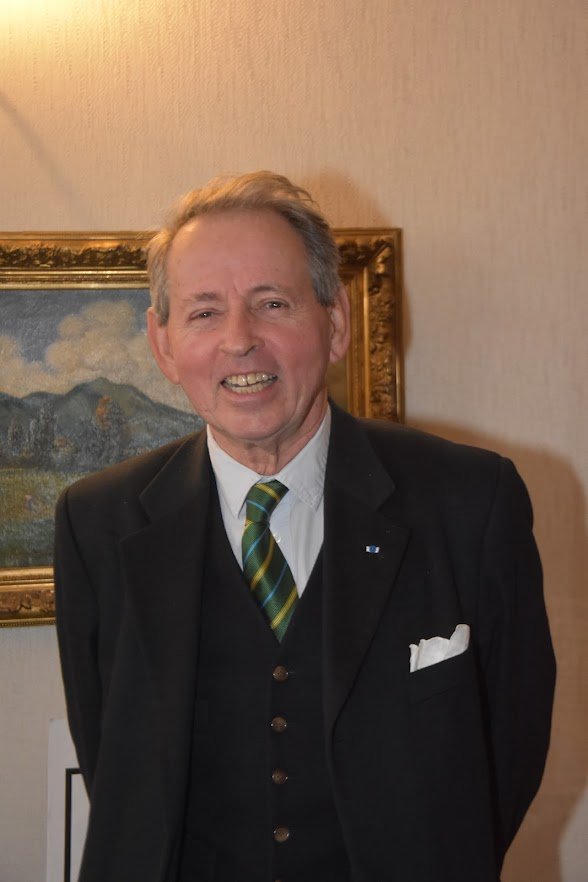
An agronomist and forester, and a former director general of the FCBA technology institute (forestry, pulp and paper, timber construction and furniture), Georges-Henri Florentin is the 2026 President of the French Academy of Agriculture (Académie d’agriculture de France). This summer’s wildfires, adapting forests to climate change, the temptation to “let nature take its course”, wood and carbon storage, the farming crisis: he answered questions from The European Scientist.
From the Jura to the presidency of the Academy
The European Scientist: Could you tell us about your career? You are President of the French Academy of Agriculture for 2026. How do you assess your term? What have you been able to achieve?
Georges-Henri Florentin: My career cannot be understood without knowing that I was born in the Jura. This département, 42% of which is forest, found a balance between meadows and woodland centuries ago, to their mutual benefit. At twelve, the age when a boy dreams of becoming a firefighter, I wanted to be a forester. Hence my scientific training, first at the Institut national agronomique in Paris, then at the former École des eaux et forêts (National School of Water and Forests) in Nancy.
I was then lucky enough to work for ten years as a silviculturist in the field, in the Jura. I then joined the FCBA technology institute (Forêt Cellulose Bois-construction Ameublement), the research and development body of the forest-wood sector, where I stayed for 32 years. There I was successively head of sawmilling, of structures, then of timber construction, and finally director general (CEO). After retiring from the civil service corps, I worked, on a voluntary basis, to get wood into the facilities and buildings of the Paris Olympic Games as chairman of France Bois 2024.
A member of the French Academy of Agriculture for fifteen years, I devoted myself to its Forests and Wood Sector section, of which I was secretary before being elected President of our Academy.
During this term, together with my fellow members, I have been working to make better known, through science and expertise, the twin pillars of our Academy, the successes of our farmers and foresters in the agro-ecological and sylvo-ecological transitions. And this despite the economic difficulties and the climate change that hit them head-on, sometimes harder than us ordinary citizens (I will come back to this). This mission takes the form, in particular, of our reports and our 800 “encyclopaedia factsheets”, available on our website, which spread scientific knowledge among our fellow citizens as well as decision-makers. It is also embodied in our “public sessions”, held every Wednesday afternoon on rue de Bellechasse. In 2026, they covered subjects as varied as “The income of farming households”, “Adapting forest ecosystems to an uncertain context”, “The Comté cheese sector” and “Metal-related risks for soils and the environment”. These themes illustrate the diversity of the Academy’s work and its determination to shed light on the major agricultural, forestry, food and environmental issues. Our sessions can also be watched on our YouTube channel, via our website: www.academie-agriculture.fr.
Fires and droughts: learning the lessons of summer 2026
TES: Droughts, heatwaves, longer fire seasons: what is your view of the recent wildfires? Beyond firefighting operations, what does warming concretely change for forest management in France and in Europe?
G.-H. F.: We have indeed been particularly hard hit by the droughts, heatwaves and forest fires of 2026. Beyond mitigating the warming caused by the greenhouse effect, we are also concerned with adapting to climate change. As early as February 2022, we devoted a public session to “The response of trees and forests to drought”.
This summer’s brutal events have revealed the dramatic impact of this change and of disrupted rainfall: lower output for most agricultural productions (by around 10%, especially maize and livestock), forest fires covering 100,000 hectares, a sad record never reached before, and more pest attacks… We are working on our report “Resilient and multifunctional forests”, due out in 2027.
The fires of summer 2026 in the Gironde, the Landes, the Pyrénées-Orientales and the Var (the four worst-affected départements) call for responses that match the risk. But building them requires looking at the facts: the origin of the fires, the limits of firefighting as it has been successfully carried out over recent decades, land-use planning choices and the sometimes contradictory effects of silviculture.
We have published two “encyclopaedia factsheets” on the fire in the forest of Fontainebleau (02.05.Q15 and Q16). The Academy has also drafted a note, “Reflections on the integrated management of forest fire risk”, to appear shortly in our academic notes.
As regards the forest fires in Aquitaine, a few lessons can be drawn: the importance of clearing undergrowth to prevent fire spreading sideways and into the crowns, widening firebreaks (300, 500 metres?), creating crop fields to break up vast continuous stretches of forest, mixing species… But we must also act to limit the number of fires that start, 90% of which are of human origin, through communication and penalties. In terms of land-use planning, we must avoid scattered development and group housing together so that firefighters can concentrate their defence… Note that in 2025 we held a joint scientific session on this subject with the French Academy of Sciences.
As for adapting silviculture to climate change, several measures seem desirable, without claiming to be exhaustive. Mixing species is recommended, both in natural regeneration, wherever possible, and in plantations. To select in natural regeneration the future crop trees which, through their genetics or through adaptation, are the most resistant, it is advisable not to rush, so as to identify the individuals that have best withstood several years of drought. Finally, when the damage caused by climate change is too great, species introduced from drier and warmer sites and countries should be tested…
“Letting nature take its course”: a reductio ad absurdum
TES: We often hear that “the best way to protect forests against warming is not to manage them, to let nature take its course”. As a forester and president of a learned academy, how do you respond to this argument?
G.-H. F.: I am not sure this position is heard often, but it does exist. Some say: “The forest existed before man and would survive him if he disappeared…” In a period of rapid climate change, it might therefore be better to do nothing. We do not think this is the best solution.
The French Academy of Agriculture will develop these points in the report mentioned above. It has devoted several public sessions to these questions, including “How to manage the forest ecosystem in a changing or uncertain context” on 25 March 2026, “Will carbon sequestration in forests become a paid activity?” (soil and trees) on 27 January 2021, and “Timber construction: what impact on the carbon footprint?” on 9 June 2021 (by avoiding carbon-intensive products: concrete, steel, synthetic chemicals…).
Let us examine the premise of your question: what would happen if nothing were done? To do so, let us use what mathematicians call apagoge, or reductio ad absurdum. Doing nothing in silviculture would mean leaving all the trees standing, without felling them. Inevitably, the trees grow old. A first consequence is that growth and carbon sequestration are limited. Moreover, by keeping a closed canopy, the development of the lower layers is restricted. Yet it is in these layers that natural regeneration is found, in other words the offspring of the adult trees. For shade-tolerant species, known as sciophilous (in mainland France: beech, fir, hornbeam, yew…), this is not a major problem, provided it is limited to their youth. Conversely, light-demanding, or heliophilous, species need direct and prolonged sunlight to develop (oaks, birch, ash, pines in general, larch…). Their regeneration is absent or weak for lack of light for photosynthesis, and becomes vulnerable to attacks by fungi (powdery mildew…), or even insects.
As adult trees age, they gradually become infertile and vulnerable to storms and to attacks by the forest’s “cleaners”: insects (bark beetles, processionary caterpillars…) or rot fungi. Their death then releases into the air the carbon that made up their wood, amplifying the greenhouse effect responsible for climate change. And this happens without that carbon having been stored, through timely harvesting, in long-lived products (beams…), which decarbonise our economy and are appreciated by most of our fellow citizens. Only later, thanks to the gaps that open up, can natural regeneration take hold. But this delay prevents adaptation from happening at a pace compatible with climate change. We also lose the ability to maintain certain ecosystem services that the accumulation of weakened timber can undermine (for example protection against soil erosion and rockfalls in the mountains).
Finally, leaving the forest to develop freely, without clearing scrub and with dead trunks piling up in dry areas, increases the risk of major fires, as seen in primary forests in America and Australia.
“Imitate nature, hasten its work” has been the foresters’ motto since the 19th century. Adapting to rapid climate change and building a new long term is undoubtedly our challenge at the start of the 21st century.
A book against idealisation and slogans
TES: You co-edited Le Grand Livre des arbres et de la forêt (The Big Book of Trees and Forests, Odile Jacob / French Academy of Agriculture, 2020). Could you summarise the book’s main arguments? Six years on, has public debate made progress on the real complexity of forests, or is the narrative still captured by idealisation and slogans?
G.-H. F.: I could not say whether the debate has been “captured”. Idealisation and slogans, on the other hand, are the failings of today’s debates, including in our country. Instant reactions, simple punchlines and emotion sell. This is a far cry from the role of an academy, which respects beliefs and opinions but relies on science, facts and the reality principle. Made up of scientists, experts and practitioners, it seeks to keep its distance from lobbies and opinions, by cultivating collegiality (our biodiversity), reflexivity and fellowship.
This book, which I coordinated with my two predecessors at the head of our Forests and Wood Sector section, Yves Birot and Bernard Roman-Amat, was written by 32 scientists, including my successor, Jean-Luc Peyron. In keeping with our ethics, each contributed only within their own field of expertise. It contains 43 signed articles that take stock, with hindsight, of what we know about these highly complex subjects, comparing different points of view. As our Academy’s motto is “Knowing in order to pass on”, it aims to “contribute to sharing knowledge, revisit received ideas, fill the knowledge gap and enable people to take part in collective discussions”. Facts and figures are given as of that date, and our encyclopaedia factsheets update them roughly every five years.
The topics are as varied as forests in France and worldwide, their history, their owners and managers, forest ecosystems, their services, their risks, their sustainable management… Not forgetting the question of “forests and society”, with their place in beliefs and religions, literature and painting. These representations may partly explain the idealisation you mention.
We therefore hope that this book has helped public debate make progress on the real complexity of forests, which cover 32% of the country (mainland France and Corsica). They are a large part of our rural landscape: together with farmland, they account for more than 80% of the territory of metropolitan France.
Wood, a renewable resource under pressure
TES: In this book, you treat wood as a renewable resource. What is the current situation?
G.-H. F.: Thanks to photosynthesis, wood is a bio-based, and therefore renewable, material. About half of it is carbon, taken up and transformed from carbon dioxide in the air, which is thus “sequestered” in the trees. This carbon, if harvested before being released back into the atmosphere by fire or decay, can be “stored” for hundreds of years, as in the beams of Notre-Dame cathedral in Paris. After harvesting, foresters regenerate the stand or replace the tree that was felled: the CO2 pump keeps working.
There are two main carbon sinks: that of soil organic matter and standing trees, to which is added that of long-lived wood products. The latter avoid greenhouse gas emissions, notably those of the high-emission building materials they replace. The leaves and branches left in the forest partly feed flora and fauna in search of organic matter and, for the rest, are incorporated into the soil, which they fertilise with no need for fertiliser.
Admittedly, with rising temperatures and changing rainfall, trees are suffering. We are seeing slower growth, trees weakened by parasites and a doubling of their annual mortality over the past ten years. The increase in storage in forests (the “sink”) is therefore shrinking, despite the continuous growth in forest area (around 100,000 hectares a year). But wood harvests remain below net natural growth: between 2015 and 2023, an average of 39 million tonnes of CO2 were sequestered each year, compared with 63 million tonnes a year in the previous period (2005-2013), according to the 2025 results of IGN’s National Forest Inventory. The forest stock is growing more slowly than before, but it is still growing. In any case, it is not declining, and it still offers potential for additional harvesting, which, if mobilised, would make it easier to renew forests and acclimatise them to future conditions.
Research and experimentation therefore remain essential to improve annual sequestration.
The farming crisis: a plea for debate
TES: In February 2026, the Bureau of the Academy published “Farming crisis (2025-2026): a plea for a great national debate”. And on 15 September, you welcomed three former ministers to the Academy, Stéphane Le Foll, Marc Fesneau and Stéphane Travert, to debate the subject. Could you tell us about this opinion, and how do you assess the meeting?
G.-H. F.: That day we did indeed welcome, for the first time, in a private session, three of the four former ministers of agriculture: Marc Fesneau, Stéphane Le Foll and Stéphane Travert. Julien Denormandie sent his apologies. The meeting followed on from our February statement, “A plea for a national debate” (available on our website).
The farming crisis, or rather the many interlocking crises, are systemically linked. While they often call for emergency measures, the problems are structural and take time. Interests are diverse, even opposed. Arbitrating between the issues is a political matter.
In front of more than 70 of our members, the ministers, with great kindness and a broad convergence of views, answered four general questions:
- Ranking the issues, linking the long term and the short term: how should choices be made, and what role can the Academy play as a go-between to clarify the issues? Should “a national debate” be envisaged?
- Respecting science: are the sciences, which have long been warning of proven dangers, sufficiently taken into account in public policy?
- Acting in France vis-à-vis the European Union: how did you experience the tensions and contradictions between European rules and demands for national solutions?
- Organising transitions: what means can be used to bring about and support change among farmers, by supporting them, without penalising them or making them feel guilty?
During the debate with the audience that followed, it emerged that the ministers and our Academy shared several observations. A minister is swept up by emergencies, the pressure of social media and the news. The question of agriculture in the long term is often drowned out by emergency measures. To move beyond the urgent, planning was tried.
The difficulty of organising a great national debate was underlined. It would be better to bring about a pact, but at national or local level? Could the Academy, with its experts, scientists and farmers, be a kind of moral authority and act as a facilitator in the public debate?
The CAP is important, and France has the expertise and the assets to shape it; but it must evolve to support the transition.
Social media raise questions. One of the Academy’s roles is to counter false information, to help people reason and to bring calm, as I mentioned earlier.
As the new season begins, many farmers are in difficulty: huge needs and no money. We have reached the end of a model; we must move towards more resilient systems and give ourselves the means, without dogmatism, to reconcile farmers, processors and society.
At the end of the meeting, a few key points emerged:
- Stéphane Le Foll: give priority to agricultural issues and to collective approaches (territorial projects and GIEEs, economic and environmental interest groups);
- Stéphane Travert: innovate, invest in training; low-carbon strategy, sovereignty, soils;
- Michel Rieu and myself: science is indispensable; cultivate the transition, highlight farming systems, involve the supply chains, demonstrate rather than impose…
Following this meeting, we also welcomed the current minister, Annie Genevard, on 23 September. Our discussions will continue internally in 2026 and 2027, in our sections and working groups, such as “Agricultures and society”. We will be sure to inform farmers, public authorities and the press, and through it our fellow citizens.
Interview by The European Scientist
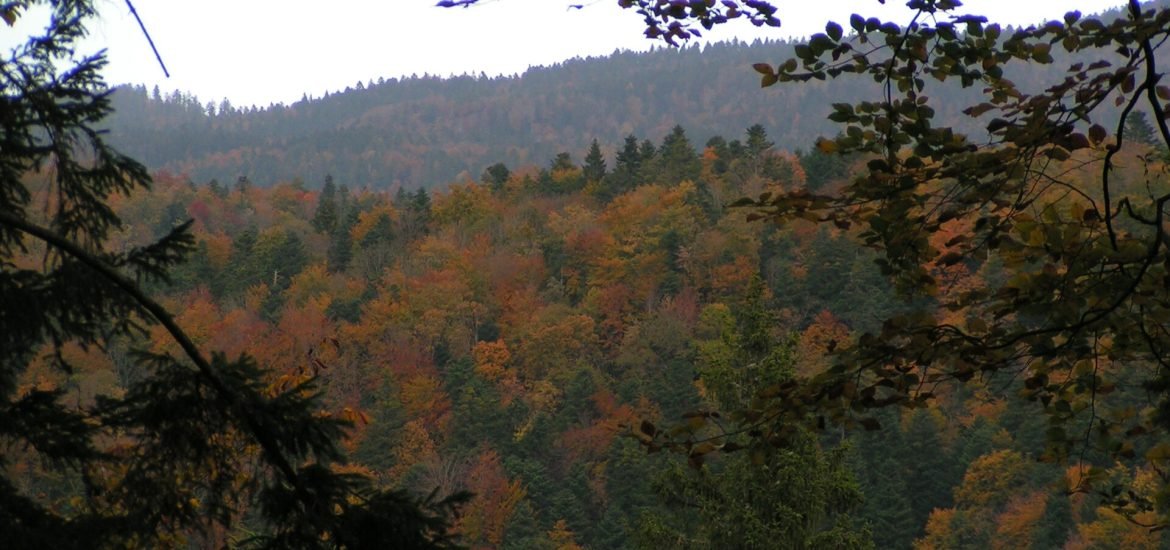
Image: mixed broadleaf and conifer forest in the Jura mountains in autumn. Photo by Juraastro, via Wikimedia Commons, licence CC BY-SA 3.0.
Read also
- Let’s do away with the myth of unspoilt nature
- Buildings made out of timber could become an important global carbon sink
- Wildfires Leave a Hidden Mark on Forest Soils That Lasts for Decades
- “I distinguish political ecology from scientific ecology” Yves d’Amécourt (interview)
This post is also available in:
Leave a Reply