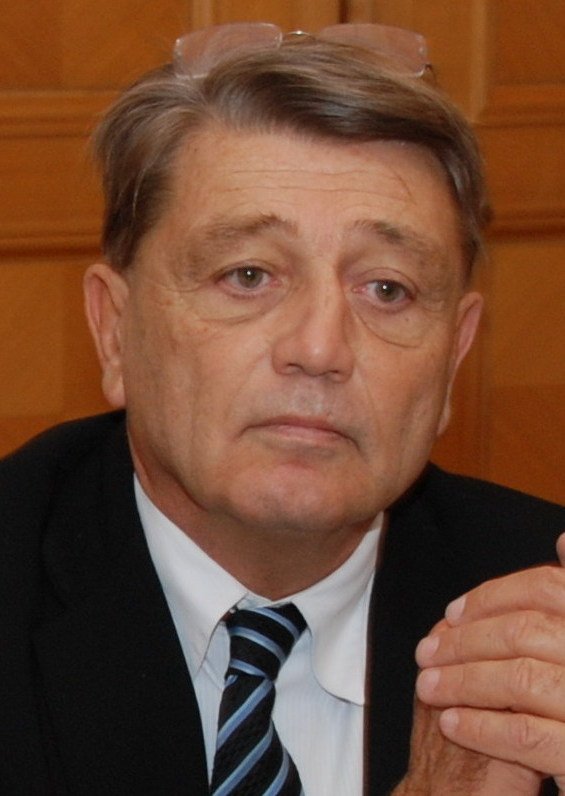
Former French Minister of the Economy and Finance (1995), Minister of Industry (1986-1988) and then of Enterprise and Economic Development (1993-1995), founder of Idées Action and president of Démocratie libérale from 1997 to 2002, Alain Madelin keeps repeating that the next ten years will be “the most fabulous in the whole history of humanity”. He placed this narrative at the heart of the “Laissez-nous faire” campus held in July in Aix-en-Provence. The technological exponential, energy abundance, the precautionary principle, Europe’s lag, AI and jobs, research, young people: in this interview with The European Scientist, he argues for “allowing the future to emerge”.
The “fabulous decade”
The European Scientist: You keep saying that the next ten years will be the most fabulous in the whole history of humanity, to the point of turning it into a show presented in July at the “Laissez-nous faire” campus. Where does this project come from, and why tell this story now?
Alain Madelin: My conviction that the next ten years will be the most fabulous in the whole history of humanity comes quite simply from a very basic observation of what was happening in Silicon Valley a little over twenty years ago. At the time, incidentally, the star was not so much artificial intelligence as genetics. But Ray Kurzweil and Peter Diamandis were already there, a whole team that would become Singularity University. With the idea that technological progress – driven not by artificial intelligence but by computing power – would lead to an exponential, an explosion of computing capacity with extraordinary consequences.
If you look closely, the starting point of this explosion is 1970. It is 1970, just after the first man on the Moon. It is also Alvin Toffler’s Future Shock, which made a deep impression on me: he sees a major change coming, almost a change of civilisation – as he would say later – and he sees knowledge emerging. Finally, 1970 is the first microprocessor, the little brain on a chip, the Intel 4004, and the famous Moore’s law: things would double roughly every two years.
Kurzweil placed the explosion of knowledge and the advent of a new civilisation in 2045. I simply did the calculation from 1970 to 2045 – I even wrote about it twenty years ago, and again more recently: the moment when the exponential turns to become almost vertical fell in the middle of the 2020-2030 decade. I said to myself: this is it, and from then on we are going to live through an absolutely fabulous period. The idea of a “fabulous decade” is more recent, because we can see that what Kurzweil predicted for 2045 will no doubt happen well before. That is why I say: 2026-2036 really is the fabulous decade. Homo creator will never have created so much in so little time as in the period we are living in – without any doubt, in the whole history of humanity.

TES: You invoke Moore’s law and a singularity well before 2045. Yet as early as 1958, in Les Limites du progrès humain (The Limits of Human Progress), Raymond Ruyer saw technical progress as an accelerating explosion bound to stop: the acceleration curve would become an S-curve leading to an indefinite plateau. Gilbert Simondon replied that human progress must not be confused with technical progress: “Nothing allows us to think that, having brought technical development to saturation, […] the human species will not find a new field of progress to engage in.” In your view, what shape does the curve have: Kurzweil’s exponential, Ruyer’s sigmoid or Simondon’s successive cycles? Where are we today?
AM: All this is complicated! I looked into the question a very long time ago, so forgive me if I have somewhat forgotten what I found at the time; I remember Ruyer, Simondon a little less. But the first idea, which needs no learned references, is a matter of common sense: can you have an infinite exponential? The answer is no.
To show this, I often use an example. I am the mother of Jesus Christ 2,026 years ago: when my son is born, I invest a small Roman gold coin – the aureus – of the kind in circulation at the time. It weighed 8 grams of gold. Had I invested it at 2% or 3%, today, at 2%, it would amount to 9.5 million times all the gold ever mined by humanity; at 3%, to 3.6 million billion times that same stock of gold. So it was, by nature and by common sense, strictly impossible. Without any need for the complex mathematical explanations that exist, it was impossible in itself: along the path of this exponential there would have been looting, great plagues, prodigal sons… or simply the taxman. Then there is a whole series of explanations: economic, human, institutional, the scarcity of resources… and then there is Ruyer’s explanation. It is interesting – God knows Ruyer is my master and I am very fond of him – but he did not have the intuition of the knowledge economy. He reasoned as an engineer, as a cyberneticist, within the framework of an economy of scarcity. That is a little less true, I think, of Simondon.
That said, the idea of the S-curve is a clever one, and I readily buy it. I had worked on this subject, because the exponential is fascinating: you can have an exponential, then at some point it calms down, and you set off somewhere else. It is no longer the same curve you are following; you set off on another adventure. It is a very fine subject for reflection, even if it does not concern us today: we are still, it seems, on the exponential part of the curve for quite a while, if only because knowledge is almost unlimited. I exchange my knowledge for yours, we enrich each other, and at zero cost.
TES: Does your optimism assume that the future is written in advance, or does it depend on political choices that can be called into question? Is there, in your view, a technological determinism?
AM: I think there is a trajectory inherent in human beings: it is the story of Homo creator. There is no limit to their creative genius, to their will to go ever higher and ever further. But of course, we also depend on political choices. If Mr Putin decides tomorrow to start a nuclear war, that is an event that will no doubt seriously upset Moore’s law in matters of knowledge! Nothing is written in advance: at every moment, human action can go the right way or the wrong way. That is a reality.
Abundance rather than degrowth
TES: Following Alvin Toffler, you describe the shift from an economy of scarcity to an economy of abundance. Vaclav Smil reproaches Kurzweil precisely for forgetting the biosphere: our civilisation remains subject to the same constraints as previous ones, and growth is limited by the physical conditions of the biosphere and by a narrow range of metabolic possibilities. In Growth (2019), he sums up this divide as the opposition between the economist, who sees growth as the creation of value, and the biologist, who sees it as the destruction of the natural world. Marian Tupy, for his part, settles the matter: atoms are finite, but knowledge is infinite. Which side are you on? How does the promised abundance meet AI’s very concrete needs for electricity, chips and data centres? And what place do you give to nuclear power?
AM: Abundance is a recent term, launched by Peter Diamandis and now widely taken up. It is the idea that at some point scarcity disappears, and that a whole range of goods and services can be distributed almost free of charge. There is a certain exaltation of abundance, but it is true that progress looks set to be strongly “deflationary” and that we can envisage goods and services becoming almost free; some will object that we will run up against electricity production. Hence the importance of what you say about nuclear power. But one infinite source of electricity is the sun – at least until the disappearance of the Earth, and then of the Sun. For now, it is still the right track.
The sun can be consumed in two ways: with solar panels, or by reproducing it through nuclear fusion. With solar, we are already on an inverted exponential: no doubt there are limits. And nuclear fusion is probably closer than we imagined: in principle, the first fusion reactor is scheduled for 2028, under a contract between Microsoft and a medium-sized manufacturer. Without public money. We will see how it turns out. But whether it is in 2028, 2035, 2045 or 2055, energy abundance will be the best answer to all our problems. It is a question of timing. The advocates of degrowth say: “We will never have enough energy.” That is false: abundance will soon be here. Man has always invented things to go further.
Could there be, at some point, a purely physical limit? A shortage of materials, for example? Very well, but with progress in nanomaterials, who is to say that I will not be able to remake lots of materials, existing or new, molecule by molecule? Human intelligence is unlimited, whatever the resources: resources may be limited, but we will find ways to get round those limits. I believe in Homo creator, which makes me an optimist. And if by chance we came up against planetary limits, it does not matter: there is the interplanetary. First there are asteroids, which are absolutely exceptional sources of materials, and then there is the possibility of sending humans into space. Here I am doing a Musk, or a Jeff Bezos. Well, let us come back down to Earth.
TES: Not to mention the millions, even billions, of humanoid robots that Elon Musk wants to put on the market as a workforce…
AM: Yes, of course. I do not know whether they will be put on the market by Musk or by others, but we are certainly heading towards one or two robots per human. Over what timeframe? Probably more slowly than Elon Musk thinks, but it will be reached.
Let me take a concrete example. There is a lot of talk about reforming France’s pay-as-you-go pension system – of course we also need funded pensions, and even investment funds independent of pensions, but that is another story. People are tearing each other apart over how pay-as-you-go pensions will be paid for in 45 years’ time: should the retirement age be set at 64, 65 or 67? We have no idea what longevity will be in 45 years. Will it be 85, 150 or more? Nobody has any idea. And I am talking about healthy longevity, because medical progress today makes it possible to imagine being old for a very, very long time while remaining young in terms of health. And does anyone know how many millions, or tens of millions, of robots will be working in France in 45 years?
I take this example to show how outdated these debates are. Today, people wonder whether we need more teachers, whether we should build or renovate secondary schools. It is absolutely crazy! We know very well that the most important thing is to think about transforming the way we educate. That is where the debate should be, not about teachers’ overtime or the schools’ toilet paper. Moreover, changing the way we teach will ipso facto change the architecture of our school buildings. We could do both, provided we at least have the essential debate.
TES: In Greta a tué Einstein (Greta Killed Einstein), I contrast the science of engineers, which pushes back limits, with the science of legislators, which turns them into norms, bans and taxes. Under your posts, many comments throw drought and climate back at you. Can innovation win the cultural battle against degrowth and the discourse of planetary boundaries?
AM: If I understand correctly, the question is about the relationship between, on the one hand, progress in science and technology and, on the other, politics? What I fear is the science of social engineers, of those who claim to be the architects or engineers of society. It is the scientistic pretension to regulate society, to draw up blueprints for society, which leads some to say: “You are entitled to three minutes in the shower a day, but not four.”
TES: Or to four flights per adult per lifetime.
AM: That is sheer madness!
We are in a period of transformation. We moved from agricultural civilisation, which began nearly ten millennia ago, to industrial civilisation in the middle of the 18th century. And we are now moving to the civilisation of digitised knowledge. It is an extremely difficult period, because the old struggles to die and the new struggles to emerge. In between there is a great deal of conflict, particularly with those who are, so to speak, the social engineers, bearers of statist thinking, who find it hard to understand the need for what might be called a spontaneous order. We are not going to invent the future: it invents itself. The point is to allow it, possibly to correct a few side effects here and there, but fundamentally the point is to allow the future to emerge.
So there is a fundamental conflict with the old statist political science that would like to direct everything, whereas what is needed is extreme freedom – we will correct things later, we will see – in order to move as fast and as well as possible in every field. We were talking about education; I could talk about disease, about all the parents waiting for treatment for their children suffering from very serious illnesses, whose lives are at risk. We must move fast. Here I am completely Silicon Valley, Peter Thiel, Musk… We have no right to slow down the progress that so many people are waiting for. We have a duty to be prudent – that is something else.
But today there is a conflict with the old statists who liked to regiment everything, who sense that this new world is not theirs, and who have understood that the fear of progress – it does exist – was a good thing for them and had to be kept alive. Because for a politician, fear means: “Luckily, I am here. Do not be afraid, I am the one who will give you security.” Fear creates a market for security, and the market for security brings back the statist policies of yesterday and the day before: “Luckily, there is me; luckily, there is the State.” That is the big problem we face today. It does not arise in the same way in every country, but since France is by nature more statist than others, it is normal that our statist culture causes far more problems than elsewhere.
Europe, the back shop of fear
TES: Europe can be described as the world’s back shop of fear of scientific and technical progress: the Green Deal, the AI Act, the precautionary principle… Isn’t there a risk that the fabulous decade will be American and Chinese? What should be dismantled first?
AM: You can see it clearly in all the European attempts to regulate everything that comes along: it has not even arrived here yet and it is already regulated. And you can see the problems this causes when fantastic advances cannot be marketed in Europe because of European regulation. In some cases, one might say that European regulation is a good thing after all. But in many cases it is absurd. We must carry on, we must innovate: there is no reason to watch progress go by, with China and the United States innovating while we lag behind. If that were to become widespread, if people really felt that progress was happening elsewhere, lots of them would emigrate, and others might rebel, saying: “We cannot stay stuck.”
An anecdote: I am a shareholder in a fine start-up. One day, without our having approached anyone, an American fund came to see us and said: “What you are doing is terrific. Do you really want to do it in France?” They were not telling us to come to the United States, but: “Go anywhere, just don’t do it in France.” And, given my past, I was surprised to hear: “France, sir, is a communist country. You cannot work with a communist country.”
TES: Should the precautionary principle be removed from the Constitution? And how do you explain that it was the right that originated this heresy?
AM: First, a clarification: it should never have been put there, and I was the only member of parliament to oppose it. I campaigned against this heresy. It is first of all a technological heresy – that is obvious in the light of what we have just said. Having a precautionary principle in ordinary law, fine. But putting it in the Constitution is serious. The Constitution, through the values it inherits, is built around one principle: “responsible freedom”. If you introduce into it, with equal standing and no hierarchy between the two, the principle of “freedom presumed guilty”, it is a bit like putting water and fire together and asking them to get along nicely. It is not possible! The constitutional judge cannot sort this out. Depending on trends, pressure groups and so on, he will go one way or the other – generally in the direction of the precautionary principle because, as we said, fear sells well.
It really is a heresy, and I do not really know how to go back, especially since another monstrosity was committed: the Environmental Charter, which is a catalogue of infringements of freedoms, was put into the Constitution.
TES: Thanks to the right…
AM: Of course, thanks to the right. These are mistakes that are extremely complicated to correct. Like our constitutional law as a whole, which has been totally perverted with respect to our fundamental values. The rights we have inherited are “rights of”: rights as freedoms, freedom of…, limited only by not infringing the freedom of others, which makes for a balance and a very clear legal order. But “rights to” have been added to our “rights of”. If I enshrine the “right to housing”, that obviously does not give everyone the power to have a home, but it does give the government the right to over-regulate housing policy. The constitutions of the people’s democracies of Eastern Europe were, moreover, packed with “rights to”: each time, they were powers handed to the government.
AI, a tool of freedom or of control?
TES: AI can liberate, but it can also ration – for instance with a bank card that would cap our carbon footprint: such a thing exists. How does a liberal stop these tools from becoming those of green planning, or even of dystopias like China’s Sesame Credit?
AM: AI can become a means of surveillance in the hands of a totalitarian country, as we can see in China; it can be a way of rooting out freedom. With new teaching methods, it could be used to force people to think the way the regime wants. There are a great many problems with AI, but that is true of every technology. The Catholic Church saw the arrival of the book as the monstrosity of monstrosities: books would be put into everyone’s hands, and that might lead to freedom of thought. How dreadful! Of course, a kitchen knife can be used to cut a throat, in the hands of a jihadist.
There is a little story I sometimes tell. It is about Félix Fénéon, a fairly famous anarchist at the beginning of the last century, who was also an art critic and a brilliant aesthete. Linked to virulent anarchist circles, he was regularly arrested, and each new arrest of Fénéon was a treat for fashionable Paris, which went to court to hear his quips before the judges. One day, the presiding judge said to him: “Monsieur Fénéon, you had a knife on you. Did you know you could have killed someone?” Fénéon turned to him: “Your Honour, do you know that you carry on you the means to commit rape?” The point being that you cannot put everything in a cage.
TES: You yourself mention the dark sides of this new world: jobs, social cohesion, longevity. Under what conditions does technical progress translate into progress for everyone?
AM: Job destruction? Yes, of course. But I think that if the speed of progress destroys jobs, it will also create new ones, perhaps even more. By nature, work is unlimited: there are only obstacles. We are going to see tremendous creativity in terms of work and new activities. Will we know how to take advantage of it, or will we try to squeeze it all into the old Labour Code, designed for the civilisation of the factory? There is a political risk there: that of favouring the past.
An example of transformation: at the beginning of this year something new appeared – artificial intelligence agents. From your smartphone, you can create a whole project and raise a whole team: the best engineers, the best marketing specialists, the best talent. They will work for you, coordinate with one another 365 days a year, 24 hours a day… They work for you while you sleep. New forms of business are going to be born. What is new is that the cost of creating and running a business falls to almost zero. And when that cost collapses, the number of entrepreneurs will multiply. It will multiply, I hope, the number of young people tempted by the adventure. Above all, countless activities that could not be carried out when they were extremely costly become possible. We are going to discover new lands, until now lying fallow: lots of new activities linked to the new needs of this new world.
Longevity will create lots of new jobs. So will education. People will want to learn to think well. So they will learn rhetoric, learn to combat sophistry; others will cultivate the humanities. In short, there will be a host of new professions: professions for humans, professions for artificial intelligence, and professions for humans armed with artificial intelligence – all thanks to agentic AI.
I look at what is being done abroad: from the first year of upper secondary school, young people are taught to use it for projects, to create businesses, and so on. I have even seen photos, in China, of people giving this kind of lesson, teaching how to use it at street stalls. And what is France doing? Nothing. We must mobilise. There is a fairly strong fear of progress in France. Those who exploit these fears are very powerful, and they thrive all the more readily because we are suffering a complete growth breakdown. With 0.4 or 0.5% growth, it would take me 150 years or more to double my income. We feel completely stuck, and when we feel that way, we are afraid of everything and we turn inwards.
In this situation, I believe that activists for progress – like you, like me, like others – must say: “This cannot go on; there are extraordinary opportunities, windows are going to open, get moving!” We have a responsibility: to make people love the future. You can make speeches, as I am doing now, but you are not necessarily credible. On the other hand, if I show a young person concretely what they can do with agentic AI, we open the doors of progress to them… It is even fun, in fact: you can test three projects a day, it is so enjoyable. It will replace video games. Young people understand very quickly. There is a collective duty here for the players of progress to show that AI is their friend.
TES: Can you tell us about your Kairos project? It relies on artificial intelligences capable of testing messages, preparing reposts and disseminating content on a massive scale. Where do you draw the line between persuasion and manipulation?
AM: Kairos is a structure we set up with a few friends to incubate projects. We have incubated a film about the future, projects on administrative simplification, and so on. Today we want to incubate the idea of pocket businesses with artificial intelligence, using agentic AI. Kairos is a Greek word: there are moments in history when something passes by that must be seized. I think we are in such a moment: there is an opportunity to be seized by those who love freedom and responsibility, and who believe in the future. I wanted to do something that makes full use of artificial intelligence, to go as far as possible. I am a few months behind schedule.
You ask me where the line lies between persuasion and manipulation: for me, the limit is ethics. Everything I am talking about – AI – can be used to lie or to restore the truth. It is like my kitchen knife. Let me give an example. I use an artificial intelligence specialised in the art of reasoning, rhetoric, sophistry, game theory – to put it simply, the art of thinking well. I fed it a major speech by Mélenchon and asked for a rhetorical analysis. It produced a superb analysis, truly impressive, in every detail; I was amazed. At the end, it suggested: “Would you like me to write you a punchy speech in reply?” Very good idea. It wrote me a truly fantastic speech: there was no more talk of rhetoric or figures of sophistry, but the speech was really well crafted. That, I believe, is useful intelligence. I do not rig anything: I stay well within the rules of thinking – in this case, the use of sophistry to lie. I take things apart, and I forbid myself – those who know me know it – the easy ways of demagoguery.
Unlocking the future
TES: In concrete terms, what should a candidate in the 2027 French presidential election champion to unlock the future? What, in your view, would be the right principles for a science policy?
AM: I do not really know how to answer that, except with a generality. What I ask of a President of the Republic is: “Stop telling us what you claim you want to do. The essential thing is to unlock the future so as to allow the builders of the future to move forward at the speed of the future.”
As for scientific research, there are of course budget problems, but also structural problems. Perhaps you know, as I do, researchers who have gone to flourish in Silicon Valley. What do these CNRS researchers who went over there tell us? Of course they earn money, but above all they tell me: “What a breath of fresh air! In the cafeteria I can meet a Nobel laureate and talk with him, whereas back home I do not even have a Nobel laureate above me, but I already have layers of hierarchy. In France I have a mille-feuille of hierarchy above me.” Research is above all an ecosystem.
Nobody made Silicon Valley. Everyone in France dreams of creating their own Silicon Valley. But frankly, what is Silicon Valley? It is the meeting of a great private university and the inventors of private equity. It is not a bureaucratic invention.
Making people love the future
TES: What would you say to a young European who grew up with eco-anxiety, and now with anxiety about AI, to convince them that the future is a promise and not a threat?
AM: To convince them, I would use what I said earlier: “Here, take your phone out of your pocket, and look at what you can do now.” And then their eyes will open wide to the future.
Interview by The European Scientist on 7 October 2026.
This interview was republished in Polish by the media outlet Wszystko co najważniejsze: “Lata 2026-2036 to najwspanialsza dekada w historii ludzkości” (“2026-2036 is the most wonderful decade in human history”).
Read also
- Why We Die: a Nobel laureate in Chemistry tackles the killer question
- The superpower will simulate the world
This post is also available in:
Leave a Reply