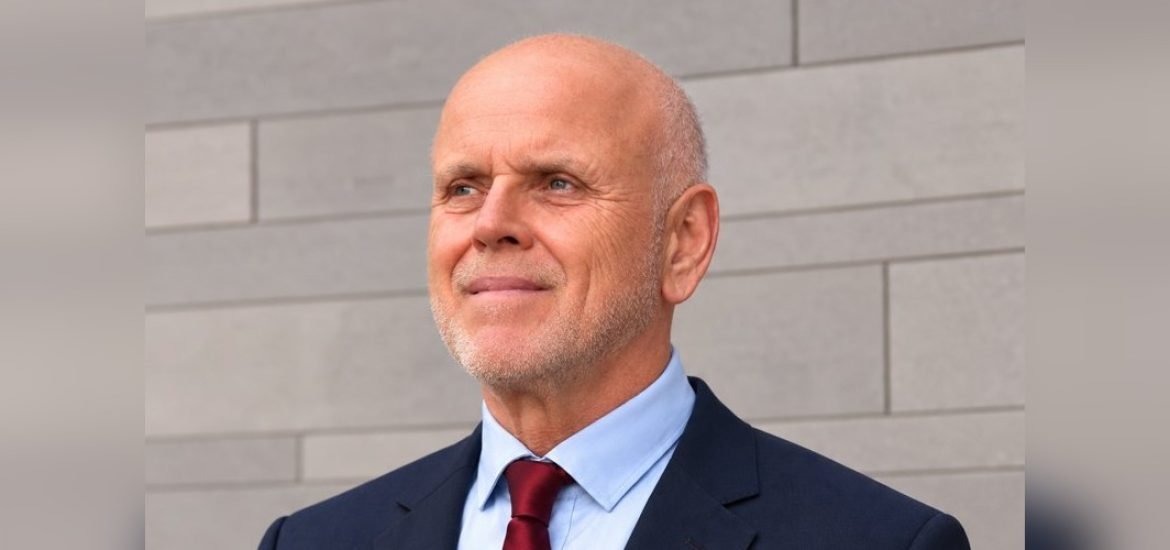
Elected unanimously in Tirana in September 2026 as President of the Union of European Academies for Sciences Applied to Agriculture, Food and Nature (UEAA) for 2026–2028, Albanian-born horticultural scientist Nazim S. Gruda answers questions from The European Scientist. In this first part of our interview, he explains what the UEAA is for, how a network of European agricultural academies with no budget of its own can feed evidence into EU policy, from new genomic techniques to the CAP, and why young researchers should help set the agenda.
Prof. Dr. Nazim S. Gruda is an internationally recognised expert in innovative, sustainable horticulture. He chairs the ISHS Division of Greenhouse and Indoor Production Horticulture and is Editor-in-Chief of both the International Journal of Vegetable Science and the Encyclopedia of Vegetable Science. With more than 450 publications (225+ indexed in Scopus), he is among the most-cited scientists in his field. He has been a Courtesy Associate Professor at the University of Florida (2003) and a Visiting Research Scholar at Virginia Tech (2007). His honours include the Dr. Heinrich Baur Prize (TU Munich, 2003), the National Prize of the Academy of Sciences of Albania (2017), the Distinguished Scientist Award of the Chinese Academy of Sciences (2020 and 2025) and Honorary Membership of the ISHS (2026). He is a Corresponding Member of the Accademia dei Georgofili (Italy), an Honorary Member of the Romanian Academy of Agricultural and Forestry Sciences, a Foreign Member of the Lithuanian Academy of Sciences and a Full Member of the Academy of Sciences of Albania.
Photo of Nazim S. Gruda: Hoehnel, 2026.
From Tirana to Bonn: a horticultural scientist at the helm of the UEAA
The European Scientist: Your career has taken you from the Agricultural University of Tirana to the Technical University of Munich, Humboldt-Universität zu Berlin, and the University of Bonn, and to vegetable and greenhouse research that is cited worldwide. How has this Albanian–German path shaped the way you see European agriculture? What is the one lesson from horticulture that you think policymakers most often miss?
Nazim S. Gruda: My university education in Tirana grounded me in agronomy and the realities of practical production. My work at German universities deepened my understanding of plant responses, experimental research, and managing growing conditions. This journey taught me that European agriculture cannot follow a single model. A greenhouse suited to northern Europe may make little economic or environmental sense in the Mediterranean. Technology developed for large farms may require shared services, cooperatives, or tailored advice to benefit smaller producers. European cooperation works best when it combines scientific exchange with local adaptation.
A lesson policymakers often miss is that success depends on the whole production system, not a single technology or input. In a greenhouse, temperature, light, water, nutrients, and plant health interact. Improving one indicator can create problems elsewhere.
Environmental targets therefore need practical alternatives, sound research, and advice farmers can use. Their success should be judged by measurable environmental benefits, crop quality, and economic viability under real growing conditions. When regulations overlook these relationships, they risk losing farmers’ confidence and cooperation. Agriculture needs sustained investment in research, innovation, and knowledge transfer, along with support that helps farmers manage the transition.
TES: You were elected unanimously in Tirana for 2026–2028, with Prof. Simone Orlandini (Accademia dei Georgofili) as vice-president. What are the two or three priorities of your action plan for 2026–2028? By what concrete measure would you judge your mandate a success in 2028?
N.S.G.: Together with Vice-President Professor Simone Orlandini and the Steering Committee, we will focus on two overarching priorities: strengthening UEAA’s contribution to European policymaking and deepening scientific cooperation among academies. Expanding our network and giving young scientists an active role will help us achieve both.
In other words, we aim to translate our collective expertise into timely, evidence-based recommendations on agriculture, food, and natural resources. Joint scientific activities should give smaller and less-represented academies a stronger voice while providing meaningful opportunities for young researchers to contribute.
By 2028, I will judge success by what we achieve together, not by the number of meetings held. Concrete signs of success would include joint initiatives involving young scientists and direct exchanges with European policymakers on how our recommendations could inform policy.
Having run in a marathon relay in Bonn, I see a parallel: every two years, we pass the baton, while the outgoing president remains involved. Our strategy must therefore look beyond any single presidency. That is why we have decided to develop a four- to five-year plan for our members to discuss and adopt. Ultimately, a successful mandate should leave UEAA more visible, better connected and more useful to its members.
TES: Many people outside academic circles have never heard of the UEAA. If you had to make the case for it to a farmer, a European Commission official and a young researcher, what would you tell each of them?
N.S.G.: To a farmer, I would say: We work to bring agricultural science and practical experience, grounded in research results, into policy discussions. Your knowledge matters, because recommendations must work under real growing conditions and support a viable livelihood.
To a European Commission official, I would say: We offer access to expertise across Europe’s academies, combining different disciplines and regional perspectives. We can help you assess evidence, identify trade-offs and develop policies that reconcile environmental ambitions with the realities of production.
To a young researcher in our field, I would say: The UEAA is your gateway to Europe. We give you a platform to connect beyond your institution and country, collaborate with leading scientists, and contribute to discussions where research meets policy.
Ultimately, UEAA’s value lies in connecting people who too often work separately: those who produce food, those who generate knowledge, and those who make policy. Its credibility depends on making those connections useful.
The UEAA, its network of academies and the science–policy interface
TES: The UEAA brings together academies from across Europe, inside and outside the EU, with very different traditions and resources. In practice, how does it reach a common position, for example on new genomic techniques, where it published several statements between 2024 and 2026? And how do you handle disagreements between member academies?
N.S.G.: UEAA develops its scientific positions through thematic electronic working groups (eWGs), bringing together specialists from member academies, including experts beyond the Steering Committee. They assess evidence and prepare contributions for discussion within the Union.
New genomic techniques illustrate this process. Following the 2018 Court of Justice ruling, UEAA challenged the application of the existing EU GMO framework to genome editing. Drawing on its eWG’s analysis, UEAA proposed a regulatory framework for genome-editing research and development in plants and animals, including draft legislative provisions (UEAA, Paris–Tbilisi, 3 January 2022). The General Assembly adopted a motion on gene editing in October 2024. In April 2025, UEAA published a position paper examining the European Parliament’s and Council’s proposals and identifying possible ways forward.
The working groups’ findings inform discussion within the Steering Committee and, where needed, the wider membership. When views differ, we distinguish disagreements about scientific evidence from differences in national circumstances or policy preferences. We consult the academies concerned and take time to clarify these issues before adopting a common position. A common position is valuable when it reflects well-founded agreement; unresolved differences should remain visible. Our diversity strengthens our advice when we examine those differences openly.
TES: Who in Brussels actually listens to the UEAA? You contributed to the Strategic Dialogue on the Future of EU Agriculture in 2024. Can you give a concrete example where academy input has changed, or should have changed, a European decision?
N.S.G.: UEAA has had direct exchanges with European policymakers: in 2017, representatives of our leadership and CAP working group presented proposals to the then Agriculture Commissioner, Phil Hogan. In 2024, the group was again invited to contribute, this time to the Strategic Dialogue on the Future of EU Agriculture. Its written recommendations called for phasing out harmful subsidies, rewarding environmental and climate services, strengthening risk management, and investing in agricultural knowledge and innovation.
On forestry, representatives of the Czech, Swedish and French academies also discussed a joint statement directly with the Commission’s forestry team. On genome editing, UEAA engaged directly with the Commission’s Directorate-General for Health and Food Safety in 2022 and contributed to its public consultation. These exchanges demonstrate that our expertise has channels into European policymaking. We welcomed the European Parliament’s adoption of the NGT Regulation in June 2026. It aligned with the direction we advocated, but it would be misleading to attribute the decision solely to our recommendations.
We provide policymakers with a scientific basis for their choices and challenge proposals when the evidence warrants it. Sustained, independent advice helps shape their questions and the options they consider.
TES: The UEAA has no budget of its own, and its Steering Committee recently decided that it was “still too early” to create one. Can an organisation running on volunteers and electronic working groups (CAP, forests, gene editing and now water) carry real weight against well-funded lobbies and NGOs? What would you change?
N.S.G.: UEAA has no budget of its own, but it draws on the resources and expertise of its member academies. They host symposia and support joint activities; the Union coordinates these contributions and builds cross-border cooperation.
We cannot match well-funded industry associations in staffing or expenditure. Our strength lies in scientific credibility, independence of judgement and expertise spanning different national contexts. eWGs allow specialists from different academies to collaborate without a large central administration. Their effectiveness depends on clear tasks, coordination and timely delivery. Influence comes from being useful at the right moment.
To strengthen our impact, we should ensure continuity: reliable administrative support, clear responsibilities and the capacity to respond promptly when European institutions request scientific input. Experts need support to turn their knowledge into timely, accessible policy briefs.
The Steering Committee’s decision leaves room to consider these needs carefully. We need to consider which organisational and financial arrangements would best support our work, while maintaining transparency and scientific independence. Decisions on their form and timing will be taken collectively with member academies as part of our longer-term strategy.
TES: In 2026 you supported a young European scientists’ initiative to build a European platform with the UEAA. What role should early-career researchers play in academies that are often seen as gatherings of senior, even emeritus, scientists?
N.S.G.: When I became Vice-President in 2024, engaging young scientists was one of my priorities. Discussions with the Lithuanian Academy of Sciences developed into concrete cooperation, and in February 2026 it and its Young Academy organised the inaugural meeting for a proposed European Platform of Young Scientists, with UEAA’s support. The platform will be independent and led by young researchers, while maintaining a strategic relationship with our Union.
Senior scientists bring experience and judgement; young researchers bring fresh ideas and momentum. Early-career researchers contribute emerging methods, digital skills and first-hand knowledge of the pressures facing research careers today. Their involvement can help academies identify questions and approaches that established structures might overlook.
This must also happen within national academies. A European platform can connect and amplify participation, but it needs strong foundations in its member institutions.
I want young researchers to help set agendas, lead joint initiatives, and contribute to scientific recommendations. Europe’s agricultural transition will extend beyond 2050, and the generation that will live with today’s decisions should help shape them. In Tirana, we agreed that, once established, the platform will have one representative serving as an ex-officio member of the UEAA Steering Committee.
The second part of this interview will be published shortly.
Interview by The European Scientist