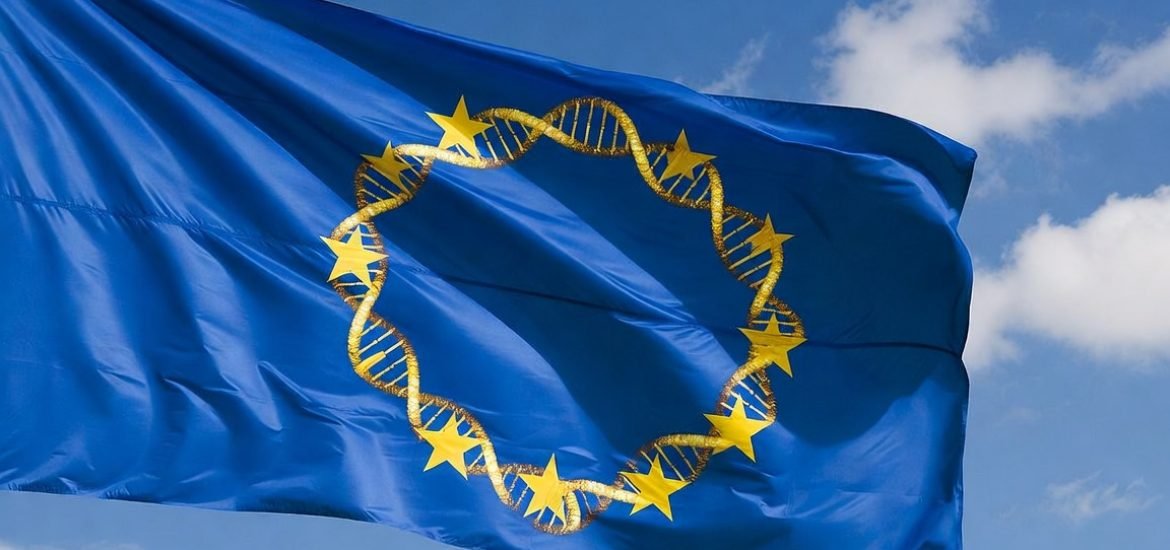
Seven years ago, the process of revising European regulations on NGTs—New Genomic Techniques, the acronym proposed by the European Commission in 2021—was set in motion. This long and demanding procedure has now culminated in a positive vote by the European Parliament on 17 June 2026. The adopted text is expected to enter into force 20 days after its publication in the Official Journal of the European Union and must be implemented within two years at the latest. During that period, the legal criteria will be established to determine whether a new plant derived from NGTs should follow a lighter, conventional market-entry pathway or remain subject to GMO authorization under Directive 2001/18.
The road to this outcome was anything but smooth. It was marked by attempts at parliamentary obstruction, suspicious computer “irregularities” that were ultimately corrected, and successive waves of amendments designed to delay votes in parliamentary bodies. These tactics formed part of a broader campaign led by long-standing opponents of plant biotechnology—anti-GMO yesterday, anti-NGT today—who count influential Members of the European Parliament (MEPs) and several well-connected Brussels lobbies among their ranks.
The procedure itself was also complex, involving numerous public consultations intended to include economic and social stakeholders at every stage of the decision-making process. This institutional obstacle course has only just come to an end. What progress does the new European framework for NGTs deliver? And will it be sufficient to meet the challenges of globalization, in which the European Union is fully engaged?
A long process strewn with obstacles
On 8 November 2019, the European Council asked the European Commission (EC) to submit proposals to update legislation on new biotechnologies. This followed the judgment of the Court of Justice of the European Union (CJEU) of 25 July 2018, which held that all products derived from new genome-modification techniques developed after 2001 must, without exception, be regarded as GMOs. That judgment placed the European Union (EU) at odds with the globalization of agricultural trade and with the regulatory approaches adopted by its main partners. Indeed, many countries across all five continents rapidly introduced new rules under which most NGT products are regulated not as GMOs but as conventional products.
The Commission therefore commissioned studies from the JRC (Joint Research Centre) on the state of the art and on developments in research and development. In April 2021, drawing on those findings, the EC sent an official letter to Portugal, which then held the rotating Presidency of the European Union, asking it to initiate a European process to update the regulation. The following phase, known as the road map, ended in October 2022 with the collection of views from European citizens, economic actors, and various organizations on the proposals under consideration. This stage was not without turbulence: “computer irregularities”—an excessive number of identical “citizen” responses—were detected and corrected.
The process continued with a public consultation held from 22 April to 22 July 2022, in which 80% of respondents supported regulatory change, while 17% opposed it. On that basis, the EC published a regulatory proposal on 5 July 2023. The proposal was submitted for public comment and then debated in several European bodies, including the European Parliament’s ENVI Committee and subsequently Parliament in plenary session. It was adopted there by a very narrow majority: 307 votes in favor, 263 against, and 41 abstentions. Most right-wing and center-right MEPs voted in favor, while the Left and the Greens rejected it almost unanimously. A trilogue consultation among the European Commission, the European Parliament, and the European Council then led to an agreement signed on 4 December 2025. After one final parliamentary episode—three MEPs from the Greens/EFA, The Left and S&D groups, long-standing fierce opponents of genetic progress in agriculture, had tabled no fewer than 37 amendments, all of which were rejected—the text was finally adopted on 17 June 2026. Particular mention should be made of the perseverance shown by Swedish MEP Jessica Polfjärd, the rapporteur for this file, in defending it.
A limited easing of European regulation: NGT-1 and NGT-2 plants
What new regulatory provisions will come into force?
- NGT-1
The proposed regulatory easing applies only to certain genetic modifications in plants designated as NGT-1 plants, “with a limited number and type of changes that could have occurred through conventional breeding “ (1). These are changes comparable to those obtained through classical techniques such as mutagenesis, without the addition of foreign DNA and with no more than 20 modified nucleotides. Once it has been verified that they meet the criteria for NGT-1 status, these plants will be treated like conventional plants.
NGT-1 varieties will be recorded in a public EU database, and all seed bags and reproductive material will have to be labeled so that farmers can make an informed choice of genetic material. The resulting plants, however, will not be labeled on store shelves, since their characteristics cannot be distinguished from those of conventional products.
To be classified as NGT-1 by European authorities, these varieties must also display traits that help them cope with climate change, resist biological attacks such as insect pests and diseases, increase yields, or reduce the need for pesticides. As indicated, “the regulation makes it mandatory to monitor the sustainability impacts of NGT plants.”
- NGT-2
Plants known as NGT-2 are excluded from this regulatory easing. They are obtained through more extensive techniques or complex genomic modifications and will remain strictly subject to European GMO regulations—Directive 2001/18 and related regulations. They will therefore have to obtain marketing authorization through this costly and specific procedure, which some regard as obsolete. To ensure full traceability, NGT-2 plants will have to be labeled as such “from farm to fork.”
Member States will remain free to restrict or prohibit their cultivation, even if the plants are authorized at EU level. The Portuguese example nevertheless shows that coexistence between conventional and genetically modified crops is entirely feasible (2).
The rules apply both to plants originating in Europe and to imported genome-edited plants; in each case, it will be necessary to determine whether the genetic modifications involved fall within the NGT-1 or NGT-2 category.
- Exclusion from NGT-1 at the request of the European Parliament
Plants genetically modified for herbicide tolerance or to produce insecticidal substances will fall under NGT-2 regulation. In other words, varieties carrying genetic modifications that confer tolerance to glyphosate, which is widely used for weed control before sowing, notably in conservation agriculture, as well as those that protect themselves by biosynthesizing an insecticidal molecule, are excluded from regulatory easing. The typical European example is the Bt protein, which enables transgenic maize MON 810—the only GMO currently cultivated in the EU—to resist the European corn borer (Ostrinia nubilalis) and the Mediterranean corn borer (Sesamia nonagrioides), two major lepidopteran pests of this crop. This legislative provision is purely ideological, and the flood of amendments—more than 1,200—that polluted the parliamentary debate undoubtedly contributed to it.
- Organic farming
No NGT plant is authorized in organic farming. However, “the technically unavoidable presence of NGT-1 plants would not constitute non-compliance.”. The European Commission has also set itself the objective of assessing “whether this regulation creates any administrative, economic, or practical burdens for organic operators, including relating to their own perception and that of consumers” (1).
- Intellectual property
The issue of intellectual property gave rise to heated debate, as amendments adopted by the European Parliament in March 2024 sought to exclude NGT varietal innovations from patentability. However, the December 2025 trilogue concluded that patent rules for these new plants obtained through NGTs must fall under the EU Biotechnology Directive. Under the newly adopted regulation, NGT plants may be patented, except where the traits or modified genetic sequences occur naturally or are obtained by biological means.
It is further specified that “MEPs inserted safeguards to prevent market concentration and to ensure affordability and fair access for farmers, so that they retain the right to save and replant seeds.”
Does this restrictive regulation meet the challenges?
More than 35 countries have already joined the race for varietal innovation through NGTs, and around fifteen have reached the field-trial stage. Among the most active research countries are China, by a wide margin, followed by the United States, then the European Union—particularly France, Germany, and Italy—South Korea, Japan, the United Kingdom, India, and Australia. According to the U.S. science information site Genetic Literacy Project (3), around ten genome-edited plants have now been approved for commercialization by regulatory authorities in five countries: the United States, Japan, Canada, China, and the Philippines. A functional tomato intended to help address hypertension has been marketed in Japan since 2022, while a soybean with an improved nutritional profile has been marketed in the United States (2). China, which accounts for nearly 58% of genome-editing work and is therefore the world leader in the field, is commercializing these plants only gradually. By early 2026, just seven varieties had received marketing authorization: one wheat variety, five soybean varieties, and one rice variety, all with improved disease resistance, agronomic traits, or nutritional characteristics (4).
The January 2026 Bulletin of the French Association for Plant Biotechnology (4) reports 1,000 studies devoted to varietal improvement through genome editing. Seventy-two plant species are involved, with five species accounting for three quarters of the work: rice, tomato, soybean, maize, and wheat. In 94.7% of cases, the genetic modifications are minor and are produced using techniques that cannot be detected by the methods used to identify transgenesis. The modifications concern tolerance to biotic stresses—diseases and pests—in 21.8% of research projects; abiotic stresses such as water stress in 10.6%; herbicide tolerance to facilitate weeding in 5.9%; increased field yields in 21.6%; food quality, including color and flavor, in 25.6%; improved resilience during storage in 2.8%; and various industrial applications in 11.7%.
It is now well established that genome editing can, with minimal genetic modifications, bring about marked epigenetic changes. This is undoubtedly what the European seed sector is relying on as it welcomes the regulatory progress achieved. But will that progress be enough for the European Union—which became known in the twentieth century for its de facto rejection of transgenic crops—to equip itself fully for the twenty-first-century biotechnological revolution, namely NGTs? Will it be ready, with these new rules, to face ongoing geopolitical upheavals and the emerging global economic order?
Conclusion
The new regulation has therefore defined two categories of plants, NGT-1 and NGT-2, each subject to different legal obligations, while NGT-2 plants continue to be regulated as GMOs.
For the time being, micro-organisms and animals have been excluded from the new regulations—an exclusion that, according to whispers in ministerial corridors, may only be temporary, but is nevertheless surprising. Should we recall the historic role played by transgenic micro-organisms in the biosynthesis of human insulin, which revolutionized diabetes treatment? Or should we overlook the research carried out in the United States and China using NGT techniques to improve animal welfare and health—for example, by avoiding the chemical or surgical castration of pigs, as in research conducted by Acceligen in Minnesota, or by reducing piglets’ sensitivity to cold and their winter mortality, as in research by the Chinese Academy of Sciences in Beijing? (2). Can the European Union afford to deprive itself of genome editing in these two areas?
As regards plants, the ISF (International Seed Federation), through its Secretary General Michael Keller, recently stressed that “policies need to evolve as science evolves,” calling for breeders to have access to the full range of available technologies rather than being constrained by “the patchwork of conflicting rules” (5). In line with this insightful observation, genetic progress could provide a response commensurate with the global challenges of agricultural development and sustainability, but only under clear and fair regulatory rules.
References
- New genomic techniques for plants to boost innovation in sustainable agriculture | News | European Parliament 17 June 2026
- Catherine Regnault-Roger (2023), Biotech Challenges, Springer Nature, 157 pages
- Genetic Literacy Project (2026) Regulation Tracker Agriculture, https://crispr-gene-editing-regs-tracker.geneticliteracyproject.org/#jet-tabs-control-1401
- Biotechnologies végétales Info (2026) dossier Intégration des NGT dans les choix stratégiques, n°38, p4
- Olivier Morrison (2026) A map that’s green everywhere’: ISF chief pushes for global alignment on gene-edited seeds. AgTechNavigator, 18 February 2026. https://www.agtechnavigator.com/Article/2026/02/18/isf-chief-pushes-for-global-alignment-on-geneedited-seeds/
Read also
Targeted modifications of living organisms: Time has come to change the European regulation
This post is also available in: FR
Excellent article. And I fully support the viewpoint of the author. And add further that we need to move towards global harmonization of the regulatory framework and facilitate not only development of improved crop varieties but also their access by smallholder farmers world-wide.