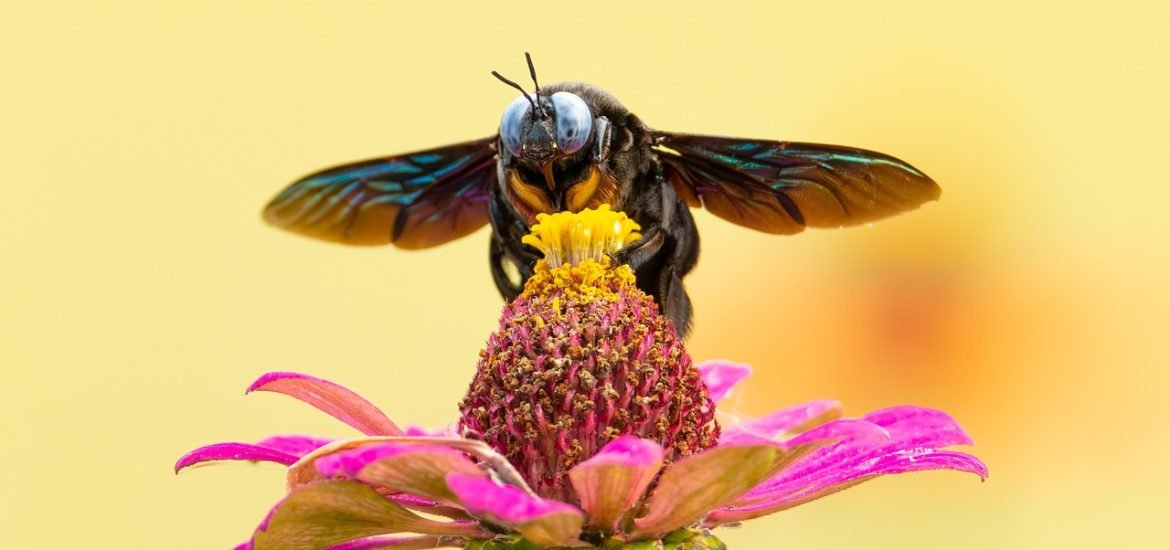
Bees, moths, butterflies, beetles, and hoverflies do far more than buzz around gardens, they keep Europe’s food supply and economy running. Now, a major new report warns that if the European Union doesn’t take urgent action to reverse the decline of these pollinators, the consequences could be severe.
The warning comes from a White Paper backed by eight EU-funded research projects and written by 135 leading European scientists from fields including ecology, economics, social science, psychology, law, and political science. Their message is clear: Europe’s approach to protecting pollinators is fragmented and inconsistent, and a much more coordinated effort is needed before it’s too late.
Most people associate pollinators with food. Without insects to pollinate crops, much of what we eat simply wouldn’t grow. But the report points out that the impact of pollinator loss goes well beyond the dinner table. Flowering plants that depend on pollination also feed into supply chains for medicines, food supplements, energy crops, textiles, cosmetics, animal feed, and even art, culture, and tourism. A collapse in pollinator populations would ripple across huge parts of the European economy.
So why are pollinators in trouble? The report traces the root of the problem to a deeper issue: the way society thinks about nature. Treating the natural world as a resource to be used for short-term gain has led to farming practices and institutional structures that damage the ecosystems pollinators depend on. The researchers argue that this mindset needs to change if real progress is going to be made.
A major barrier, according to the report, is the way the EU itself is organized. Responsibility for issues affecting pollinators is spread across different policy areas, including agriculture, environment, chemicals, trade, finance, planning, and education, with little coordination between them. This fragmented approach means that policies designed to help in one area can end up causing harm in another. The authors say the EU and its member states need to make what they call “Pollinator Stewardship” a clear, measurable priority across all of these sectors.
One particularly striking finding is how little many people actually know about pollinators, even those whose daily work directly affects them. Farmers, land managers, urban planners, and other professionals often want to help, but don’t have the knowledge they need to make a real difference. The report calls for pollinator education to be built into professional training across all relevant industries.
Professor Jeroen van der Sluijs, the report’s lead author, illustrates this gap vividly: “Many farmers plant wildflower strips along their fields, but almost no one knows that some moths are more effective pollinators than honeybees. These little creatures of the night, clothed in velvet and moonlit dust, need host plants for their larvae, not only flowers. Host plants for pollinating hoverflies, beetles and moths are missing in most seed-mixtures for flower strips.”
It’s a telling example. Even well-intentioned conservation efforts can fall short when they’re based on an incomplete understanding of what pollinators actually need. Wildflower strips are a good start, but if they don’t include the right plants for the full range of pollinating insects, not just honeybees, they won’t solve the problem.
The report doesn’t just diagnose the issue; it offers a way forward. It concludes with a detailed roadmap of 15 evidence-based recommendations designed to reverse pollinator decline across Europe. These span policy reform, better coordination between government departments, improved education, and changes to agricultural practices.
The underlying message is one of urgency. Pollinators underpin so much of what European society depends on — from food security to economic stability to the health of natural landscapes — that allowing their decline to continue is a risk Europe simply can’t afford to take.
Full White Paper can be accessed at https://zenodo.org/records/20715669