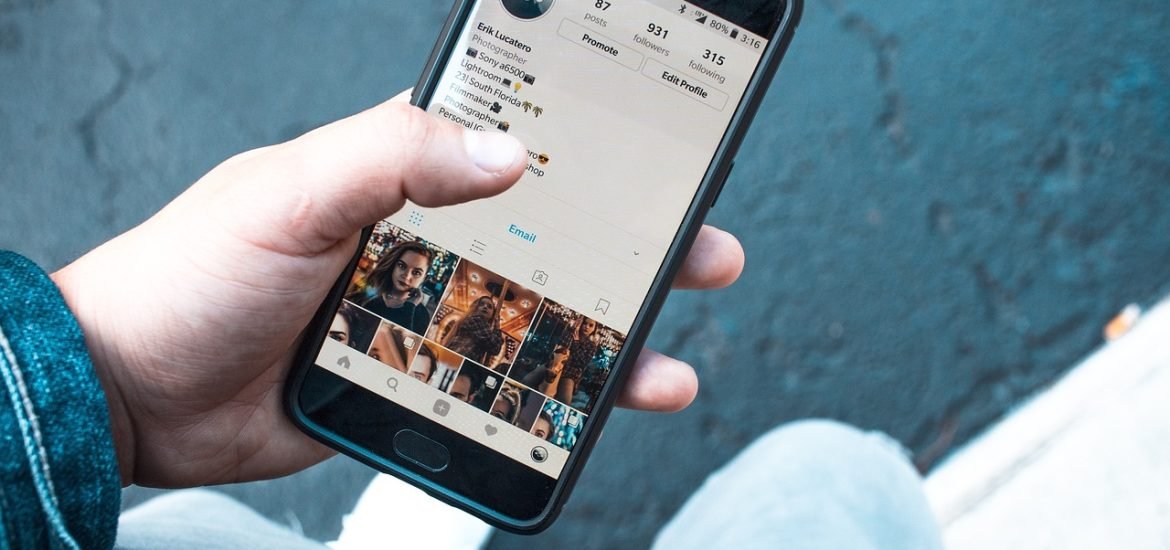
Spending years on Instagram might do more than shape how you feel about your looks, it could actually affect your brain’s ability to recognize your own face as yours, according to a study published in the journal Computers in Human Behavior.
The study, led by researchers at Università Cattolica del Sacro Cuore in Milan, Italy, introduces what the researchers call the “Digital Erosion of Bodily Identity Hypothesis.” The idea is that years of scrolling through selfies, filtered faces, and digitally altered images can gradually weaken the mental boundaries that help us see our own faces as uniquely ours. Put simply, if we spend enough time in a digital world where everyone’s face starts to look the same, we may begin to lose touch with what makes us look and feel like ourselves.
This matters because our sense of identity is more physical than most people realize. Every day, your brain is constantly combining internal signals, like your heartbeat and the position of your limbs, with what you see and feel from the outside world. That ongoing process is what creates the basic feeling that your body belongs to you and that you’re a distinct person. When that process is disrupted, it can become harder to feel grounded in your own body, read your own emotions, or maintain a clear sense of where “you” end and others begin. Disruptions like these are known to be linked to conditions such as eating disorders and dissociative disorders.
To test whether heavy Instagram use might be connected to these deeper identity processes, the researchers recruited 95 young adults with an average age of 26, each with roughly eight years of Instagram history. Participants were placed in virtual reality experiences designed to temporarily trick the brain into feeling that a stranger’s face or body belongs to them. These “body illusions” are a well-established tool in neuroscience for measuring how flexible a person’s sense of bodily identity is. The easier it is for someone to feel that a stranger’s face is their own, the more malleable their sense of self.
The results revealed a clear pattern: the longer someone had been using Instagram, the more likely they were to perceive a stranger’s face in virtual reality as their own. This connection was specific to the face, arguably the most personal and recognizable part of the body.
Professor Giuseppe Riva, who coordinated the research, explained that “it is through our faces that we recognize ourselves in the mirror, construct our individuality, and are recognized by others. In other words, the association does not emerge in any bodily representation, but precisely in the part of the body most closely linked to the sense of who we are.”
The researchers were careful to point out that the study doesn’t prove Instagram directly causes mental health problems, or that these changes are necessarily harmful. But it does open up a new way of thinking about what social media might be doing beneath the surface, not just to our self-esteem, but to something more fundamental about how we experience being ourselves.
And there’s a broader concern about younger users. The people in this study were among the first generation to grow up with social media, typically starting in their late teens. Today’s children and adolescents are encountering these platforms much earlier and spending even more time on them.
Dr. Maria Sansoni, who led the study, said “The participants involved in the study belong to the first generation to grow up with social media: they began using these platforms in late adolescence and have integrated them into their daily lives for almost a decade. If associations with processes fundamental to the construction of bodily identity are already emerging in these young adults, the question that arises concerns the new generations and new adolescents, who come into contact with these technologies at an increasingly early age and for increasingly longer periods of time.”
It’s a question that, as social media continues to evolve, researchers and parents alike will likely be grappling with for years to come.
Sansoni M, Portingale J, De Gaspari S et al. Blurring the boundaries of the self: Instagram’s impact on bodily identity and multisensory experience among young adults. Computers in Human Behavior, 183, 109054. https://www.sciencedirect.com/science/article/pii/S0747563226001512