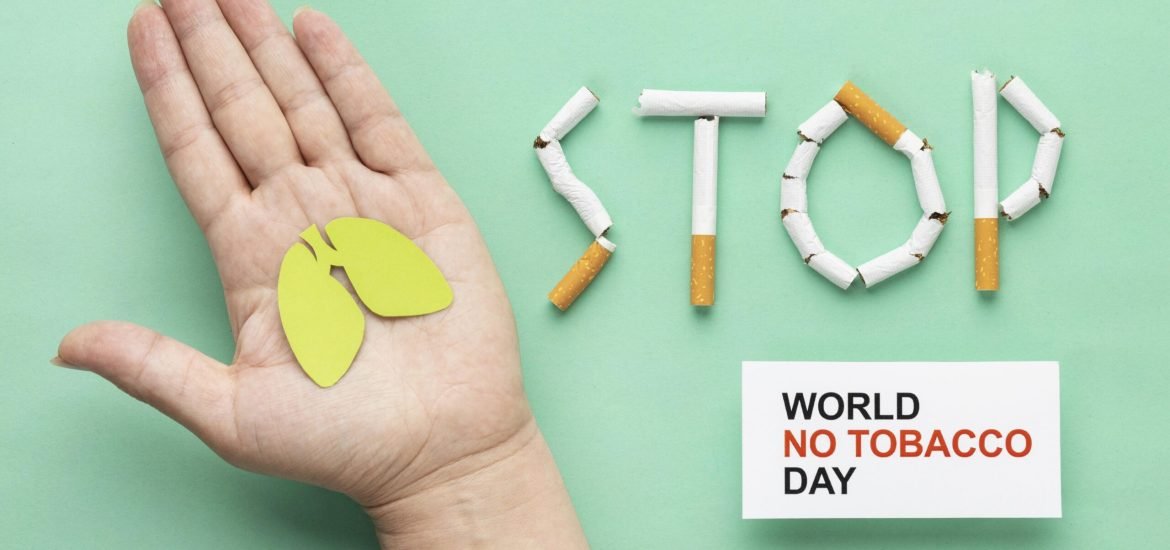
As the global public health community observes World No Tobacco Day on May 31, the conversation naturally turns to evaluating policy milestones. The 2026 theme, “Unmasking the appeal, countering nicotine and tobacco addiction,” aims to expose evolving industry strategies and advocate for stronger policy action and stricter regulation [1]. Amid these global campaigns, policymakers often look for international champions – countries that have successfully implemented comprehensive tobacco-control frameworks.
Türkiye presents one of the most striking case studies in modern tobacco control. By conventional metrics, it is an undeniable success story [2,3]. However, a deeper look at the epidemiological and market data raises a critical question: should policy success be judged by the laws drafted, or by actual reductions in smoking?
The pinnacle of policy compliance
When the World Health Organization (WHO) introduced its MPOWER technical package to help countries reduce tobacco demand, Türkiye was quick to act. WHO has described Türkiye as the first country to achieve all six MPOWER measures at the highest level, following major reforms that included 100% smoke-free indoor public places and broader tobacco-control measures [2]. From 2008 onward, Türkiye legislated smoke-free rules, comprehensive bans on tobacco advertising, promotion and sponsorship, a tax burden above 75%, pictorial health warnings, plain packaging, mass-media campaigns and a quitline service [3]. On paper, Türkiye has built an ideal regulatory environment for reducing tobacco use.
Strong laws, stubborn tobacco use
Yet the real-world results have been disappointing. Surveys show that tobacco use in Türkiye has stalled or even risen after earlier declines. Recent national survey data indicate that 34.8% of adults use tobacco products [4]. This is higher than the 2017 estimate of 31.5% [5]. Passive exposure also increased, including at home and in workplaces. Earlier reports found a similar pattern: smoking prevalence declined between 2008 and 2012 but “largely returned to 2008 levels” by 2016 [6]. In short, decades of strong laws have not driven smoking prevalence down to low levels. In OECD’s 2025 comparative data, Türkiye is among the OECD countries with the highest smoking prevalence, with a smoking rate roughly twice the OECD average [7].
Cigarette consumption statistics paint a similar picture. Per-capita cigarette sales rose from 1,266 sticks in 2010 to 1,609 sticks in 2023, a 27% increase. Fine-cut tobacco consumption per capita rose from almost zero to 107 grams over the same period, reflecting the role of tax and price incentives in consumer substitution [6]. A recent industry report also described Türkiye as a “growing industry,” where total combustible cigarette-market volume have increased by approximately 8.8% in 2025 (this is a derived estimate from company-reported data, not an official national sales statistic) [8].
In other words, strong laws on paper have not translated into steady declines in cigarette use or consumption. This does not show that tobacco-control measures do not work in general. Rather, the available evidence suggests that enforcement, affordability and tax design in Türkiye deserve closer evaluation. Recent analyses point to inconsistent enforcement and weakening compliance with indoor smoking restrictions in some hospitality venues over time [9-11].
The impact of taxation also depends heavily on inflation and income growth. Periods in which cigarette prices rise more slowly than inflation and household income can allow cigarettes to remain relatively affordable. When tax increases do bite, they can also trigger substitution into cheaper combustible products. Between 2010 and 2023, per-capita consumption of fine-cut (roll-your-own) tobacco rose sharply as consumers sought cheaper, much less taxed alternatives to manufactured cigarettes. In other words, instead of quitting, some heavily taxed smokers appear to have migrated to fine-cut tobacco [12].
A prohibition-heavy model with few legal alternatives
One distinctive feature of Türkiye’s model is its strict treatment of non-combustible nicotine products. E-cigarettes, HTP, snus and nicotine pouches are banned in the country [13]. At the same time, cigarettes remain widely available. The result is a regulatory asymmetry: the most dangerous nicotine product, the combustible cigarette, remains the dominant legal option. For adult smokers who cannot or will not quit nicotine, a system that strongly restricts non-combustible alternatives while leaving cigarettes widely available narrows the practical routes away from smoking.
Evidence from other countries suggests that restrictions on lower-risk nicotine products can have unintended effects. For example, studies have found that restrictions on tobacco alternatives were associated with higher cigarette smoking among young people or young adults [14,15]. These findings are not directly transferable to Türkiye, but they illustrate a broader principle: nicotine policy must consider how consumers respond when legal access changes.
Measuring what matters
World No Tobacco Day is often a moment for governments to highlight the laws they have passed. That is understandable, legal frameworks matter, but checklists, legislative architecture and MPOWER scores are indicators of policy effort. They are not, by themselves, proof of public-health success.
The more important indicators are outcomes: fewer people smoking, falling cigarette sales, reduced second-hand smoke exposure, stronger quit success and measurable movement away from combustible products.
Türkiye’s experience suggests several practical questions. Are smoke-free laws still being enforced consistently in the venues where violations are most likely? Are cigarette taxes keeping pace with inflation and income growth? Are cheaper combustible substitutes undermining the impact of tax policy? Are cessation services accessible and effective enough for smokers who want to quit? Does public communication distinguish adequately between nicotine use and exposure to smoke from combustion? And does the regulatory framework give adult smokers realistic pathways away from cigarettes?
These questions are not a call to abandon traditional tobacco control. They are a call to make it more outcome-focused.
Rethinking policy success
Türkiye shows why tobacco-control success cannot be measured only on paper. A country can have strong laws, high compliance with global policy frameworks and a sophisticated regulatory architecture, yet still struggle to reduce smoking and combustible tobacco use because of enforcement gaps, affordability dynamics and substitution into cheaper combustible products.
The lesson for World No Tobacco Day 2026 is not that conventional tobacco-control policies should be discarded. Smoke-free laws, advertising bans, warning labels, taxes and cessation services remain essential for public health [16]. The lesson is that they must be judged by whether they deliver sustained reductions in smoking and tobacco-related harm.
A more realistic tobacco-control strategy would combine strong enforcement, tax policy that maintains cigarette unaffordability, serious attention to preventing substitution into cheaper combustible products such as fine-cut tobacco, high-quality cessation support, better risk communication and proportionate regulation of non-combustible alternatives for adult smokers.
The goal is not more laws for their own sake. The goal is to have fewer people inhaling smoke. Until policy success is measured by outcomes rather than checklists, the world will keep celebrating victories on paper while smoking remains stubbornly present in real life.
References
- World Health Organization. (2025, October 17). World No Tobacco Day 2026: Unmasking the appeal – countering nicotine and tobacco addiction. https://www.who.int/news/item/17-10-2025-world-no-tobacco-day-2026–unmasking-the-appeal—countering-nicotine-and-tobacco-addiction
- World Health Organization. (2021, April 12). MPOWER package of data-driven tobacco control measures helps protect up to 5 billion lives. https://www.who.int/news-room/feature-stories/detail/mpower-package-of-data-driven-tobacco-control-measures-helps-protect-up-to-5-billion-lives
- Dagli Guner, E., Evrengil, E., Gezer, T., Ay, P., Yildiz, F., Pazarli, P., & Güner, M. (2024). Why is tobacco consumption increasing in Turkey? Tobacco Prevention & Cessation, 10(Supplement 1), A46. https://doi.org/10.18332/tpc/194288
- World Health Organization Regional Office for Europe. (2025, May 28). Türkiye completes national household survey on noncommunicable disease risk factors. https://www.who.int/europe/news/item/28-05-2025-turkiye-completes-national-household-survey-on-noncommunicable-disease-risk-factors
- Arslan, R., & Ergüder, T. (2025). Changes in tobacco use and associated risk factors: An evaluation of findings from the Türkiye household health survey on noncommunicable disease risk factor prevalence 2017-2023 (WHO STEPS). Turkish Journal of Tobacco Control, 5(3), 134-144. https://doi.org/10.64511/TJTC.2025.27
- Dinçer, M. (2025). Effects of tobacco products taxes on consumption in Türkiye. Eastern Mediterranean Health Journal, 31(5), 309-316. https://doi.org/10.26719/2025.31.5.309
- Organisation for Economic Co-operation and Development. (2025). Health at a glance 2025: OECD indicators. OECD Publishing. https://doi.org/10.1787/8f9e3f98-en
- Japan Tobacco Inc. (2026). 2025 earnings report. https://www.jt.com/investors/results/forecast/pdf/2025/Full_Year/20260212_06.pdf
- Ay, P., Evrengil, E., Guner, M., & Dagli, E. (2016). Noncompliance to smoke-free law: Which hospitality premises are more prone? Public Health, 141, 1-6. https://doi.org/10.1016/j.puhe.2016.08.008
- Institute for Global Tobacco Control. (2022). Compliance with smoke-free law in hospitality venues: An observational study in Turkey. Johns Hopkins Bloomberg School of Public Health. https://www.globaltobaccocontrol.org/en/resources/compliance-smoke-free-law-hospitality-venues-observational-study-turkey
- Baltacı, E., Çarkoğlu, A., Saraf, S., Ergüder, T., Ergör, G., Hayran, M., & Hoe, C. (2024). Understanding the dynamics of compliance to smoke-free policy regulations: Exploring the perspectives of venue owners and staff in Türkiye. Tobacco Induced Diseases, 22(January), 11. https://doi.org/10.18332/tid/176226
- Dinçer, M. (2025). Effects of tobacco products taxes on consumption in Türkiye. Eastern Mediterranean Health Journal, 31(5), 309-316. https://doi.org/10.26719/2025.31.5.309
- Global State of Tobacco Harm Reduction. (2026). Smoking, vaping, HTP, NRT and snus in Turkey. Knowledge•Action•Change. https://gsthr.org/countries/profile/tur/
- Friedman, A. S., Pesko, M. F., & Whitacre, B. E. (2024). Flavored e-cigarette sales restrictions and young adult tobacco use. JAMA Health Forum, 5(12), e244594. https://doi.org/10.1001/jamahealthforum.2024.4594
- Kenkel, D., Mathios, A. D., Phillips, G., Suryanarayana, R., Wang, H., & Zeng, S. (2026). The impact of tobacco regulations on smoking and vaping. Southern Economic Journal, 92(4), 956-972. https://doi.org/10.1002/soej.70019
- National Cancer Institute, & World Health Organization. (2016). The economics of tobacco and tobacco control (NCI Tobacco Control Monograph No. 21; NIH Publication No. 16-CA-8029). U.S. Department of Health and Human Services, National Institutes of Health, National Cancer Institute; World Health Organization. https://cancercontrol.cancer.gov/brp/tcrb/monographs/monograph-21
Funding / disclosure statement
This study was funded within a grant from Global Action to End Smoking (formerly known as the Foundation for a Smoke-Free World), an independent U.S. nonprofit 501(c)(3) grantmaking organization. The funder had no role in the conception, design, implementation, data analysis, interpretation of the study results, or preparation of this article.
Author details
Giorgi Mzhavanadze, MA in Economics
Affiliation 1: Healthy Initiatives (GO Zdorovi Iniciativi), 36 Rustaveli Street, Kyiv 01033, Ukraine
Affiliation 2: Knowledge-Action-Change, 8 Northumberland Avenue, London WC2N 5BY, United Kingdom
ORCID: 0000-0002-0336-311X
Email: g.mzhavanadze91@gmail.com
Giorgi Mzhavanadze works as an independent consultant on various research projects undertaken by multiple research institutions and NGOs. At the time this research was conducted, the author had a service agreement with the Ukraine-based NGO Healthy Initiatives. Healthy Initiatives is a non-profit organization aimed at promoting and strengthening public health and well-being, tackling the most urgent questions in need of an answer. The organization supports and implements projects in Eastern Europe and Central Asia to address the growing risks of non-communicable diseases.
In parallel, the author has service agreement with Knowledge-Action-Change (KAC), a UK-based private organization that focuses on harm reduction as a key public health strategy.
This study was conducted as part of the authors’ collaboration with Healthy Initiatives.
Further reading
“Evolution: There is a Tendency Toward Homo – A Paradigm Shift” Vincent Fleury (Exclusive Interview)