Paul Nioi, SVP of Research at Alnylam Pharmaceuticals, discusses the development of RNA interference (RNAi) medicines, twenty years after Fire and Mello’s Nobel Prize — from scientific discovery to an established therapeutic class — and explains why acting upstream on messenger RNA opens routes that conventional approaches struggle to match, while delivery beyond the liver remains the decisive challenge.
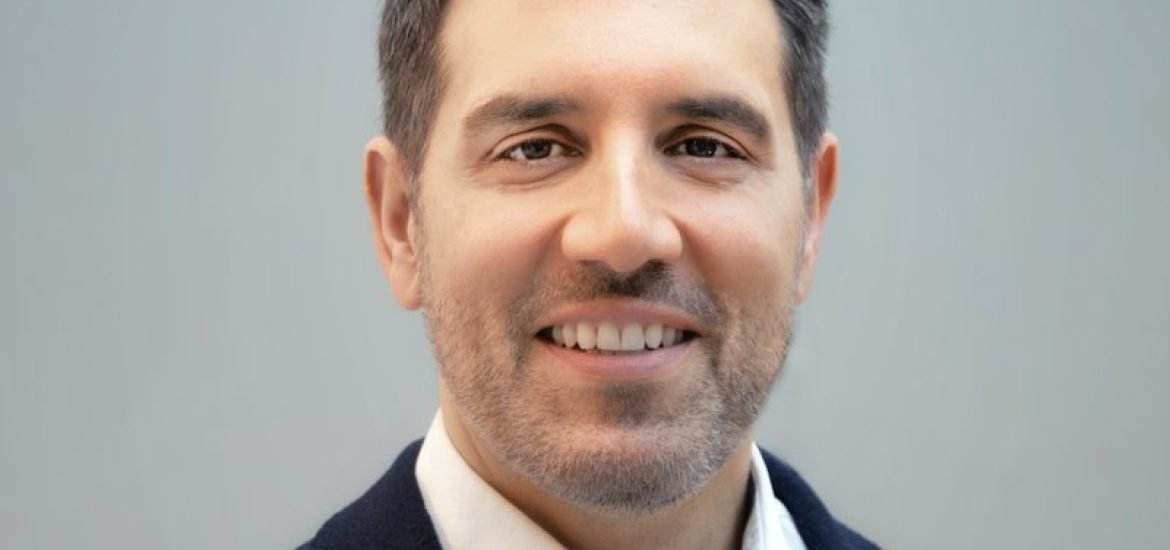
Paul Nioi, SVP of Research at Alnylam Pharmaceuticals, discusses the development of RNA interference (RNAi) medicines, twenty years after Fire and Mello’s Nobel Prize — from scientific discovery to an established therapeutic class — and explains why acting upstream on messenger RNA opens routes that conventional approaches struggle to match, while delivery beyond the liver remains the decisive challenge.
Glossary — selected technical terms
Editorial definitions for the reader (not interviewee quotes). Distinguishes reversible gene silencing from DNA modification; approved vs experimental indications.
RNAi (RNA interference). A natural cellular process in which small RNA molecules guide the cell to reduce or block the production of a specific protein by acting on the corresponding messenger RNA. Therapeutic RNAi medicines harness this mechanism. Several RNAi drugs are already approved for selected rare diseases; programmes for additional tissues and more common diseases remain in clinical development.
siRNA (small interfering RNA). A short, double-stranded RNA molecule that is the active “guide” used in many RNAi medicines. Once inside the right cell, an siRNA can direct the cell’s machinery to cut a matching mRNA, lowering production of the disease-related protein — without permanently rewriting the DNA sequence.
mRNA (messenger RNA). The working copy of a gene’s instructions that ribosomes read to make a protein. RNAi therapies typically act on mRNA, intervening after DNA has been transcribed but before the protein is produced.
Gene silencing. A reduction in a gene’s protein output, usually temporary or reversible while the medicine is active. In RNAi, silencing is achieved by degrading or blocking mRNA. This is distinct from permanently altering the DNA itself.
Gene editing. Approaches (for example CRISPR-based tools) that make lasting changes to the DNA sequence. In this interview Nioi contrasts RNAi with gene editing: RNAi does not permanently alter DNA, which he presents as a potential tolerability advantage, while acknowledging that each modality has its place.
Lipid nanoparticles (LNPs). Tiny fat-based particles used to protect fragile RNA molecules in the bloodstream and help them enter cells. Early approved RNAi delivery relied in part on this approach; Alnylam later also advanced ligand-based delivery strategies that guide siRNA to specific tissues.
Turning down the tap — RNAi as clinical reality
You compare RNAi’s ability to silence a disease-causing gene to ‘turning down the tap’, intervening upstream rather than ‘mopping up’ after the protein has been made. Twenty years after Fire and Mello’s Nobel, and eight after Alnylam’s first approved RNAi medicine, how far has that metaphor become clinical reality — and where does medicine prefer to mop rather than target the tap?
Paul Nioi : When RNA interference (RNAi) was first discovered, by Fire and Mello, the idea that we could silence a disease-causing protein sounded almost like science fiction. But it was the belief in the potential of their discovery that led to the founding of Alnylam.
We were established with a single vision: to see if we could harness RNAi as an entirely new way to treat disease. But there was still a genuine question about whether RNAi would remain an extraordinary laboratory tool, or whether it could ever become a medicine. Much of Alnylam’s history has been dedicated to answering that question and solving the scientific challenges that stood in the way.
Looking back now, with our first RNAi medicine, the world’s first approved RNAi therapeutic, eight years ago and several Alnylam-discovered RNAi medicines reaching patients since then, it’s fair to say we’ve delivered on this vision. RNAi therapeutics are an established class of medicines and we’re proud to continue to drive the field.
What makes RNAi particularly distinct is that it acts upstream at the genetic level on mRNA, ‘silencing’ the production of disease-causing proteins before they are made. This is where the tap analogy comes in – RNAi enables us to reduce the flow and address the disease at the source, rather than mopping up after the symptoms have occurred. That creates opportunities that are difficult to achieve with conventional approaches that intervene later in the disease process.
Where we can deliver an siRNA to the relevant tissue, it can also provide a long duration of action, potentially changing how physicians and patients think about treatment compared with taking a medicine every day. Additionally, unlike gene editing, it does not permanently alter the DNA, which offers a potential tolerability advantage.
That being said, every therapeutic modality has its place. Small molecules, biologics, RNAi and other modalities all offer different advantages, and the appropriate choice depends on the biology of the disease, the target and the needs of the patient.
From rare diseases to a mainstream platform
Alnylam began by translating RNAi into medicines for rare diseases; the pipeline now reaches more prevalent indications. What had to change scientifically and industrially for that expansion, and which common-disease programmes will tell us whether RNAi is a niche modality or a platform for mainstream care?
Paul Nioi : Initially, the scientific debate about whether RNAi could ever be used therapeutically was absolutely legitimate and we had to overcome numerous scientific hurdles along the way.
When you look at an siRNA molecule, it really doesn’t look like something that should become a medicine. It’s highly charged, unstable in its native form and unable to efficiently enter cells on its own.
So, there were two fundamental problems we needed to solve. First, how do you prevent an siRNA molecule from being rapidly degraded when it’s introduced into the body? Second, once you’ve stabilised that molecule, how do you deliver it to the right tissue and get it into the cells where it needs to act?
For the former we had to understand exactly what was causing these siRNA molecules to break down so quickly in the body and then develop ways to stabilise them. For the latter, we developed different approaches, including lipid nanoparticles, and ultimately landed on a ligand-based strategy – by attaching a ligand to the end of the siRNA, we could help guide the molecule to the right tissues and cells, which was a critical step in unlocking its therapeutic potential.
Those advances really created the foundation for the field as we know it today. Once we could reliably stabilise siRNA molecules and deliver them to the right tissues, the conversation shifted from asking whether RNAi could work to exploring just how broadly it could be applied.
We started in rare diseases and initially focused on tissues such as the liver. Rare diseases provided an important opportunity because the underlying genetic drivers were often well understood, allowing us to demonstrate the potential of gene silencing in a clear and meaningful way.
What I think is important to remember is that many of the technologies that underpin the field today simply didn’t exist when we started. There wasn’t a roadmap, a body of literature or an established playbook telling us how to do this. We had to continually make discoveries and develop solutions that helped pioneer many of the approaches now used across the field.
Reopening targets once written off
Conventional small molecules and antibodies struggle with many intracellular and genetic drivers. How has RNAi reopened targets once written off — and what still limits which genes you can silence in patients?
Paul Nioi : Drug development is inherently challenging and, if you look across the industry, many programmes fail because they start with the wrong biological target. Historically, a lot of our understanding has come from animal models, particularly mice, which can provide important insights but don’t always reflect human disease.
The approach I’ve always been passionate about is starting with human biology. By studying human genetics and large populations, we can begin to understand why some individuals are naturally protected from certain diseases. What is different about their biology? What mechanisms are providing that protection? And, perhaps most importantly, can we design medicines that allow more patients to potentially benefit from those same protective effects?
One of the things that’s always inspired me about RNAi is that it expands the range of biological targets we can potentially address. And it offers a different way of thinking about the problem. Rather than targeting a protein directly, it targets the messenger RNA responsible for producing that protein. This means that if a disease is driven by expression of a particular gene, RNAi can potentially provide a route to intervention even when traditional modalities can be less effective.
What limits the field today is increasingly not target selection but delivery. In tissues where RNAi therapies can be delivered efficiently, gene silencing is highly versatile. The challenge is ensuring the therapeutic reaches the correct cells while maintaining specificity, durability and a tolerable safety profile.
That is why so much attention is now focused on delivery technologies. We have already seen what is possible when delivery challenges are solved. The next wave of innovation will come from extending those capabilities into additional tissues and organ systems.
Every delivery challenge we overcome has the potential to expand the number of patients we can help. At Alnylam, we’ve already seen how translating RNAi from a scientific discovery into medicines has changed the outlook for some patients living with serious diseases. As we continue to expand into additional tissues and disease areas, we have the potential to bring the outcomes of gene silencing to many more patients who today still face significant unmet medical need.
Towards every gene — beyond the liver
Alnylam’s stated ambition is to treat every gene. For a European readership watching regulatory, manufacturing, and delivery bottlenecks, what is the realistic path from today’s liver-focused approaches to other tissues — and what would “every gene” require that we do not yet have?
Paul Nioi : I really believe we’re at the next frontier for RNAi. We’ve gone from proving that gene silencing can work to establishing RNAi as a class of medicines. What’s particularly interesting is the profile of these therapies and the potential they create for the future.
One of things I find remarkable about RNAi is that, for any tissue where we can successfully deliver an siRNA molecule, we potentially have the ability to silence any gene in the genome. Once you’ve solved the delivery challenge, that opens up an incredible range of possibilities. We’ve already demonstrated that in the liver, where RNAi has been successfully applied across multiple disease areas.
What excites me even more is that we’re now extending beyond the liver into new tissues. The brain is a great example. We have several programmes in clinical development, and we can support evidence of the ability to silence targets such as the amyloid precursor protein (APP).
That’s why I see this as such an important moment for the field. The opportunity now is to continue expanding the range of tissues, targets and diseases we can address, and I believe we’re only beginning to see what’s possible.
If we continue to make progress in genetics and delivery, we may not only expand the range of diseases RNAi can address, but may also be able to help patients who today have little or no therapeutic options. That, to me, is where the opportunity of RNAi lies.
Where Europe should place its bets
As RNAi marks this anniversary, where should European science, biotech, and health systems place their bets: discovery, delivery chemistry, rare-disease access, or scaling into cardiometabolic and other high-burden diseases?
Paul Nioi : If I had to highlight two priorities, I would point to human genetics and delivery science.
Europe has exceptional strengths in human genetics, particularly in linking genetic variation to disease. Those insights provide one of the most powerful starting points for drug discovery because they help identify targets that are directly relevant to human biology.
RNAi is especially well positioned to potentially benefit from those discoveries. Once a genetically validated target has been identified, gene silencing provides a potential mechanism for translating that insight into a therapeutic approach.
The second priority is delivery. Every time we learn how to deliver RNAi efficiently into a new tissue, it creates opportunities across multiple diseases and gene targets within that tissue – meaning you aren’t limited to creating just one medicine, you open up opportunities across many diseases. Delivery breakthroughs therefore have a multiplier effect across the entire platform.
Of course, continued investment in rare disease research and patient access remains important. But looking ahead, I believe the greatest opportunity lies in combining advances in genetics, delivery technology and clinical development.
Unlocking the heart and other tissues
Alnylam unlocked the liver for RNAi therapeutics and proved the technology could work in one tissue. How can scientists expand the applications of RNAi to other tissues such as the heart?
Paul Nioi : The central challenge as I’ve previously mentioned is delivery. In many ways, I think of it as finding the right key for the right lock. The question is: what’s the key that’s going to unlock the next tissue? What’s the ligand that can recognise a specific receptor on the surface of the cells we’re trying to reach?
We understand the biology far better than we did twenty years ago, and we now have a proven framework for solving these problems. The task in front of us is to identify the right delivery solutions for each new tissue and cell type.
The liver has been the first major success story for RNAi because researchers were able to develop highly effective ways of transporting siRNA molecules into liver cells, which is useful for a range of diseases. The same principle will apply to other tissues, including components of the cardiovascular system.
For the cardiovascular system, the challenge is understanding which receptors or transport pathways can be used to reach the relevant cells within blood vessels, arteries or the heart itself. Solving that challenge requires substantial discovery work, based on the scientific framework already in place.
That is why the future of RNAi is increasingly centred on tissue expansion – unlocking new tissues to unlock entirely new areas of medicine, to extend the impact of gene silencing far beyond where the field began.
That same thinking underpins our ambitions, at Alnylam, for our next chapter. We want to continue pushing the boundaries of what RNAi medicines can do, expanding beyond the tissues we can reach today to develop therapies that may prevent, halt, or even reverse disease.
We have set ourselves a target, by 2030, to build a pipeline of more than 40 clinical programmes and extend to 10 tissue types, significantly broadening the impact of this technology for patients and prioritising conditions where patients still have significant unmet need, including cardiovascular, metabolic and neurological diseases. We pioneered RNAi therapeutics, but I believe we’ve only begun to realise the potential of the technology.
What motivates me most though is not the technology itself, but what it could mean for patients. For many serious diseases, patients are still waiting for treatments that address the underlying cause of their condition. Every advance in delivery brings us one step closer to help change that reality and to potentially extend the benefits of RNAi medicines to many more people.
Interview by The European Scientist.
Paul Nioi — Paul Nioi is SVP of Research at Alnylam. He joined Alnylam in 2018 and is responsible for leading the Discovery and Translational Research function. He has overall responsibility for new target identification, biomarkers, and all preclinical drug discovery programs. Building on his depth of prior experience, he also oversees the Alnylam Human Genetics center, which focuses on identification of new drug targets from large genotype-phenotype datasets. Paul has more than 20 years of biotech and pharma experience, including roles of increasing responsibility at Amgen and deCODE genetics. He received a BSc in Pharmacology from the University of Edinburgh and a PhD in Molecular Biology from the University of Dundee.
Read also
- First RNA therapy gets the green light from FDA to treat rare disease
- Gene therapy: science at a crossroads
- CRISPR used directly inside a person’s body for the first time
- Germany’s First CRISPR Gene Therapy Patient Is Thriving
- Early results of the first ever in-body gene editing treatment are promising
Leave a Reply