For 19-year-old Mohammad, life used to revolve around hospital visits every three weeks for the blood transfusions to keep him alive. Now, just a few months after receiving a groundbreaking gene therapy at Berlin’s Charité – Universitätsmedizin, he no longer needs them. Mohammad is Germany’s first patient to receive an approved CRISPR-based treatment, and his doctors say the results are remarkable.
A Rare Chance for a New Life
Mohammad was born with severe beta-thalassemia, a genetic condition that stops the body from producing enough healthy haemoglobin, the molecule that carries oxygen in the blood. Without regular blood transfusions, children with the severe form of the disease don’t survive past toddler age. Around 60,000 babies worldwide are born with it each year.
For some patients, a stem cell transplant from a donor can offer a cure, but it’s only an option up to age 14. By his late teens, Mohammad had aged out of that window, leaving him without an obvious path forward, until a new option emerged.
That option was Exagamglogene Autotemcel (Exa-cel), the world’s first approved CRISPR-based therapy. It was co-developed by a company founded by Nobel laureate Prof. Emmanuelle Charpentier, who was present at Charité when Mohammad received his treatment on 28 May 2026.
“On May 28, basic research turned into medical care,” said PD Dr Lena Oevermann, senior physician at Charité’s Department of Pediatric Oncology and Hematology, who led Mohammad’s treatment.
How the Therapy Works
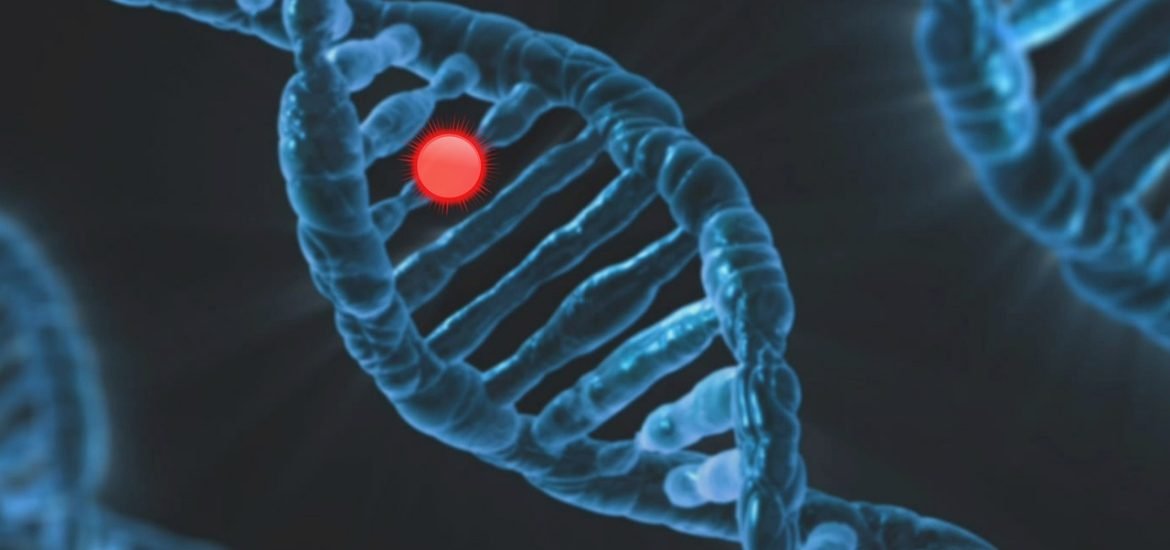
Exa-cel isn’t a drug in the usual sense; it’s a one-time cell-based gene therapy. Doctors first stimulated Mohammad’s own blood stem cells to move from his bone marrow into his bloodstream, where they could be collected. The cells were then sent to a specialist lab in the Netherlands, where CRISPR gene-editing was used to switch on a gene that normally only works in the womb, called the gamma-globin gene.
That gene produces fetal haemoglobin, a form of haemoglobin that babies make before birth and the body naturally stops producing after we’re born. Fetal haemoglobin carries oxygen just as well as the adult version, so switching it back on can effectively bypass the faulty gene that caused Mohammad’s disease.
Before the modified cells could be returned to him, Mohammad had to undergo chemotherapy to make space in his bone marrow, a process known as chemoconditioning. Then, in late May, the moment came. More than 900 million of his own gene-edited stem cells were infused back into his bloodstream.
A Rapid and Striking Recovery
Within 40 days, Mohammad’s body began producing fetal haemoglobin, which now accounts for about 85% of his total haemoglobin. His overall haemoglobin levels are already in the normal range, meaning blood transfusions are no longer needed. His immune system has recovered, and he was discharged from Charité just under six weeks after the infusion.
“It will take about half a year in total to reach full hemoglobin production. Fortunately, however, his total hemoglobin level is already within the normal range, meaning that blood transfusions are no longer necessary. Mohammad’s immune system has also regenerated, and he’s currently doing really exceptionally well,” said Dr Oevermann.
A Treatment With Trade-Offs
The therapy is powerful, but it isn’t risk-free. The chemotherapy needed to prepare the body can cause painful mucous membrane inflammation, is likely to cause infertility, and can damage the liver. Because Exa-cel is so new, researchers don’t yet know its long-term safety profile. Patients who receive the treatment must be followed up for 15 years as part of its conditional approval.
Still, for Mohammad, the shift is life-changing. “For Mohammad, an entirely new life is now beginning. After just this single dose of the gene therapy, he has the chance to lead a symptom-free, normal everyday life, and he would like to start vocational training. We wish him every success and all the best,” said Dr Oevermann.
A Milestone for Medicine
CRISPR-Cas9 was first described by Charpentier and her colleague Prof. Jennifer Doudna in 2012, work for which they won the Nobel Prize in Chemistry in 2020. Just 14 years after that initial description, the technology is now being used as a routine clinical treatment.
Prof. Heyo K. Kroemer, Chief Executive Officer of Charité, called the moment a landmark: “Now, just 14 years after it was first described, the gene-editing tool is part of a treatment that we can offer to seriously ill young patients in routine clinical practice. The fact that this therapy is now being used for the first time in Germany following its approval—here at Charité—is a milestone in medicine. Charité is committed to bringing medical progress directly to patients, and Mohammad’s treatment demonstrates what this means in practice.”