Europe’s most-used weedkiller has survived its latest day in court. On 4 November, the General Court of the European Union dismissed a legal challenge seeking to overturn glyphosate’s approval across the bloc, leaving the herbicide authorised until the end of 2033 and rejecting claims that regulators had failed to take cancer risks seriously enough.
How the Case Came About
The challenge was brought by Antidote Europe, a Strasbourg-based nonprofit, against the European Commission. Bayer (whose Roundup brand is built on glyphosate) joined the case on the Commission’s side.
The dispute goes back to the Commission’s decision in November 2023 to renew glyphosate’s EU approval for ten years. Antidote Europe asked the Commission to carry out an internal review of that decision. When the Commission refused in June 2024, the group took the matter to the General Court, asking it to annul both the refusal and the underlying renewal itself. The case, registered as T-503/24, was heard in March and decided roughly eight months later.
What the Court Actually Decided
By the time of the hearing, the case had narrowed considerably. Antidote Europe withdrew several of its original arguments, leaving two central questions: whether the Commission had properly applied the “precautionary principle,” and whether it had met its obligations under the EU’s core law on plant protection products.
The precautionary principle is worth explaining, because it sits at the heart of many European chemical regulations. In simple terms, it says regulators can act to restrict something when there is scientific uncertainty about a possible harm, rather than waiting for absolute proof. Antidote Europe argued the Commission should have erred on the side of caution and that its reliance on industry-supplied data was not enough to rule out a long-term cancer risk.
The court disagreed on both counts. It held that the precautionary principle does not require regulators to obtain cast-iron proof that a substance is safe before approving it. The Commission, acting as “risk manager,” was entitled to rely on what the court described as a scientifically exhaustive assessment carried out before the 2023 renewal. On that basis, it dismissed the case in full.
The court also excluded two scientific studies, from 2021 and 2023, on procedural grounds: because they had not been raised in the original review request, they could not be introduced for the first time in the court filing. Antidote Europe was ordered to pay the Commission’s legal costs, while Bayer covered its own.
A Weedkiller Under Permanent Scrutiny
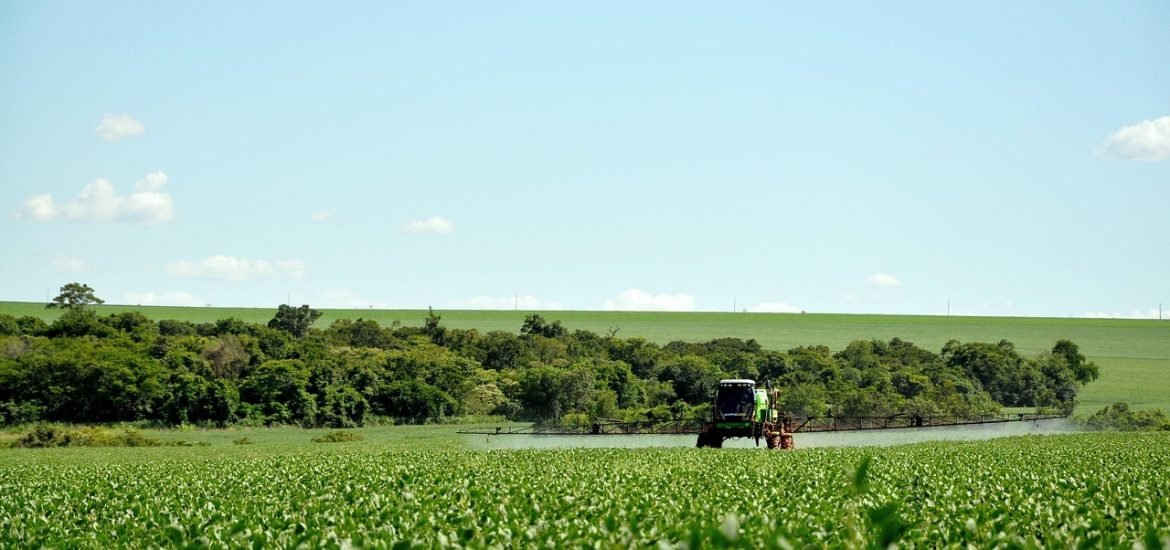
Glyphosate is the most widely used herbicide in both the EU and the world. It underpins “no-till” farming, in which fields are not ploughed, helping to protect soil structure and lock in carbon, and it is used for weed control across a wide range of crops. That ubiquity is exactly why it attracts such fierce argument.
The science has long been contested. In 2015 the World Health Organization’s cancer agency classified glyphosate as “probably carcinogenic to humans,” while the EU’s own food safety and chemicals agencies have repeatedly concluded that it does not meet the criteria to be classified as a carcinogen. That split verdict has fuelled years of litigation, lobbying and public unease, most visibly in the United States, where Bayer has faced a wave of lawsuits from claimants who say Roundup caused their cancer.
What Happens Now
For Europe’s farmers, the ruling removes a cloud of uncertainty. Glyphosate stays legal for roughly another seven years, though individual member states can still impose their own restrictions on specific products and uses.
However, the story is not necessarily over. Antidote Europe can appeal to the Court of Justice of the European Union, the EU’s highest court, but only on points of law rather than the underlying science. Whether it chooses to fight on or not, this latest judgment confirms a pattern: for all the controversy that surrounds it, glyphosate keeps clearing Europe’s legal and regulatory hurdles.
Global Agriculture (2026). *EU Court Upholds Glyphosate Approval, Rejects NGO Challenge*. 10 November 2026. https://www.global-agriculture.com/crop-protection/eu-court-upholds-glyphosate-approval-rejects-ngo-challenge/
Court of Justice of the European Union — case search for T-503/24 (*Antidote Europe v Commission*): https://curia.europa.eu/juris/liste.jsf?num=T-503/24