On 4 November 2026, Richard Lindzen received the Robert J. Zimmer Medal for Intellectual Freedom from the American Academy of Sciences and Letters at the Library of Congress in Washington, D.C. Richard Lindzen, emeritus professor of meteorology at MIT, has worked on the fluid mechanics of the atmosphere for more than half a century, and is one of the best known critics of the climate “consensus”. He talks to The European Scientist about the physics that public debate ignores, and how a scientific hypothesis became a political consensus.

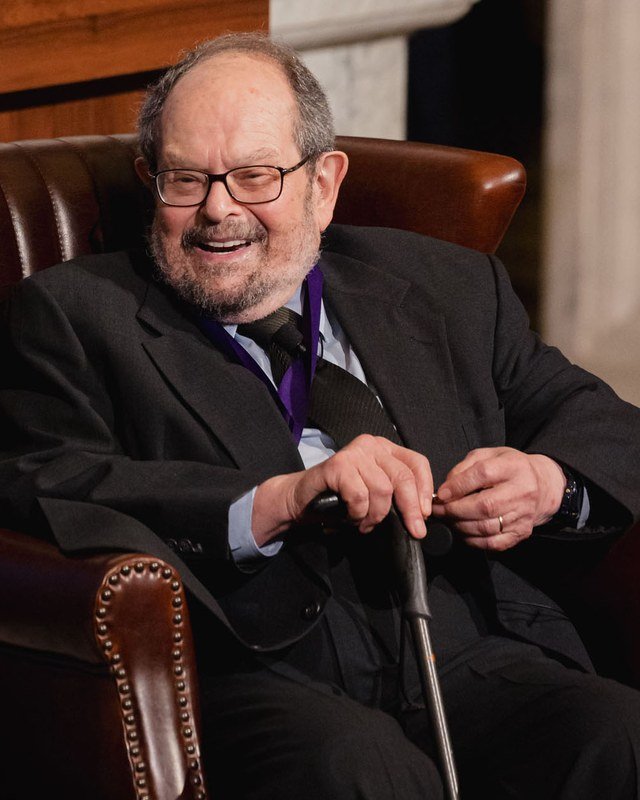
On 4 November 2026, Richard Lindzen received the Robert J. Zimmer Medal for Intellectual Freedom from the American Academy of Sciences and Letters at the Library of Congress in Washington, D.C. Richard Lindzen, emeritus professor of meteorology at MIT, has worked on the fluid mechanics of the atmosphere for more than half a century, and is one of the best known critics of the climate “consensus”. He talks to The European Scientist about the physics that public debate ignores, and how a scientific hypothesis became a political consensus.
1. From a tiny field to a trillion-dollar issue
Your early work dealt with ozone photochemistry, atmospheric tides and planetary waves. Can you remind us?
Richard Lindzen: Each of these topics has its own story. The work on ozone in the stratosphere originated with my thesis advisor, Richard Goody. The problem was the then newly discovered quasi-biennial oscillation (QBO). Over the tropics, the wind in the stratosphere blows from east to west for about a year, then turns around and blows from west to east. The period was somewhat variable. During the 1960’s it was approximately 26 months, though it currently appears closer to 28 months. This oscillation is dominant in the tropical stratosphere. Goody thought this might have something to do with ozone because its photochemical relaxation time was around 2 years. As far as I could tell, this made no sense, and my thesis made no progress toward understanding the QBO though it discovered a variety of other things including the ability of ozone photochemistry to accelerate radiative processes.
I completed my doctoral dissertation in August of 1964, and had a NATO postdoctoral fellowship at the University of Oslo which was to begin in February of 1965. I used the intervening period to visit Prof. Richard Reed at the University of Washington in Seattle. Reed had done the best observational studies of the QBO. However, he was also studying tides in the mesosphere. Atmospheric tides had long been studied at the surface where the semidiurnal component turns out to be larger than the diurnal component. Lord Kelvin suggested that the atmosphere might have resonance at 12 hours, and this suggestion dominated research until the 1960’s. However, Reed found that the diurnal component was dominant in the mesosphere. This got me interested in tides. While in Oslo, I discovered that Laplace’s Tidal Equation had solutions with both positive and negative equivalent depths; the latter were associated with trapped waves. It turned out that the dominance of semidiurnal tides was due to the trapping of diurnal modes. Much of this was described in a monograph, Atmospheric Tides, co-authored with English physicist, Sydney Chapman.
While at the University of Oslo, I met another postdoc, Larry Larsen, who was working on internal waves in the ocean and their interaction with the mean flow.
When waves are absorbed they change the flow. That turned out to be the key to understanding the 26-month cycle. Weather in the tropics was generating waves, and they were interacting with the flow, causing the wind pattern to descend with that period. That was an important success on a problem that was considered deeply puzzling, and the theory has held up well. This is now many years ago. The interaction of waves with the flow was really what interested me. Back in the States I continued working on planetary waves, their interactions with the flow and so on. Other problems came up, and there were some old traditional problems that we found interesting. In particular, I focused on the instabilities of shear flows. One of the puzzling aspects was that some flow configurations that were stable when viscosity was omitted, became unstable when viscosity was included. It was a good period; there were a lot of good problems around. And it was a relatively small field so there were numerous opportunities for discovery.
This was a tiny field, as you said. So how did it become such a huge field?
Richard Lindzen: The ‘tiny’ field that I referred to was dynamics of climate. Meteorology in general was considerably larger, and there were programs like the Global Atmospheric Research Program, to improve forecasting, that were quite large, but by and large there was room for individuals working on their own. You didn’t need major efforts then.
The transformation of climate dynamics into what you call a huge field (though it isn’t really all that huge) had nothing to do with science. With the first Earth Day in 1970, the primary focus of the environmental movement moved, to the energy sector. The reason was pretty obvious: trillions of dollars. The emphasis took a variety of forms. It began with fear over global cooling due to aerosols produced by burning fossil fuels since the global temperature metric showed cooling in the 70’s. The aerosols were also blamed for forest die-back in Germany – at least until the forests recovered. When cooling turned to warming, CO2 was claimed to be the cause. Control of CO2 proved to be a powerful tool for societal control since all burning including breathing produced CO2. In 1988, Jim Hansen testified to the US Senate about the alleged dangers of CO2, and the magazine, Newsweek, had a cover showing the Earth on fire, and the claim that all scientists agreed. This suggested massive involvement of scientists. This was highly unlikely, but most funding agencies were insisting on funding only supporters of the politically correct position. I will comment a bit more on this later.
2. Fluid dynamics versus the radiative view
You often contrast scientists trained in fluid dynamics with those who see climate as a simple radiative problem. Why does that background matter so much? And what does a non-scientist need to grasp about a turbulent ocean-atmosphere system on a rotating planet?
Richard Lindzen: You’re asking a technical question, but it’s an important one. If you look at major climate change, the two examples we have are the ice ages, which have a rough periodicity of about 100 thousand years and of which we have had several cycles, and the Eocene, 50 million years ago. Working on them gives you a context. What you see is a change in the temperature difference between the tropics and the high latitudes.
If you look at a map of surface temperature, what you see is a break at 30 degrees. Equatorward of 30 degrees the Earth is relatively homogeneous; it mixes horizontally, and the gradients are concentrated beyond 30 degrees. The reason is the rotation of the Earth. Nobody discusses that when they discuss climate, but it’s crucial. In the tropics the vertical component of the rotation vector is small: the rotation vector is almost parallel to the surface, so you don’t have a very strong Coriolis force. I would like to see something in the public domain explaining the Coriolis force, but that is a pedagogical unlikelihood. Yet it is crucial. Without a strong Coriolis force in the tropics, nothing inhibits the motions that wipe out gradients. So the tropics are horizontally homogeneous, and the tropical circulation carries angular momentum poleward, helping maintain the jet stream at 30 degrees.
Poleward of that, rotation is very important, and you are in what is called the baroclinic domain.
How do you communicate this to the public? The public wants something simple, so you get the simple story. What is being discussed in public and what is important are two different things, and it becomes almost impossible to communicate that difference.
In mid-latitudes you have motions that transport heat. Why is heat transported? Say I have a pot of water and I heat it from below. What do I get? Convection. The fluid churns over, mixes, and does its best to get rid of the temperature gradient. In the atmosphere you have something relatively similar: in the tropics you wipe out the gradient. But in the extratropics the motions that carry the heat are baroclinic instabilities. Essentially, if you perturb the flow you get waves. If you look at a weather map, these are the highs and lows that travel across from west to east. They act to carry heat from 30 degrees to the pole. Like the pot of water, they try to reach a stable state, but that state is not one of uniform temperature: it still has a gradient. Now we’re getting into a difficult technical problem, but that gradient is set at about 20 degrees Centigrade at the altitude of the polar tropopause, and how that relates to the surface depends on conditions at the surface, and so on. That tells you what the temperature difference between the tropics and the pole is. The temperature at the pole has almost nothing to do with the equator. And yet in the current popular picture it is argued that small changes in the tropics control the pole. There’s no evidence of that. You can look for it, and we did in some papers: you don’t find it. It doesn’t matter. You asked earlier how this became a field with thousands of people. The answer is obvious: it became a political thing, and it was announced that support for the warming hypothesis was required for funding. The average person who claims to be a climate scientist could not begin to tell you about baroclinic instability or any of these processes.
3. Climate is not one number
You argue that doubling CO2 perturbs the energy budget by about 2%, and that reducing climate to a single variable is “magical thinking”. What are the other variables of comparable importance, and why are they neglected in public debate?
Richard Lindzen: What is the definition of climate? The World Meteorological Organization defines it as the statistics of the weather over a period of 30 years or longer. Do we have any reason to think that it is one number? Look at the cold places, the warm places, the dry places and the wet places.
Do they all move together? No. The problem is that they would like people to think it is something like a world average. Why do people accept that? They’re telling people: “You don’t know anything; I’ll tell you what you know.” People take vacations all over the place. They know the world is full of different climate regimes. They hear on television that there are extremes in one place and in another, so they understand these don’t move together. And yet, when they are told something that contradicts what they see, they believe what they are told. It’s an amazing phenomenon, and it takes an expert in propaganda to explain it, not an expert in climate. It’s one of the most curious things when you think about it: people are asked to believe things that their own experience tells them are false. They know there can be hurricanes in Florida and nothing in New York, and in other years the storms reach New York. These are different events, random in some respects. It’s astonishing what people will believe, and that they never ask how it fits their own experience. People say: “Climate is what you expect, weather is what you get.” That doesn’t help, because they don’t use it. Now they are told climate is one number, the same over the whole world.
Can you say a little more about the variables of comparable importance that the public, politicians included, ignore?
Richard Lindzen: Think about it yourself. If you live on the West Coast or the East Coast of the US, are the ocean currents going to affect you? I think so. And what are the time scales of ocean circulation?
It’s okay if you don’t know, but you should, because that will affect the climate. The longest time scale for ocean circulation is about a thousand years, for one overturning. When the overturning is complete, it replaces warm water with cold water near the surface, and that affects the climate of the coast. You’re worried about 30 years; this is longer. There are shorter time scales too, like El Niño, every three or four years. The oceans are a very important source of change.
The notion that climate has one cause fascinates me, because it’s stupid. And what happens when you say it isn’t CO2? Another group comes in and says it’s solar. That’s as implausible as CO2: again, one thing that does it all. Once you recognize what climate is, that it varies a great deal from place to place and that there are many different climate zones, the notion of one number defining it makes no sense. You have to be ignorant of what climate is to accept that picture. Most people don’t try to develop their own view of the subject. Even scientists, if they keep being told it’s one number, go along with it. To be honest, one of the annoying things I found with this issue, and this brings us back to the iris, is that the way they describe it is so full of stupidity that you get caught up in pointing out “this is wrong, that’s wrong” without stepping back to see the whole picture. When they had the positive feedbacks, those just seemed wrong, and the question was: are there other feedbacks?
What was interesting was the reaction when I published the iris paper with two colleagues at NASA, my former student, Arthur Hou, and Ming-Da Chou, an expert in satellite data at NASA. The iris effect refers to the observation that upper level cloud cover changed so as to inhibit changes in temperature.
For a long time the professional society would publish my papers after normal review. The iris paper was one of two papers that I published in the Bulletin of the American Meteorological Society and in both cases the editors were immediately fired. In the case of the iris, critiques were invited, and dozens were submitted. Some were funny: they suggested we hadn’t looked at this or that. In some cases the critique had made the warming go away. It was just a race to see who could attack it the most. We answered most of them, but we never got a fair hearing. The review of the iris actually appeared in the Asia-Pacific Journal of Atmospheric Sciences [Lindzen, R.S. and Y.-S. Choi (2021) The Iris effect: a review, Asia-Pacific Journal of Atmospheric Sciences, https://doi.org/10.1007/s13143-021-00238-1]. It reviews the papers published since, and the iris basically holds up pretty well.
4. The iris effect and water-vapour feedback
Your “infrared iris” hypothesis suggests tropical cirrus clouds act as a negative feedback. Also, why do you believe models overestimate warming through their treatment of water-vapour feedback?
Richard Lindzen: The water-vapour feedback assumes that relative humidity remains constant, and it doesn’t. It has long been known that this assumption is wrong. As far as feedbacks go, there is something called the Le Chatelier principle. For a long time it was considered plausible that the Earth tries to stabilise itself, that it always comes back to equilibrium. The positive-feedback view essentially says no, the Earth isn’t like that: it amplifies disturbances. The Earth would hardly have remained stable this long if that were true. But it was needed for this kind of alarm. It makes no sense, but it becomes an issue. You start checking it, it doesn’t hold up, and that doesn’t seem to matter.
The iris hypothesis was simply the statement that nature tries to restore balance. It says that the area of cloud cover adjusts in order to keep the energy budget constant. It has held up well. The review paper mentioned above appeared about four or five years ago, and I can send you a copy. It reviews most of the discussion. There was an immediate attempt to say “oh no, this can’t be”, but it has actually survived fairly well. One example was at the Max Planck Institute where Bjorn Stevens was running a model, and it pretty much confirmed the iris, and he was in a good position at Max Planck. But eventually he could not get support, so he turned around, and now he goes along with the consensus. Even in my case, I remember receiving a phone call from the National Science Foundation saying that if I wanted to keep getting support, I had to get on the bandwagon. As I mentioned, you got invited to meetings, which didn’t interest me, but a lot of meetings were being held to explain to people why they had to get on board. Of course, this is not the way science is supposed to work.
5. Tropics, poles and storms
You note that warming signals arriving in the tropics are amplified there, and that a warmer world should mean a smaller temperature difference between the equator and the poles, and therefore fewer storms. Why does this physical reasoning rarely reach the media?
Richard Lindzen: Essentially, what drives mid-latitude storms is the temperature difference between the tropics and the pole. The stronger that difference, the stronger the instabilities associated with the highs and lows that form on your weather map. I think this is common knowledge at some level: after all, people listen to the weather forecast and may notice it. Apparently you can say all sorts of things. In this case, what drives what is called baroclinic instability is the temperature difference, and the process then reduces that difference. But to make it scary, you say it does the opposite of what it actually does. As for the public at large, I think people tune out; you probably know this better than I do. People are constantly exposed to technical issues on television and so on, and they apparently ignore them: ask ordinary people and they’ll say “I don’t know.” So you can get away with irrationality. For the most part, people’s appreciation of science has not really changed over time.
6. Extreme weather versus climate
Like Steven Koonin, you denounce the confusion between extreme weather and climate change, noting that the IPCC itself finds little trend in many extremes. Why does every heatwave or flood still get attributed to global warming?
Richard Lindzen: This is a relatively new issue. It took quite a few years before climate alarm focused on extremes. I think the reason is that if you treat climate correctly, you are dealing with time scales of 30 years and longer, and there are no dramatic visuals for that kind of slow change. If you want to excite the public, it’s much better to use the fact that every month there are at least three, four or five days somewhere with an extreme event, and to show the video of that. Meanwhile, things change only gradually.
7. Academics, incentives and trust in science
You say academics are “easily corrupted” by funding, and that “this is not a scientific debate”. Is the problem the institutions, the incentives, or the scientists themselves? And what would restore trust in “official” science?
Richard Lindzen: I think it’s a long-standing problem. The worst example I can think of is Germany in 1933. Before Hitler even asked, every university in Germany got rid of everyone who had Jewish blood, including Protestants. And you have to wonder why academics behave that way. I think academics are, for the most part, dependent on government support. At MIT, and I mentioned this, I wrote a letter to Trump in his first administration that had about 300 signatures. The president of MIT came to the department and insisted that everyone sign a letter saying they disagreed. And they did, though a couple of them later apologized to me. That does not say much for intellectual independence and courage at universities. In France during the war, the record of the universities wasn’t good either. There were some who resisted, and their names are always mentioned.
But the truth is that most did not. It’s typical. The people who study things are usually academics, and one of the things they rarely study is the behaviour of academics. I think trusting science at the least requires caution. Covid showed the public that you cannot trust the political system to implement science. It was understood from the beginning, even in the media, that Covid was primarily a problem for older people, and yet they insisted on vaccinating babies. So the public knew the word “science” was being misused, and that made it clear that maybe they should trust “science” less. I think that actually helped open up the climate issue.
In the US, The National Academy seems busy disposing of scientific prudence. For example, they recently issued a new advisory for judges stating that consensus is the highest form of scientific verification. It’s crazy, and in the United States of all places. There was enough of an outcry that I think it got thrown out. But they were willing to issue such a statement. As I’ve said “Controlling carbon is a bureaucrat’s dream. If you control carbon, you control life.” After all, CO2 is a product of breathing. If you can control breathing, what’s left?
8. The United States, Europe and the consensus
In the United States, climate splits Republicans and Democrats, and the Trump administration has cut research overheads. In Europe, there is almost no political opposition to climate policy. How do you explain this difference? And what do you make of the 97% consensus claim?
Richard Lindzen: That’s a fascinating issue. First of all, the US still has a two-party system. In Europe, the two major parties are gone in the UK, in France, and in Germany. In America the tendency is that if one party supports something, the other party doesn’t, so there is an automatic kind of opposition.
And on climate, the dissent was there from the start. People forget, but when the climate issue began there were things like the Oregon Petition, which had thousands of signatories who disagreed. They kept saying there was no disagreement and threw that out, but people know. In Trump’s case, he regards it as a joke. So you have two parties taking opposite views. And in America I think the Democrats are finding that the issue is something of an embarrassment. So it’s healthier. As for what goes on in Europe, I can’t pretend to be an expert, but there seems to be more uniformity in general, an understanding that educated people all agree. That is not quite true in the US. I can’t explain why; you probably have a better idea. Are Europeans more conformist?
9. AI, energy and what comes next
The massive energy demand of AI data centres is now challenging net-zero targets. Some even claim AI could help “change the climate”. Will AI reshape the climate debate?
Richard Lindzen: I don’t think so. To be sure, AI has impressive energy needs. However, we are learning to reduce the impact of energy generation.
For instance, there are several coal-fired plants, including one in Alabama, that are running with much reduced impact. At the moment, AI is almost a kind of science fiction. The notion that a machine can read the Library of Congress in seconds and with a perfect memory is amazing.
I think a lot of people today feel it’s going too fast. There isn’t time to assimilate it. You could argue the same thing about the invention of the steam engine at the end of the 18th century. Until then progress was very slow, with not much happening for hundreds and even thousands of years, and then all of a sudden we began the modern era, and things went much faster. Now it seems to be accelerating again. One wonders if we evolve fast enough to follow it.
Read also
Leave a Reply