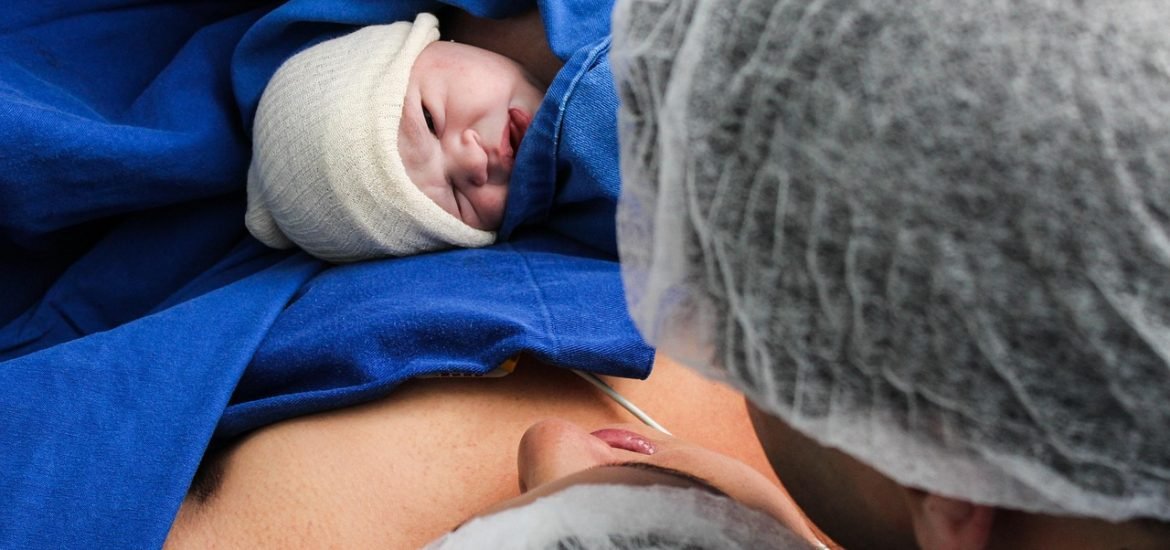
For a long time, scientists thought humans had a uniquely tough time giving birth. It was believed that because we walk on two legs, our pelvises became narrower, while our brains (and therefore our babies’ heads) got bigger. The result was a tight squeeze during childbirth that no other animal had to deal with. This idea even has a name: the “obstetrical dilemma.”
But a new study from researchers at University College London (UCL) is turning that idea on its head. Published in Nature Ecology & Evolution, the research shows that difficult births are common across the primate family, especially with smaller monkeys. In some species, the newborn’s head is nearly twice the size of the space it has to fit through.
A Closer Look at Other Primates
While our closest relatives, the great apes (chimps and gorillas), tend to have easy births, the picture changes when you look at smaller primates. The UCL team found that species like bushbabies and squirrel monkeys face serious anatomical challenges when giving birth. In fact, baby squirrel monkeys have heads that can be almost twice as big as their mother’s pelvic opening.
The reason why this hasn’t been widely understood until now? Dr. Nicole Torres Tamayo, co-corresponding author from UCL Anthropology, explained the problem: “Much of the data that informed earlier studies was flawed. It had been collected in a human-centric way that failed to consider the anatomy of other species. As well as greatly expanding the number of species considered, we collected measurements that took into account the specific anatomy of different species. This data then informed our 3D modelling. In the past, the measurement for the newborns’ heads were from the forehead to the back of the skull. This assumed that all babies are born crown-first, as most humans are. But species like the gelada monkey, with their pronounced snouts, are often birthed face-first. We took this positioning into account.”
In other words, earlier scientists were measuring other primates as if they were tiny humans and that approach missed a lot.
A Bigger, Better Study
To get a full picture, the UCL team massively expanded the scope of the research. Where previous studies looked at just eight species, this report one examined 29 species. They also used advanced 3D modelling to capture the real shape and positioning of newborns as they pass through the birth canal. What they discovered was that tight-fit births are especially common in smaller primate species, and not just humans. The “obstetrical dilemma” isn’t really ours anymore.
Clever Solutions from Nature
One of the most fascinating findings was how some animals have evolved to cope with the challenge. Different species have developed their own workarounds to make birth a little easier.
Dr. Lia Betti, also a co-corresponding author from UCL Anthropology, shared some examples: “Interestingly, we found that some of the small-bodied primates that experience a constrained fit during childbirth have developed clever adaptations to make the process less difficult. The pelvic bones of female rhesus macaques fuse together later than in males, during their reproductive years, and in bushbabies they never fuse, allowing the pelvis to expand during birth to accommodate the neonatal head. The findings of our study reshape previously held assumptions about how unique human childbirth is, revealing a diversity of obstetrical dilemmas and adaptations across primates.”
So, while human pelvic bones are firmly locked together, female rhesus macaques get a longer window of flexibility, and bushbabies keep theirs movable for life. These are essentially built-in solutions to solve a tricky biological problem.
What This Means
The takeaway is that human childbirth isn’t the one-of-a-kind struggle we thought it was. Difficult births appear across the primate world, and different species have come up with different ways to handle them. Our challenges during labor are part of a much bigger evolutionary story, one shared with monkeys, bushbabies, and many others.
Torres-Tamayo, N., Schlager, S., Hirasaki, E. et al. Comparative primate analysis shows that humans are not unique in having a tight cephalopelvic fit at birth. Nat Ecol Evol(2026). https://doi.org/10.1038/s41559-026-03102-5