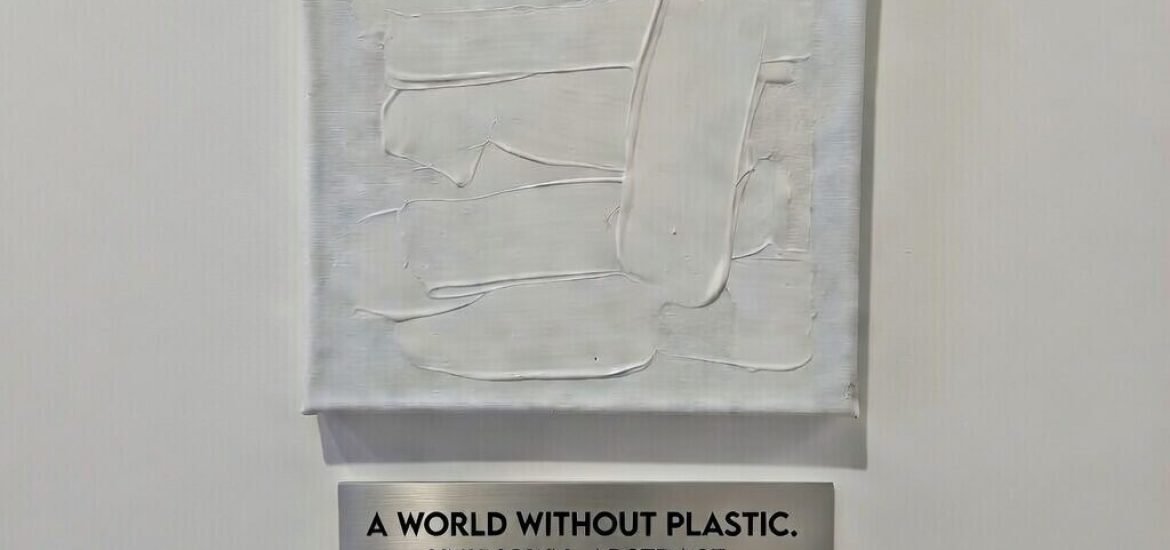
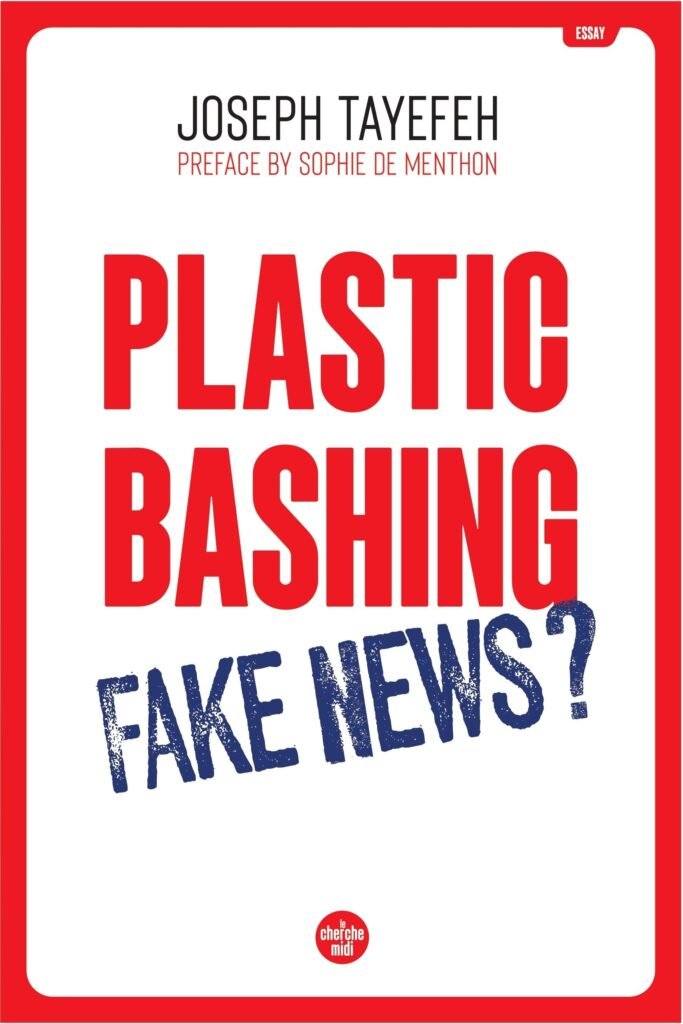
On an ecological level, arguably no material has as bad a reputation as plastic. And yet, when listening to Joseph Tayefeh, the Secretary General of The European Plastics Alliance (Plastalliance), the exact opposite emerges. “Normal for a lobbyist,” you might say… but he primarily claims to be doing institutional pedagogy to correct the widespread opinions resulting from the “plastic bashing” by NGOs. Author of a book on the subject, he kindly agreed to answer our questions.
The European Scientist: Could you introduce Plastalliance to us?
Joseph Tayefeh: I am the Secretary General of The European Plastics Alliance, better known as Plastalliance. It is a rather atypical professional organization: we have the legal form of a non-profit trade union, similar to what the CFDT or CGT might be, for example. We federate not only manufacturers of plastic products (for aeronautics, automotive, packaging, or healthcare, for example), but also those who vitally depend on it in their daily activities, such as farmers or mineral water producers.
Today, the French automotive industry is collapsing, taking orders for plastic parts down with it, and the building sector, our second-largest outlet, is doing very poorly. As a result, packaging now accounts for 50% of industrial plastic production in France. It is therefore essential to protect this sector, upon which many others depend (food, transport, agriculture, healthcare).
Although we currently have members in 17 European countries, our headquarters is in France. This is no coincidence. France is the global epicenter of “plastic bashing.” A veritable “continent of NGOs,” extremely aggressive and influential, has settled there, shaping punitive regulations such as the anti-waste law (AGEC) of February 2020. Our mission is to remain in the thick of the fray to stem this French anti-plastic rebellion and prevent it from contaminating the rest of Europe. And we are achieving success by pushing back certain measures, inspiring others, or opening the debate on subjects considered untouchable by these associations or certain politicians, which, I won’t hide from you, has a knack for strongly irritating them. That is the very sign that we are doing our job.

T.E.S.: You maintain that plastic presents both industrial and environmental qualities… you say it is “the only packaging material included in the European green taxonomy,” which deserves an explanation, doesn’t it?
J.T: This is the great paradox that people refuse to see in France! Plastic is today, by far, the most strategic material for the future, both from a capitalistic and an ecological standpoint.
What is omitted is that since 2023, single-use or reusable plastic packaging incorporating recycled content or plastics derived from biowaste is the only type of packaging to be included in the famous “European green taxonomy” via the Delegated Regulation of June 27, 2023. You will not find cardboard, glass, or aluminum packaging in this text. Why? Because plastic in packaging, under certain conditions, contributes substantially to the circular economy, according to the regulation itself. This gives it massive financial advantages: better credit terms, better ratings, and higher stock market valuations.
While in France we decree the “end of plastic,” Brussels supports our sector. “When you are strong, Europe is strong,” said Stéphane Séjourné last January to the European chemical, cosmetic, and plastics industry during the launch of the Critical Chemical Alliance, of which Plastalliance is a founding member. The recent European Packaging and Packaging Waste Regulation (PPWR), published in February 2025, protects 99% of plastic packaging against national bans, betting on recycled content and recyclability rather than blind prohibition. Plastic is not a material of the past; it is a circular asset supported by Europe.
T.E.S: Plastic is ubiquitous in our daily lives. You go so far as to assert that “he who dominates plastic dominates the world.” Can you elaborate on this vision?
J.T: Absolutely. Plastic is the backbone of modernity and strategic sectors. Look at the facts: In the automotive industry, it represents 50% of the volume of a modern car, but only 10% of its weight. It is what makes it possible to lighten electric vehicles to compensate for the crushing weight of the batteries.
In aeronautics and aerospace, nearly half of the structures of recent aircraft (Boeing 787, Airbus A350) are made of composite materials—that is to say, plastic. Without plastic, there is no weight reduction, no fuel savings, no space suits, no orbital exploration. Without single-use plastic packaging, astronauts would die of starvation on the space station. We aren’t going to use glass or buy in bulk up there. We need to come back down to Earth a bit, so to speak.
In defense, without plastic, there would be no bulletproof vests, armored glass, gas masks, or diving suits… Waging war on plastic is easy; waging war without it in the 21st century is a pipe dream.
Global projections (OECD, Pew) are clear: global plastic production will double, or even triple, by 2050. No other family of materials (glass, metal, cardboard) is experiencing such momentum. NGOs cry foul about the waste, and it obviously must be managed, but on an industrial level, it is a historic opportunity. It would be suicidal for Europe to turn away from the material of the future. The real question is not whether the world will consume plastic, but who will manufacture it. And in this geopolitical battle, he who dominates plastics dominates the world.
T.E.S.: You make plastic an issue of national sovereignty. Why is it so crucial, in your opinion, to defend the French industry against global competition?
J.T.: Plastic is a Western invention. It was developed by France, Belgium, Germany, Italy, Switzerland, the United States, Russia… Not by China or Saudi Arabia. Yet today, China, which imports its oil, dominates 34% of global production. France, on the other hand, accounts for less than 1% of this production with its 120,000 jobs and 3,000 companies, and contributes only 0.02% to oceanic pollution, according to publications from Oxford University. In Europe, the plastics industry represents 50,000 companies and nearly 1.5 million direct jobs.
Let’s be logical: destroying the French plastics industry will not save the oceans. Its only effect will be to massively import Chinese products, to the detriment of our sovereignty and our jobs. The automotive industry is a sad example of this: our roads are full of cars, containing more plastic than before, but we no longer manufacture the vast majority of them.
There is, moreover, a fascinating hypocrisy on this subject. During COVID, no one worried about having a polypropylene mask stuck to their face all day. In the hospital, blood bags, IVs, syringes: everything that comes into intimate contact with our bodies is made of plastic, and fortunately so, for hygiene reasons! But suddenly, drinking water from a PET bottle would become a health crime? Even tap water, adorned with every virtue, reaches your home under high pressure via PVC or polyethylene pipes. Plastic keeps us alive on a daily basis, but we only take offense when it comes to packaging.
T.E.S.: Whether in terms of manufacturing, cost of use, or even greenhouse gas (GHG) emissions, you maintain that plastic outperforms its direct competitors. On what concrete elements do you base this claim?
J.T.: I claim it and I prove it. Plastic is unbeatable because it requires extremely little energy to be manufactured. Heating or recycling glass at 1400 °C, using fossil gas that suddenly becomes virtuous to NGOs, is an energy sinkhole. The “plastic-free” dogma mathematically equals price inflation and an explosion of greenhouse gases (GHG). It is astounding to see activists claiming to be anxious about the climate while demanding a return to heavy, ultra-emitting materials. The real climate skeptic might not be who we think it is.
Mario Draghi, in his September 2024 report on the competitiveness of the European Union, wrote it in black and white: of all materials (glass, metal, wood, paper), plastic is the one that emits the least CO₂. Wanting to decarbonize a carbon-based material, which is already the lowest emitter, is intellectual nonsense.
Ecologically, it consumes very little water (1 to 2 liters per kilo, compared to 500 for paper or 80 for steel), and the PET in bottles is recycled in a closed loop (a bottle becomes a bottle again). Aperitif glass is not recycled; food paper ends up as paper towels. Finally, without plastic, you can say goodbye to wind turbine blades and modern solar panels. Just like nuclear power, civilian or military, for that matter. Plastics can become problematic when they are abandoned in nature, but that is an end-of-life issue that can be addressed. Other materials, on the other hand, have a problem with their very nature, upon which the margins for improvement are quite limited.
Plastic is not perfection, but through its versatility, it comes close.
T.E.S.: In terms of packaging, you warn of the consequences of a potential ban. What would the real losses be for producers and consumers?
J.T.: Plastic packaging is not a whim; it is a technological barrier. It protects fresh products against oxygen, microbes, and humidity. Without it, a product that keeps for a week will rot in two days. It is packaging that prevents mass food waste, thus protecting all the energy, water, and inputs invested upstream by our farmers.
As for the “all-bulk” myth, it is sanitary nonsense. We have somewhat forgotten the COVID-19 period when the bulk aisles were closed. Who can believe that was the last epidemic we will ever experience? In a supermarket aisle, bulk can promote cross-contamination, especially for fruits and vegetables. Worse: it makes it impossible to distinguish between an organic product and a conventional one (for example, in the case of purchasing fraud or involuntary mixing), exposing organic food to the phytosanitary residues of its neighbors. Banning plastic packaging means organizing waste and signing the death warrant for organic products in mass retail.
T.E.S.: On the regulatory front, how do European and French legislation articulate today? What do you denounce regarding current bans?
J.T.: We are swimming in sheer regulatory schizophrenia. Since the AGEC law of 2020 promoted by Emmanuel Macron, the environmental code has turned into a war machine against the plastics industry. The goal of ending single-use plastic packaging by 2040 directly threatens 50,000 jobs. The mandated 50% reduction in plastic beverage bottles by 2030 strikes at the heart of a French heritage attached to brands like Cristaline or Thonon, and imperils 20,000 jobs in mineral waters. And for what? Replacing these bottles with glass would add 10,000 trucks to our roads! The carbon footprint curiously no longer interests ecologists when it comes to punishing plastic.
Meanwhile, in Brussels, the discourse is radically different: they speak of simplification, competitiveness, and deregulation. Europe protects 99% of these packages via its PPWR regulation, which it even includes in the green taxonomy to boost the circular economy. The paradox is absolute: our industrial sovereignty is saved by Europe, while France tries to kill it from the inside. French politicians love to blame Brussels for their own erratic behavior, but they forget that France itself, at the EU Council, validated this PPWR regulation, which formally forbids hindering compliant packaging! Dogmatic ideology has taken precedence over the respect for the Rule of Law.
The most striking illustration of this shipwreck took place on February 18, 2026, in the Senate. On that day, Vincent Louault, a senator from the “Horizons” party—ironically, the very party of those who had carried the AGEC law in 2020—requested, with as much courage as panache, the repeal of French measures that are on a head-on collision course with the new European regulations. He had tabled economic safeguard amendments within the framework of the bill adapting French law to European Union law (known as “DDADUE”), which is precisely the legislative vehicle designed to purge our law of these anomalies contrary to EU rules.
And then, stupefaction: the rapporteur from Les Républicains (LR), a party presenting itself as pro-business and “right-wing,” publicly stated that there was no “gold-plating” (surtransposition), that the European Regulation does not prevent hindering products, and that we must therefore go further than Europe. She purely and simply ignores that the President of the European Commission, Ursula von der Leyen, demands the exact opposite: putting an end to these national excesses that ruin our competitiveness and fragment the internal market, thus creating a completely distorted competitive situation. It’s aberrant, it’s completely backwards!
The result? Through the massive and irresponsible absence of a large part of the LR senators, the ecologists managed to get these amendments rejected by just a few votes during a show of hands.
I do, however, wish to pay a strong tribute to LR senators Max Brisson and Laurent Burgoa. True Republicans in the noble sense of the term who, like the fishermen of the Île de Sein, stood out alongside Vincent Louault as all-too-rare resisters. They showed another face of French politics, far from the prevailing indifference or this latent will to collaborate in the methodical destruction of our French industrial sovereignty.
T.E.S.: You are very critical of NGOs, notably denouncing their growing influence on the debate and the fears related to microplastics. What exactly do you reproach them for?
J.T.: NGOs have a true business model built on fear. Faced with the failure of their emotional campaigns about the oceans—since the French continue to praise the practicality of water bottles, for example—they have pivoted toward the invisible: micro and even nanoplastics, or even additives or chemical substances. The smaller it is, the easier it passes!
We have been subjected to a deluge of anxiety-inducing headlines: “We swallow 5g of plastic a week,” “Plastic in the placenta and the brain”… Except that science, true science, takes its time and eventually deconstructs these panics. The WWF study on the famous “5 grams a week” was pulverized in 2021; the researcher admitted to having made an error of several orders of magnitude (it was more like every 23,000 years!). But the study had come out, by providential coincidence, right in the middle of the debate on the AGEC law. And it still continues here and there to cause media damage.
Today, the EFSA (European Food Safety Authority) has pointed out the massive methodological biases in these alarmist studies: samples contaminated by polyester lab coats, confusion between plastic and natural brain fats… Telling people they have a plastic spoon in their skull is gross manipulation. Recently, even The Guardian (in January 2026) issued a mea culpa, admitting that the alerts were largely exaggerated, if not unrealistic. This British pragmatism is sorely lacking in France, where guilt-tripping remains the preferred tool of political ecology.
T.E.S.: Despite your arguments, you acknowledge that plastic pollution in the oceans is a dramatic reality. How do you analyze this major environmental problem and what solutions do you advocate?
J.T.: Oceanic plastic pollution is an undeniable reality, but it suffers from a monumental perception bias. It is a geographically ultra-localized problem. Asia is responsible for about 81% of discharges, with the Philippines in the lead (36%), India, or Malaysia. Why? Because these countries desperately lack efficient waste collection infrastructures.
The entirety of Europe contributes 0.6%, and France 0.02%. The correlation between production and pollution is false: Western countries produce massively but generally manage their waste well. The real scourge in France is not the material, it is incivility and, above all, the scandal of landfilling: we still bury nearly 30% of our plastic packaging, leaving it to the wind, compared to 0% in Germany, Austria, or the Netherlands!
The solution is not to kill our industry, but to totally ban landfilling at home, to heavily tax incineration to make it less attractive than recycling, to harshly penalize incivility, and above all, to export our know-how, and no longer our waste, to Asian countries. That is where saving the oceans is at stake.
T.E.S.: Faced with the “plastic bashing” you describe throughout this interview, what are your concrete proposals to restore dialogue and communicate better with public opinion?
J.T.: First, we must stop treating the polymer industry as a shameful anomaly. It is the embodiment of European and French scientific genius, carrying the legacy of illustrious scientists like Marcellin Berthelot, Henri Victor Regnault, or Joseph Zeltner, an exceptional chemist murdered at Auschwitz. Destroying this heritage today to satisfy the dogmas of punitive ecology is not only an economic mistake; it is a true betrayal of our industrial memory.
Today, we must re-educate the public’s gaze, which, as with nuclear power, has been manipulated. Plastics manufactured in the European Union meet the strictest health and environmental standards in the world. In France, we do not use Bisphenol A, phthalates, or brominated compounds to manufacture plastic packaging intended for food. In the USA or China, I cannot guarantee anything. When consumers buy a product, they must now pay as much attention to the container as to the contents, and favor “Made in Europe.”
We must also bring scientific reason back into the debate. Our opponents demand an absolute chimera from plastic: “100% harmlessness.” This is a concept that does not exist in any serious science! Nothing is 100% harmless, not even the water we drink. It is all a matter of dose, exposure threshold, and risk/benefit balance. This is the absolute foundation of toxicology that many ideologues seem to have forgotten. Rice, for example, naturally contains arsenic, a recognized poison: do we stop eating rice because of it? No. Regarding microplastics and nanoplastics, they have been closely scrutinized in nearly 20,000 studies over the past twenty years, and to date, none has succeeded in demonstrating any real danger to human health under normal exposure conditions. On the other hand, with massive doses, such as giving mice the same amounts of microplastics that a human being could absorb over a given period, it is not surprising to observe deleterious effects. But is that still science?
Deep down, “plastic bashing” is a luxury of the affluent. It is the fight of privileged populations who forget that their daily comfort, their life expectancy, and even their ability to pontificate on social networks or in the media rely entirely on this material.
My first book helped to open a breach in this wall of denial. Something unthinkable just two years ago: the political debate has reopened, the questioning of the goals to ban plastic products is discussed publicly, certain media outlets—still too few for my taste—are beginning to look for nuance, and consumers, through their daily purchases (Cristaline is the number one consumed product in France in large and medium-sized supermarkets), prove that they do not reject the vital practicality of plastic and that they do not let themselves be influenced as much as some would have us believe. During the recent floods, it was indeed plastic water bottles that ensured emergency humanitarian aid! Conversely, bulk, which some elevate to a religion, is in reality a deeply anti-solidarity concept in my view: a product stripped of its protective packaging becomes perishable, difficult to store, and impossible to distribute hygienically to associations helping refugees or the homeless.
Furthermore, a thesis defended in my book has proven to be exact: the existence of foreign interference, notably German, acting through NGOs to destabilize the French plastics industry. The research center of the Economic Warfare School (École de Guerre Économique – EGE) has actually dedicated two reports to it, explicitly mentioning my book. We must be lucid; everyone defends their interests. These supposedly disinterested NGOs, whose massive funding raises strong questions, deserve to have their actions examined much more closely.
Moreover, there are different representations of the plastics industry that are not all equal, far from it. Some, within our own industry, are ready, for obscure reasons, to sacrifice the single-use plastic packaging sector, notably to please the government. This inevitably blurs the message to politicians and the public. The fact is they are very good at negotiating the length of their chains. At Plastalliance, we work to cut them.
Finally, to communicate, sometimes you just have to look at the world as it is. The international treaty on plastic failed for a relentless reason: the global powers (United States, China, Russia, India, and the Middle Eastern countries), which were open to the idea of better managing waste, categorically refuse to scuttle their production. This subject even achieves the geopolitical feat of getting Iran and the United States to agree! The “green ayatollahs” simply met their match: the wall of geopolitical reality.
Further reading
The World as Probability: Why Bayesian Thinking Matters More Than Ever in Science
“Europe’s Growing Dengue Threat” – Interview with Dr. Eduardo Bittencourt
Post-Growth Economy Reflections: Reimagining Prosperity through Regenerative Cities
Leave a Reply