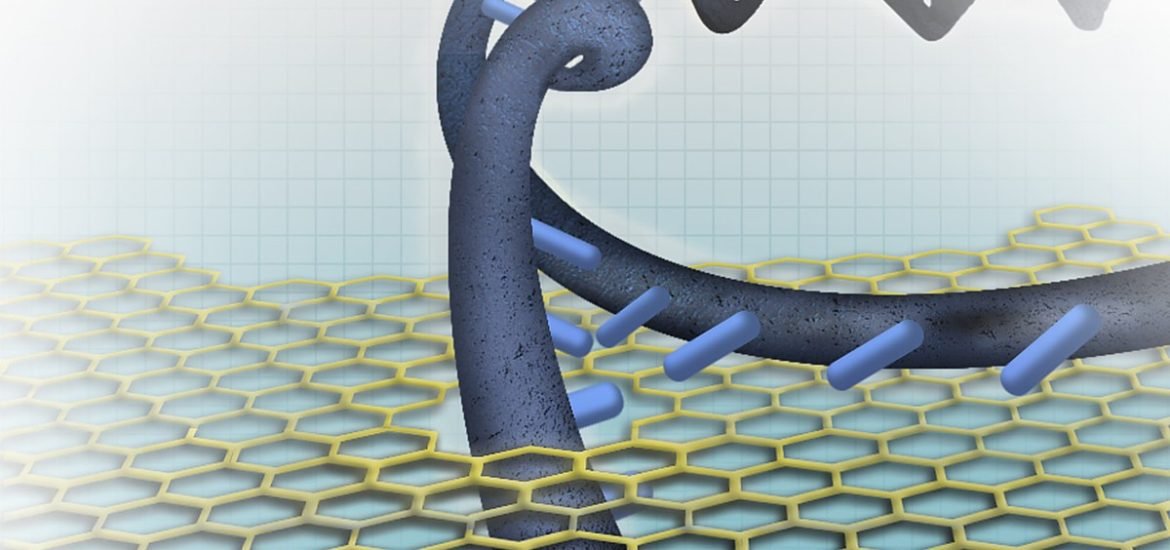
As DNA sequencing becomes ever more sensitive, the challenge is increasingly not whether genetic material can be detected, but what the evidence can responsibly support. The better we get at finding biological signals, the more carefully we must interpret them, argues biotechnologist Kasem Jamil Al-Saloumi in this op-ed.
For much of the history of molecular biology, the guiding question was simple: can we find it? As detection methods grow ever more powerful, a harder question takes its place: what does finding it actually mean?
Nanopore sequencing illustrates this shift particularly well. Seen from the outside, molecular detection looks like a straightforward chain of events: a biological sample is analysed, DNA is detected, a sequence is compared with a database and an organism is identified. Anyone who has spent time with real sequencing data knows that the reality is considerably more interesting.
A DNA sequence is the beginning of the question
Oxford Nanopore technology is remarkable partly because it reads DNA molecules directly as they pass through protein pores only a few nanometres wide. Each stretch of bases disturbs an electrical current in a characteristic way, and software translates that signal into a sequence in real time. In microbiology, a widely used application is 16S sequencing: the gene encoding the bacterial 16S ribosomal RNA, a standard genetic marker for identifying bacteria, is amplified and read in order to profile the microbial DNA present in a sample.
Watching sequencing data appear is fascinating. Information that was invisible a short time earlier begins to take biological form on a screen. But a name appearing in a sequencing output is not the end of the scientific process; it is the beginning of interpretation. A sequencing platform produces molecular evidence. Scientists still have to decide how much confidence that evidence deserves and what biological conclusion it can reasonably support. That distinction becomes especially important now that modern methods can detect very small amounts of genetic material.
Sensitivity changes the problem
For decades, one of the major ambitions of molecular diagnostics was greater sensitivity: methods capable of detecting smaller quantities of DNA, identifying organisms faster and revealing biological information that older techniques could miss. That ambition has produced extraordinary technologies. But increased sensitivity changes the nature of the challenge.
Imagine two instruments. The first can detect a biological signal only when it is relatively strong. The second can detect the same signal when only a tiny amount of genetic material is present. The second instrument is clearly more sensitive, yet the scientist using it now has more questions to answer. How strong is the signal? How consistently does it appear? How much sequence information supports the identification? Are closely related organisms genetically similar in the region being analysed? Would another analytical method produce the same interpretation? Does the result make sense alongside the rest of the available evidence?
None of these questions diminishes the value of sequencing. They show why sequencing is science rather than mere measurement.
The database matters too
There is another side of DNA sequencing that people outside molecular biology rarely see: DNA does not arrive with a species name attached. Once a sequence has been generated, computational tools compare it with reference information, so the quality and composition of those reference databases matter. Some organisms are represented by extensive, high-quality reference genomes; others far less completely. Closely related species may also share highly similar stretches of DNA. Short regions of the 16S gene, for instance, often cannot tell closely related bacteria apart, and even the full-length gene does not always do so (Johnson et al., 2019).
A computational classification should therefore be understood as an interpretation supported by sequence similarity, not as a label magically revealed by the machine. The distinction may sound small, but scientifically it matters. A result can have strong sequence support and still call for careful interpretation at species level. In other circumstances, several independent lines of evidence may converge and make the conclusion considerably stronger. The scientist’s task is to understand where on that spectrum a result belongs.
The real lesson comes after the sequencing run
For those who work with nanopore data, the most valuable lesson is often not the technology itself, exciting though it is, but the reasoning that comes after the sequencing. The questions change. Instead of asking only “What did the machine detect?”, one starts to ask: How much evidence supports this interpretation? What are the alternative explanations? What additional evidence would increase confidence? And, perhaps most importantly: what can responsibly be concluded from the data available today?
That last question reaches far beyond genomics. It is one of the foundations of scientific thinking.
Detection, identification and biological meaning are different steps
It helps to separate three ideas that are sometimes compressed into a single sentence. The first is detection: genetic material has produced a measurable signal. The second is identification: analysis indicates that the sequence corresponds most closely to a particular biological source. The third is biological meaning: the detected and classified sequence tells us something relevant about the biological system under investigation. Finding a microorganism’s DNA, for example, does not by itself show that the organism was alive, active or playing any role in the system studied.
These statements are related, but they are not identical, and moving from one to the next requires additional evidence. This matters all the more as sequencing moves beyond specialist research laboratories and becomes increasingly connected with medicine, environmental monitoring, food science and other fields. The easier DNA becomes to detect, the more important careful interpretation becomes.
Artificial intelligence will make the question more pressing
There is another reason this matters now. Genomic datasets are becoming too large and complex for every result to be inspected manually, and artificial intelligence (AI) and machine-learning tools will inevitably play a larger role in classification, prioritisation and interpretation. That could be enormously useful: an algorithm can examine patterns across thousands or millions of observations far faster than any person. But an algorithm can also make an uncertain result look deceptively certain if the uncertainty is hidden behind a clean interface and a confident label.
Future genomic systems should therefore not simply provide answers; they should communicate evidence. How much data supports the classification? What alternatives exist? How consistent is the result? What additional test could strengthen the conclusion? In other words, better computational systems should help scientists ask better questions, not merely generate more confident-looking answers.
More data does not automatically mean more certainty
Modern biology is entering an unusual period. Biological systems can now be measured at resolutions that would have seemed extraordinary only a generation ago, and sequencing instruments are becoming faster, smaller and more accessible. This is unquestionably progress. But scientific progress does not eliminate uncertainty. Sometimes it reveals uncertainty that older technology could not even see.
That is not a weakness. Nanopore sequencing, like any sensitive method, invites a different view of uncertainty: a careful scientist is not the one who turns every signal into a conclusion, but the one who knows how far the evidence allows the conclusion to go.
Perhaps that is the real paradox of increasingly sensitive DNA detection. The better we become at finding biological signals, the more important it becomes to know when a signal is enough – and when the most scientific answer is: we need more evidence.
About the author
Kasem Jamil Al-Saloumi holds an MSc in Biotechnology (DNA Technology) from the American University of Science and Technology (AUST), Lebanon, and a BSc in Biology with a focus on biochemistry. His postgraduate research included hands-on Oxford Nanopore 16S sequencing, carried out in collaboration with the Biomedical Research Center at Qatar University under the supervision of Dr Fatiha Benslimane. Based in Doha, Qatar, he works in scientific research coordination and biology education. His interests include genomics, molecular biology, scientific evidence and the communication of uncertainty in science.