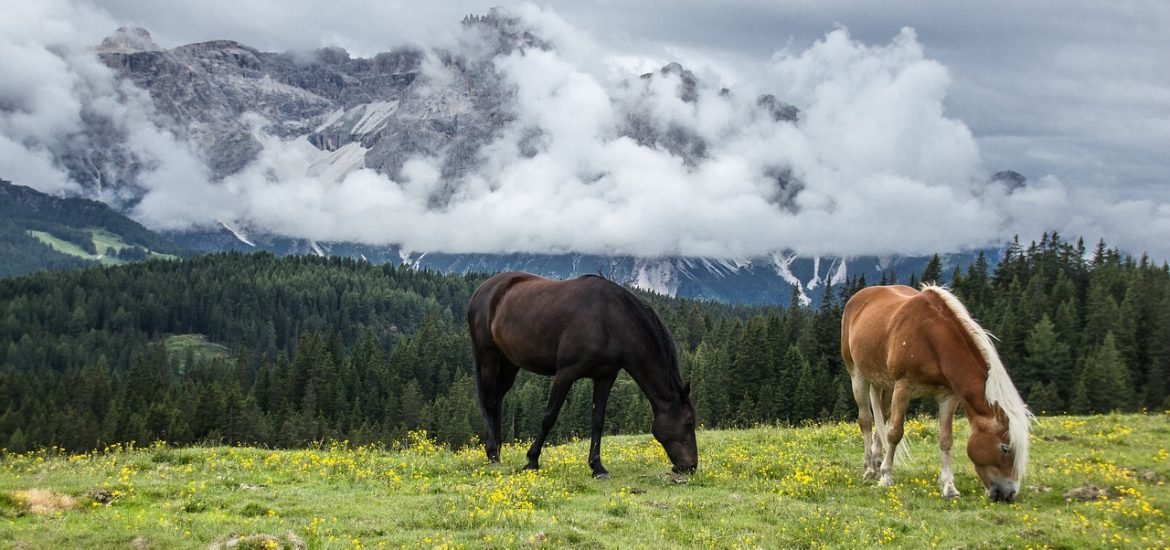
The partnership between men and horse extraordinary partnership began 6,000 years ago, and was far more complicated than anyone previously thought, according to a study published in the journal Science Advances.
Earlier Than We Knew
Few animals have shaped human history as profoundly as the horse. From ancient battlefields to vast empires, from the Americas to the steppes of Central Asia, horses carried people, ideas, and whole civilisations across the globe.
Now, a major new study led by researchers at the University of Helsinki, has pushed back the timeline of organised human use of horses by centuries. Drawing on archaeological finds, animal bone analysis, and ancient DNA evidence, scientists have found that horses were being ridden, worked, and traded as far back as the 4th millennium BCE, roughly 3,500 to 3,000 years before the birth of Christ.
But the story isn’t as simple as one people, in one place, deciding to tame a horse. Domestication was messy, slow, and uneven. “Horses were already being used in sophisticated, widespread ways before we could pin down full domestication. That gap reshapes how we understand human history,” says Professor Volker Heyd, co-lead author of the research.
Three Populations, One Winner
The research identified three distinct wild horse populations — known as Dom1, Dom2, and Dom3 — that once roamed a vast stretch of land from Western Siberia to Central Europe. Early attempts to tame horses happened independently across different regions and populations around 3,500 to 3,000 BCE, possibly even earlier.
However, only one of these populations, Dom2, went on to become fully domesticated, between around 2,200 and 2,100 BCE. These horses, spread rapidly across Eurasia and into the Middle East by mobile human groups, became the ancestors of every domestic horse alive today.
Shortly before 3,000 BCE, a people known as the Yamnaya (nomadic herders from the Eurasian steppe) were already riding Dom2 horses and bringing them westward. What followed changed the world.
The Wheel, the Horse, and Language Itself
The timing of horse domestication coincides with one of the most transformative periods in human prehistory. Around the same era, steppe peoples began spreading east and west across Eurasia, carrying with them a revolutionary new invention: the wheel. At first, cattle pulled the wagons. But horses travelled alongside them and a rider on horseback could cover in hours what a wagon took days to cross.
This leap in mobility had consequences that echo to this day. Researchers now link it to the spread of Proto-Indo-European languages, the ancient root from which most European and many Asian languages eventually grew. The horse carried people across continents, and with those people went words, culture, and ideas.
As Professor Heyd puts it: “The role of horses in major historical developments is almost too vast to measure, hence the saying that the world was conquered on horseback.”
A Partnership That Shaped Civilisation
The influence of the horse on human history is staggering. The great nomadic empires, including the Huns, the Avars, the Magyars, the Mongols, were built on horseback. Horses were central to warfare for thousands of years, right through to the First and Second World Wars. When European conquistadors crossed the Atlantic to the Americas, horses went with them. For most of human history, until the arrival of engines and motors, the horse was simply how people and goods moved around the world.
And yet, in a striking footnote to this story, truly wild horses no longer exist. Even Przewalski’s horse, long celebrated as the last surviving wild horse, is now known to descend from early domesticated populations. Humans have shaped horse genetics so thoroughly, over so many thousands of years, that there is no going back.
More Than History
For Professor Heyd, this research is about more than ancient timelines. It touches on a relationship that still resonates today. “Today, horses are a source of attraction, companionship, and friendship for many people. Therefore, it is important to learn about the earliest stages of human–horse relationships and how this unique partnership first emerged,” he says.
Six thousand years on, the bond between humans and horses remains one of the most significant — and most enduring — in all of history.
David Anthony et al., Horse genetics, archaeology, and the beginning of riding.Sci. Adv.12,eady7336(2026).DOI:10.1126/sciadv.ady7336