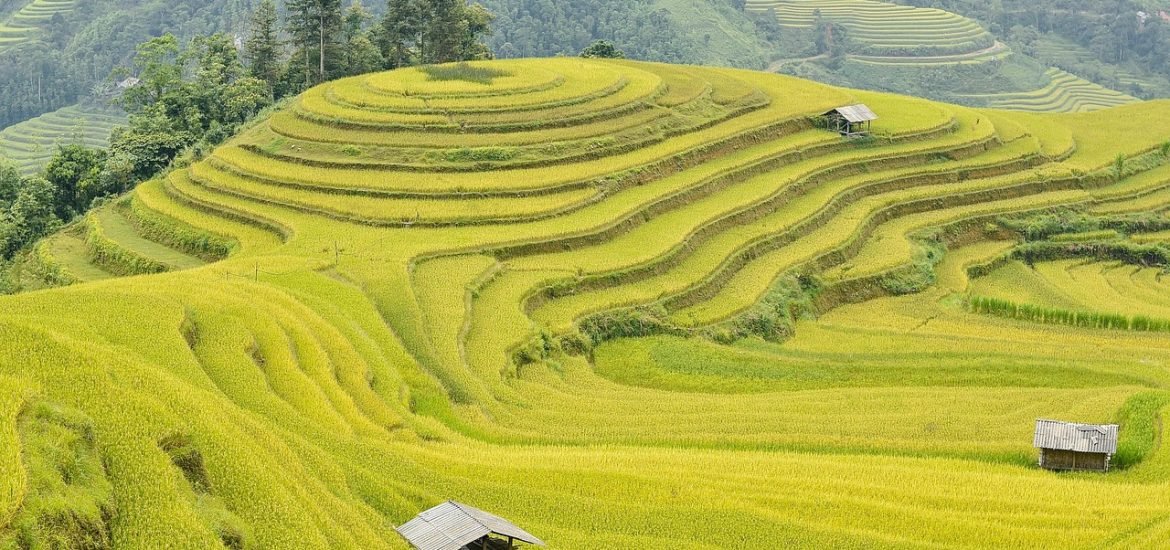
Around the world, farming landscapes that have been managed the same way for generations are proving that growing food and protecting the environment don’t have to be at odds, according to a study published in the journal Ecology & Society. Researchers from the University of Göttingen in Germany looked at these traditional systems and found they hold valuable lessons for sustainable farming but only if their unique local conditions are respected.
The study focused on places recognized by the United Nations’ Food and Agriculture Organization as “Globally Important Agricultural Heritage Systems,” or GIAHS. These are farming landscapes where communities have developed ways of working the land over long periods that produce food while also supporting wildlife and preserving cultural traditions.
The examples span continents and climates. In the Philippines, farmers have carved terraced rice fields into mountainsides, a practice passed down through centuries. In the mountains of Portugal, communities still raise livestock and grow rye and potatoes using traditional methods. In arid regions, oasis farming systems use ancient irrigation techniques to cultivate date palms. And in the Austrian Alps, a centuries-old hay-milk farming tradition keeps cows grazing on established grasslands, which supports dairy production and helps maintain meadows rich in plant and animal species.
By surveying GIAHS sites around the world, the research team identified four main strategies that help these farming systems survive and stay economically viable. Some rely on certified products and local markets, where consumers can buy goods they know were produced using traditional methods. Others focus on short supply chains for staple foods, keeping production and consumption close together. Some regions have found success by exporting high-quality specialty products, such as unique cheeses, heritage grains, or traditionally grown crops that fetch a premium abroad. And across all of them, there’s a strong emphasis on preserving cultural values and adapting to the realities of climate change.
“Our analysis of Globally Important Agricultural Heritage Systems shows that food production and nature conservation do not have to be in opposition,” said Maria Chiara Camporese, a PhD researcher at Göttingen University and the study’s lead author. “Our study highlights that traditional farming landscapes can offer practical examples of how land can be used sustainably while also protecting cultural heritage and supporting local livelihoods.”
The researchers also found that international recognition, such as the GIAHS designation itself, can make a real difference. When a farming landscape is officially acknowledged for its heritage value, it tends to attract more attention and support, which helps protect both the cultural traditions and the land itself.
But the picture isn’t entirely positive. These traditional systems are under growing pressure from multiple directions. Climate change is altering the conditions that many of these farming methods depend on. Markets are shifting, often favoring cheaper, industrially produced alternatives. Younger people are leaving rural areas for cities, and the farmers who remain are getting older. In some places, traditional land-use practices are simply being abandoned as communities shrink.
The study’s key takeaway is that there’s no one-size-fits-all answer. What works for terraced rice fields in Southeast Asia won’t necessarily work for Alpine dairy farming or oasis agriculture in North Africa. Each region needs strategies tailored to its own landscape, communities, and farming practices. Copying solutions from one place and dropping them into another is unlikely to succeed.
Still, the broader message is an encouraging one. At a time when debates about food production often pit farming against conservation, these heritage systems show that the two can go hand in hand — and have done so for a very long time. They offer living proof that sustainable land use is possible, and that protecting nature, feeding communities, and honoring cultural identity can all be part of the same effort.
Camporese, M. C. et al. “Exploring the role of Globally Important Agricultural Heritage Systems in integrated landscape approaches”. Ecology and Society (2026). DOI: 10.5751/ES-17116-310203