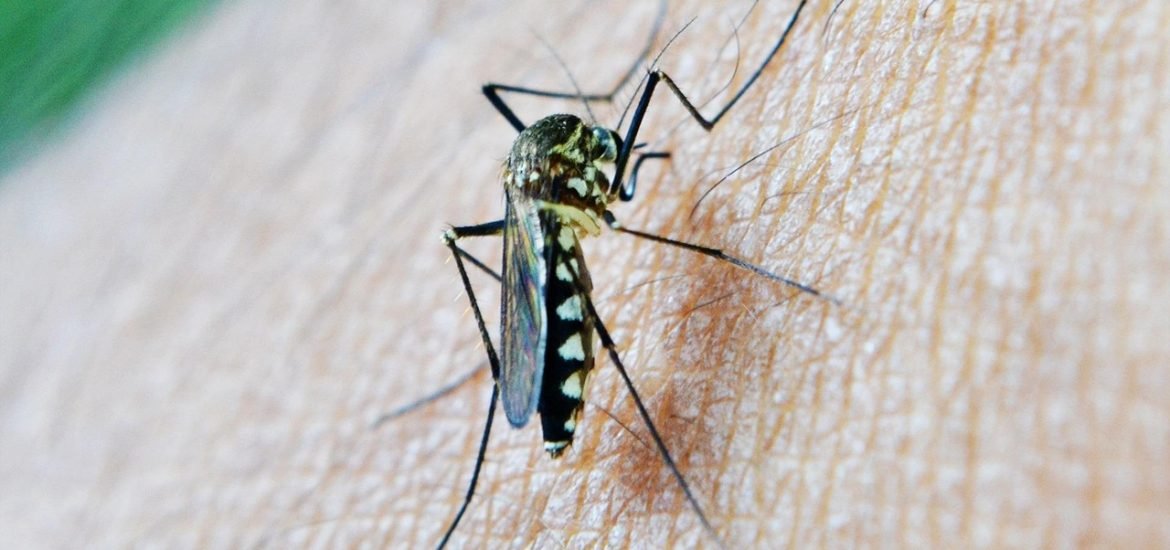
Malaria-carrying mosquitoes pushed early human groups away from certain areas, splitting populations apart over tens of thousands of years, according to a study published in Science Advances by researchers from the Max Planck Institute of Geoanthropology and the University of Cambridge. That separation, it turns out, helped create the remarkable human diversity we see on Earth today.
Not One Cradle, But Many
Scientists no longer believe humans emerged from a single birthplace in Africa. Instead, the evidence points to multiple populations living in different parts of the continent, occasionally coming together, mixing, and drifting apart again. Think of it less like a single family tree and more like a braided river with separate streams that sometimes flow together.
Until now, climate was seen as the main force deciding where those streams ran. The new research adds disease to that picture.
Mosquitoes as Invisible Borders
The team looked at a long stretch of time,from about 74,000 to 5,000 years ago. This was before humans spread widely beyond Africa, and before farming changed the landscape in ways that would later make malaria even more common.
Using computer models, the researchers mapped where the mosquitoes that carry Plasmodium falciparum (the parasite responsible for the deadliest form of malaria) would have been active across sub-Saharan Africa during that period. They combined mosquito distribution data with ancient climate reconstructions and epidemiological records to estimate where malaria transmission risk would have been highest.
Then they compared those high-risk zones with a separate map of where humans were actually living. The match was striking. People were consistently avoiding or simply unable to survive in the areas where malaria risk was highest.
Separated by Disease
Over generations, these avoided zones acted like invisible walls. Human groups on either side of a high-risk area couldn’t easily move through it to meet, trade, or intermarry. This kept populations separate for long stretches of time, allowing them to develop their own distinct genetic and cultural characteristics.
“The effects of these choices shaped human demography for the last 74,000 years, and likely much earlier,” said Professor Andrea Manica of the University of Cambridge, one of the senior authors of the study. “By fragmenting human societies across the landscape, malaria contributed to the population structure we see today. Climate and physical barriers were not the only forces shaping where human populations could live.”
A New Way of Looking at Human History
Lead author Dr. Margherita Colucci explained how the team built their picture of the past: “We used species distribution models of three major mosquito complexes together with palaeoclimate models. Combining these with epidemiological data allowed us to estimate malaria transmission risk across sub-Saharan Africa.”
That kind of multi-layered approach weaving together ecology, climate, and disease is relatively new to the study of human prehistory. Ancient DNA from this era is scarce, making it hard to test ideas about population movement and structure. The researchers found a way around that limitation by modeling the environmental pressures people would have faced.
“This study opens up new frontiers in research on human evolution,” said Professor Eleanor Scerri of the Max Planck Institute of Geoanthropology, also a senior author. “Disease has rarely been considered a major factor shaping the earliest prehistory of our species, and without ancient DNA from these periods it has been difficult to test. Our research changes that narrative and provides a new framework for exploring the role of disease in deep human history.”
More Than a Threat
Perhaps the most thought-provoking takeaway is this: malaria wasn’t just an obstacle early humans had to overcome. It was, in a very real sense, a sculptor of our species quietly carving out the population patterns, genetic variety, and cultural differences that make humanity what it is today. The mosquito, it seems, has been part of our story far longer than we knew.
Margherita Colucci et al., Malaria shaped human spatial organization for the past 74 thousand years.Sci. Adv.12,eaea2316(2026).DOI:10.1126/sciadv.aea2316