Neither a vaccine nor a cure exists yet for the new orthobunyavirus infecting dairy cows across Europe. Pierre Sultana, Public Affairs Director of AnimalhealthEurope, argues that the EU’s Biotech Acts should support veterinary innovation from discovery through to manufacturing.
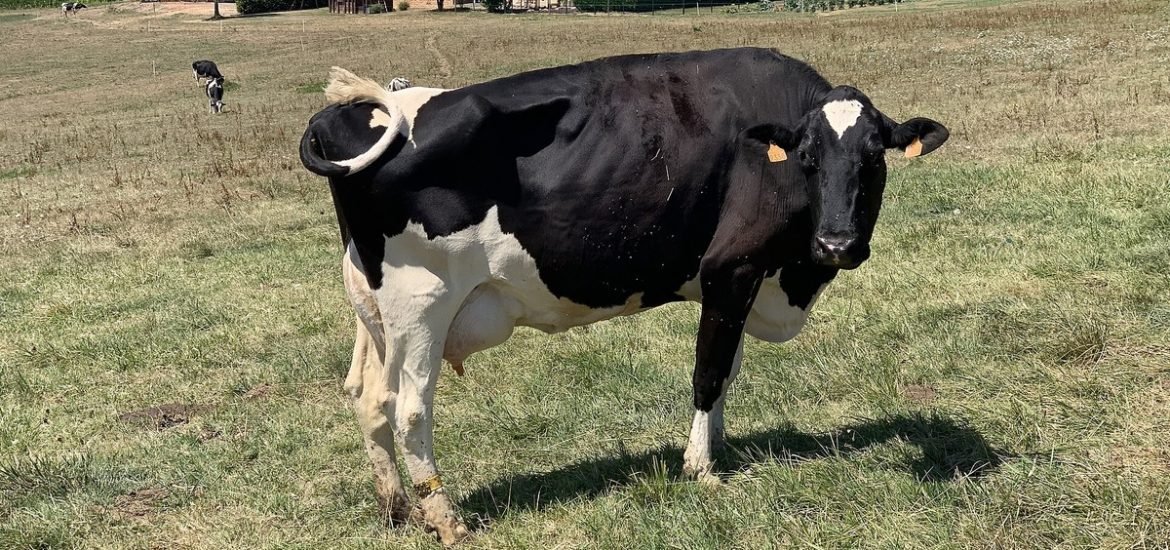
Neither a vaccine nor a cure exists yet for the new orthobunyavirus infecting dairy cows across Europe. Pierre Sultana, Public Affairs Director of AnimalhealthEurope, argues that the EU’s Biotech Acts should give veterinary medicine the regulatory space and manufacturing capacity to respond.
Neither a vaccine nor a cure exists yet for the new orthobunyavirus infecting dairy cows across Europe, but the ability to respond quickly to novel diseases is rapidly growing.
Researchers used metagenomic sequencing to identify the previously unknown virus after cattle in France and other European countries developed fever, diarrhoea, lethargy and reduced milk production.
This is precisely where emerging veterinary biotechnology could make a difference, nipping new diseases in the bud and reducing their costly impact. New technologies can accelerate the identification of diseases and, ultimately, the development and delivery of next-generation vaccines and treatments.
High-precision diagnostic tools, mRNA vaccines and other novel biotechnologies are rapidly emerging. But turning these scientific advances into practical defences requires a regulatory environment that supports innovation throughout the development process. The EU’s Biotech Acts can help provide that environment.
What the Biotech Act I already proposes
The Commission Proposal on the EU Biotech Act I has already taken steps towards reducing administrative burdens for veterinary biotechnology. Among other measures, the proposed changes to the Veterinary Medicinal Products Regulation would simplify the handling of variations that do not require assessment, as was the case under previous legislation. The European Commission estimates that this could save up to an estimated 30,000 hours of staff time per year sector-wide, equivalent to almost EUR 2 million per year or 10–20% efficiency gain on processing workload.
The act also aims at supporting innovation by introducing regulatory sandboxes that allow for novel technologies not fitting under an existing regulatory route to be tested before full market entry. Although welcome, their effectiveness is still to be proven.
However, this is not sufficient to clearly incentivise innovation. To do this, Europe firstly needs legislation that treats veterinary medicine according to its own realities.
Veterinary medicine has its own realities
Human and animal health biotechnology share many scientific foundations, but their regulatory and development needs are not identical. The Commission’s proposal already recognises specific issues affecting veterinary medicinal products, including the complexity of biological products.
A clear distinction between the two sectors can help prevent regulatory gaps or uncertainty for veterinary medicines while maintaining appropriate safeguards.
Manufacturing the next generation of defences
In addition, the Biotech Act II should reflect and optimise how veterinary biotechnologies are manufactured. Biological medicines can depend on the availability of biological agents, fermentation and cell cultures at industrial scale.
Supporting the ability to manufacture these products would not only help bring innovation from the laboratory into practical use, but it could also strengthen Europe’s capacity to produce its own active ingredients needed for veterinary medicines.
The Biotech Act II should therefore not only support the creation of new start-ups and companies, but it should also strengthen Europe’s existing environment by supporting the scaling up of the manufacturing of these agents and ingredients. This would allow the veterinary sector to diversify its supply chains and even increase the sector’s resilience.
The emergence of the Shamonda-type orthobunyavirus illustrates why this matters. The virus has been detected in cattle across several Western European countries, with transmission thought to involve biting midges.
With disease threats only likely to grow with rising temperatures and increased movement, Europe must ensure it has the latest defences available, which means backing homegrown veterinary innovation.
Biotechnology cannot guarantee that every emerging disease will be stopped at source. But it can provide new tools for detection, prevention and treatment. Those tools will only reach farmers and veterinarians at the speed required if Europe’s regulatory architecture supports innovation from discovery through to development, manufacturing and deployment.
The Biotech Acts are an opportunity to build that architecture: one that removes unnecessary obstacles, recognises the specific needs of veterinary medicine and gives Europe the capacity to develop and manufacture the technologies needed to respond to tomorrow’s animal-health threats.
For European policymakers, strengthening veterinary biotechnology is ultimately about strengthening resilience — of animal health, food supplies, livelihoods and the European economy.
Pierre Sultana is the Public Affairs Director of AnimalhealthEurope, which represents the manufacturers of animal medicines, vaccines and other animal health products in Europe.
Read also
- Stopping bird flu has become a needless game of ‘chicken’
- The return of rabies in central Europe and the One Health imperative
- Expanding animal vaccination can curb the ‘silent pandemic’ of superbugs
- Without a clear animal vaccination strategy, the next outbreak could be a disaster
- Why Europe needs to talk about livestock vaccination