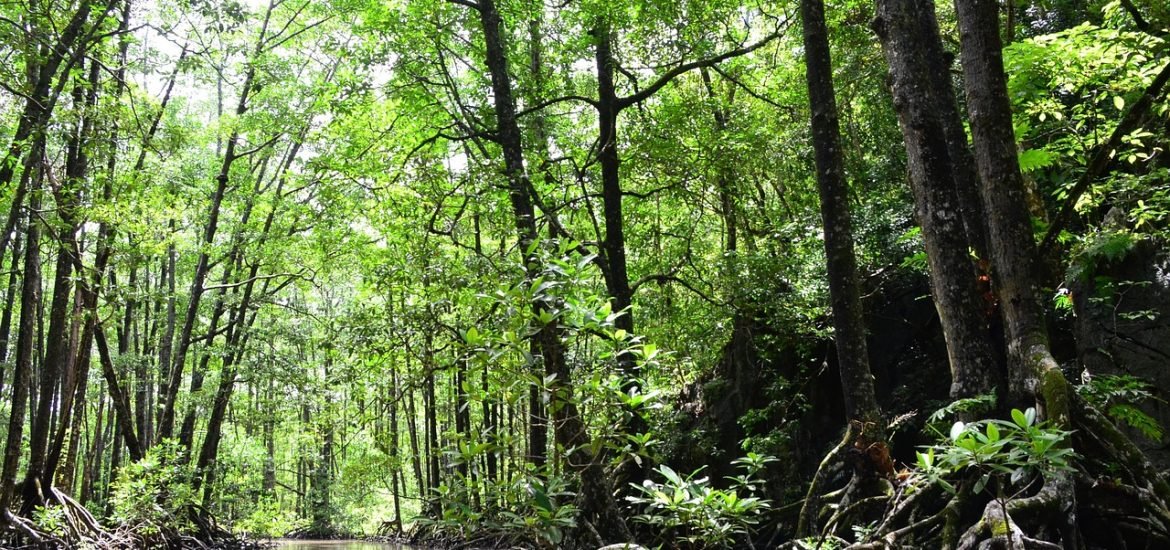
The world’s mangrove forests have quietly gained ground over the past four decades, according to new analysis, offering a rare piece of encouraging news in the climate story. But the global gain hides a mixed picture, with some of the most mangrove-rich countries still losing these vital coastal forests at worrying rates.
The research comes from Aberystwyth University, UK, as part of the Global Mangrove Watch, an international collaboration that tracks mangroves using satellite imagery. Between 1985 and 2025, the team found a net gain of 47,720 hectares of mangrove cover worldwide.
Why Mangroves Matter
Mangroves are among the most valuable ecosystems on the planet. Found along tropical and subtropical coastlines, they act like natural sea walls, shielding coastal communities from storms and rising seas. They provide nurseries for fish, homes for wildlife, and livelihoods for millions of people. Perhaps most importantly for the wider planet, they lock away huge amounts of carbon in their soils and roots, making them a key ally in the fight against climate change.
Losing them means losing all of these benefits at once. Knowing where they are thriving, where they are vanishing, and why, has become a scientific priority.
New Maps with Sharper Detail
The newly launched maps, known as GMW v4.1, use improved satellite imagery and machine learning to track areas of mangrove loss, recovery, and stability across four decades. They give researchers and decision-makers a much clearer view of what’s happening on the ground.
Dr Pete Bunting, Reader in Remote Sensing in the Department of Geography and Earth Sciences at Aberystwyth University, whose work has helped drive the Global Mangrove Watch, welcomed the results but urged caution.
“The latest Global Mangrove Watch update gives us a much clearer picture of how mangrove ecosystems are changing around the world. The overall increase in mangrove cover is encouraging, but it also shows that progress is uneven, with some regions continuing to experience significant losses. The findings also highlight the complexity of mangrove change, with gains in some areas linked to both restoration efforts and natural processes,” he said.
An Uneven Picture
The global figure is positive but in certain areas the story becomes more complicated. Indonesia, for example, which holds the largest area of mangroves in the world, has lost 2,044 km² of mangrove cover since 1985. Myanmar, Malaysia and Nigeria have also seen significant declines.
In other places, mangroves are bouncing back, either through natural regeneration or through active restoration projects. New coastal habitats are even forming in some areas. The result is a patchwork: gains and losses happening at the same time, but not always in the same places.
A global increase might sound like a green light for policymakers, but if the countries with the biggest and most biodiverse mangrove forests are still losing them, the world could still be losing critical ecosystems (and the wildlife and carbon storage that go with them).
Turning Data Into Action
The Global Mangrove Watch platform is designed to help scientists, conservation groups and governments target their efforts where they are most needed. Users can view the maps online at globalmangrovewatch.org and see how mangroves in specific regions have changed over time.
Dr Bunting explained why this matters: “Reliable information about mangroves is essential for understanding what is driving these changes and for supporting effective conservation. The improved mapping capabilities of the Global Mangrove Watch help identify where conservation efforts can have the greatest impact.”
The hope is that the sharper maps will help direct resources to the places where restoration will do the most good, and where losses need to be stopped urgently. With the Global Mangrove Alliance aiming to increase the world’s mangrove cover by 20% by 2030, tools like this one will play a central role in tracking progress.
The Bottom Line
The world has slightly more mangroves today than it did 40 years ago, which is genuinely good news. But the increase is fragile, uneven, and by no means guaranteed to continue. Protecting mangroves means protecting coastlines, communities, wildlife, and one of nature’s most efficient carbon stores. This new data gives the world a much better map for that job.
Global Mangrove Watch (2026). Global Mangrove Watch v4.1 dataset (mangrove extent and change maps, 1985–2025). Global Mangrove Watch, a collaboration led by Wetlands International with Aberystwyth University, The Nature Conservancy and soloEO. Available at: https://www.globalmangrovewatch.org