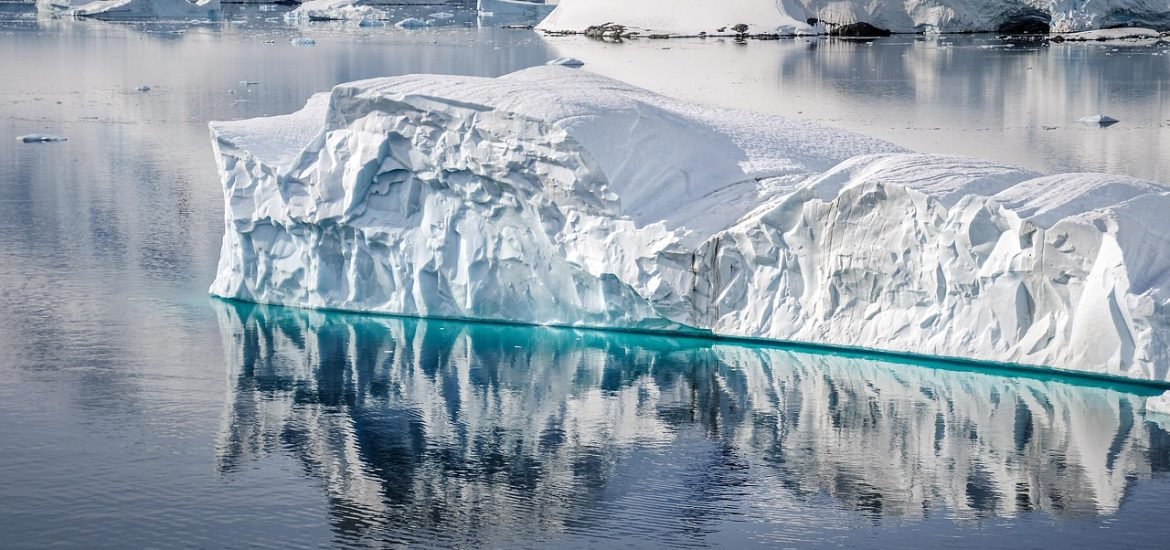
Antarctica’s sea ice hasn’t just been affected by one problem triggered by climate change, but three compounding ones hitting in sequence, according to a study published in the journal Science Advances. Together, they have driven sea ice to record-breaking lows, with consequences that could affect the entire planet.
A Slow Build-Up, Then a Sudden Collapse
For decades, Antarctica seemed almost immune to the effects of climate change. While the rest of the world warmed, the sea ice surrounding the frozen continent actually grew. But in 2015, something shifted dramatically and scientists have now pieced together exactly what happened.
A new study led by the University of Southampton, UK found that the collapse of Antarctic sea ice happened in three distinct stages, with each one making the next worse.
It began quietly around 2013, when shifting winds started pulling warm, salty water up from the deep ocean towards the surface. This deep water, known as Circumpolar Deep Water, had been sitting far below for a long time, slowly accumulating heat.
Then in 2015, stronger winds mixed that deep heat directly into the surface layer of the ocean. The effect was rapid and dramatic and sea ice melted at an extraordinary rate, particularly around East Antarctica.
Since 2018, the situation has worsened further. With less ice covering the ocean, the surface water stays warm and salty, making it much harder for new ice to form. The ocean is now effectively trapped in a self-reinforcing cycle where recovery becomes increasingly difficult.
Lead author Dr Aditya Narayanan described the sequence vividly: “What started as a slow build-up of deep-sea heat under the Antarctic sea ice was followed by a violent mixing of water, ending in a vicious cycle where it’s too warm to let ice recover. It’s concerning because massive loss of sea ice destabilises the world’s ocean current systems, warming our planet far quicker than expected.”
East and West: Different Problems, Same Result
Interestingly, the research found that the ice loss isn’t happening in the same way across the whole continent. In East Antarctica, the main culprit is that surge of warm deep water rising to the surface. In West Antarctica, the picture is slightly different and heat became trapped in the ocean beneath thick cloud cover, brought in by warm air travelling down from the subtropics, driving particularly severe melting in the summers of 2016 and 2019.
The overall scale of the damage has been staggering. By 2023, the loss of sea ice had reached record levels, with an area equivalent to the entire landmass of Greenland simply disappearing.
Why This Matters Far Beyond Antarctica
It would be easy to think of melting Antarctic ice as a distant, contained problem. In reality, what happens at the bottom of the world affects all of us.
Antarctic sea ice plays a crucial role in regulating the planet’s temperature. As co-author Dr Alessandro Silvano explained: “This isn’t just a regional problem. Antarctic sea ice acts as Earth’s mirror, reflecting solar radiation back into space. Its loss could destabilise the currents that store heat and carbon in the ocean, accelerating global warming, and also destabilise ice shelves that prevent glaciers from sliding into the sea, raising global sea levels.”
In other words, losing Antarctic sea ice doesn’t just raise sea levels, it also weakens one of the planet’s most important natural cooling systems.
Dr Narayanan added that the Southern Ocean helps drive the global circulation of ocean water, a vast conveyor belt that distributes heat, nutrients and carbon around the world. Disrupting it carries consequences for weather patterns, marine ecosystems and climate stability everywhere.
A Tipping Point Ahead?
The researchers warn that human-driven climate change is strengthening the very winds that are exposing the Southern Ocean’s surface and dragging up that warm deep water. If this continues, Antarctica could be locked into a permanently ice-diminished state.
Professor Alberto Naveira Garabato sounded a stark note of caution: “If the low sea-ice coverage prevails into 2030 and beyond, the ocean may transition from a stabiliser of the world’s climate to a powerful new driver of global warming.”
The study is a reminder that climate tipping points aren’t just theoretical, they are already unfolding, and the effects reach far beyond the places where the ice once stood.
Aditya Narayanan et al., Compound drivers of Antarctic sea ice loss and Southern Ocean destratification.Sci. Adv.12,eaeb0166(2026).DOI:10.1126/sciadv.aeb0166