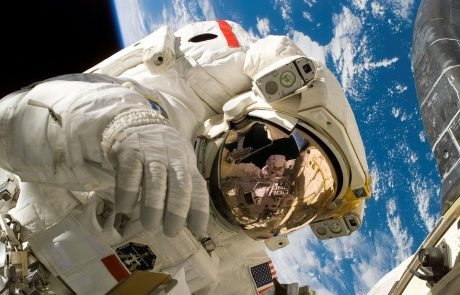
To boldly go where no man has gone before…. thanks to graphene! A team of researchers from Manchester University and architects from Skidmore, Owings & Merrill unveiled a graphene-enhanced space
To boldly go where no man has gone before…. thanks to graphene! A team of researchers from Manchester University and architects from Skidmore, Owings & Merrill unveiled a graphene-enhanced space

Even honeybees know instinctively to use social distancing when their hive is under attack from a parasite, finds a new study published in Science Advances (1). A team involving researchers

An international team of experts suggest that governments and road users around the world need to develop an ethical framework to introduce new road rules for connected and automated vehicles

A new app developed by a team from the University of Exeter, UK, will help small-scale farmers in the Amazon to live and earn a living in the deforested parts

According to a study published in Nature, horses were domesticated in the northern Caucasus, specifically in the Pontic-Caspian steppes, and from there conquered the rest of Europe and Asia in
Computer games could be a valuable tool to educate young adults about Covid-19 and the benefits of preventative measures, such as social distancing and mask-wearing. Exploring the idea of using

A new study looking at more than 2500 animal and plant species suggests that farming should be as high-yielding and as concentrated in small areas as possible, leaving more space

Current ventilators used in hospitals across the world to treat patients with COVID-19 are expensive and cumbersome. But, it doesn’t have to be that way. A team from Imperial College

Researchers from the University of Cambridge’s Department of Psychology in the UK identified several ways in which people of high socioeconomic status have a greater impact on global greenhouse emissions

Researchers from the Complexity Science Hub in Vienna found out that, during the lockdown, women preferred to talk on the phone with a few select friends, while men were more