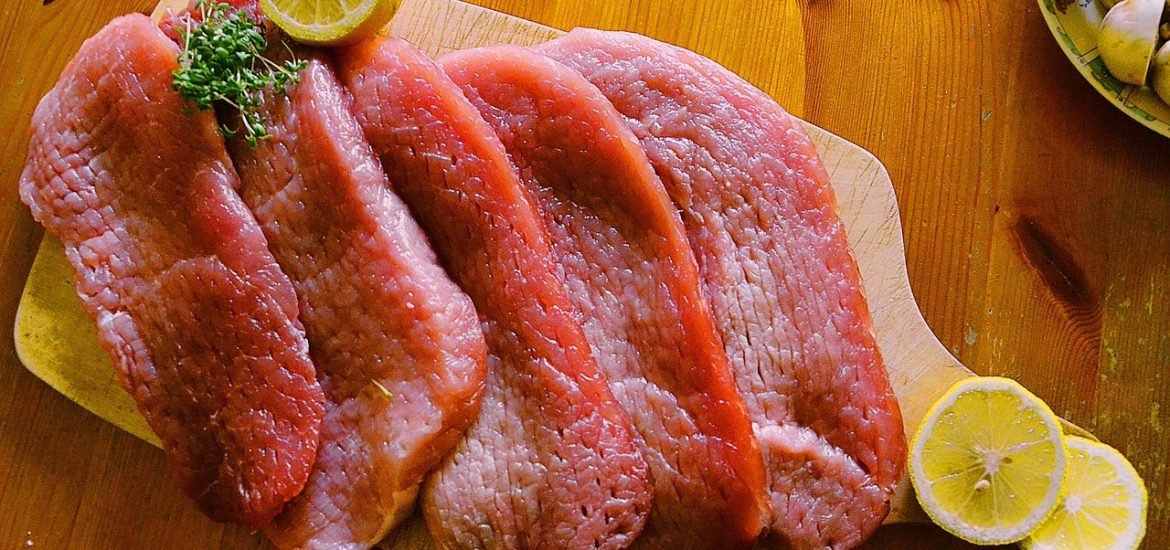
Most fake meat today gets its protein from bacteria or yeast, tweaked in the lab to churn out animal-like proteins in large tanks. Now scientists at Imperial College London, UK, have shown that plants themselves might do the job, and possibly do it better, according to a study published in Frontiers in Plant Science.
Meat Flavour in a Leaf
Cutting down on meat is one of the most powerful things any of us can do for the planet. Livestock farming eats up huge amounts of land and water and produces significant greenhouse gases like methane. Many people also want to avoid animal suffering. That’s why the market for meat alternatives is now worth between €6.7bn and €8.1bn a year and is expected to keep growing fast over the next decade.
The team, led by Dr Alexia Groff, has managed to get tobacco and lettuce plants to produce myoglobin, an animal muscle protein, inside their chloroplasts (the tiny green structures in plant cells that carry out photosynthesis).
“Here we show that plants can be engineered to produce the animal protein myoglobin (Mb) in their chloroplasts, the energy factories for photosynthesis. This could provide a more sustainable way to produce an important ingredient for plant-based meat products,” said Dr Groff.
Myoglobin is a key protein found in the heart and muscles of animals. It’s packed with iron (which gives meat its metallic, savoury taste) and it binds oxygen (which gives meat its red colour). Getting this protein into plant-based products could help them look, taste and feel much more like the real thing.
How They Did It
The researchers first copied the genes for pig and cattle myoglobin. Then they used a “gene gun” to physically fire tiny gene-carrying particles into the chloroplasts of young tobacco and lettuce plants. Some seedlings successfully absorbed the new gene into their chloroplast DNA. Those plants grew up, flowered, produced seeds, and passed the modification on to the next generation.
For comparison, the team also inserted the gene into the plants’ main nuclear DNA, and into the chloroplast of a single-celled alga called Chlamydomonas reinhardtii.
“Due to their bacterial ancestry and their high number of copies per cell, chloroplasts are generally much better at making large amounts of protein than the cell nucleus,” Dr Groff explained. “Here, we used tobacco because it is the best model plant for developing this technology, and lettuce because it is an edible crop that could eventually be used for food ingredient production.”
Promising Yields
Using a lab technique called liquid chromatography-mass spectrometry, the team measured how much myoglobin the plants produced. Tobacco yielded about 800 mg per kilogram of dry weight, and lettuce about 810 mg, at least three times more than plants that had the gene added to their nuclear DNA.
That’s still less than the concentration you’d find in real meat (which contains 8.1 to 11.2 mg per gram of dry weight). But the authors argue this doesn’t tell the whole story. Growing plants uses far less land, water and energy than raising animals, so plant-grown myoglobin could match, or even beat, animal farming when you look at how much protein each hectare produces, with a much smaller environmental footprint.
What’s Next
So how might this actually reach our plates? Dr Groff explains: “The myoglobin could be extracted from leaves and purified using industrial protein purification methods. Since it is identical to animal myoglobin, it could then be added as an ingredient to plant-based meat products to improve their colour, flavour and nutritional value.”
Co-author Dr Kyoko Morimoto, chief scientific officer at Kyomei, a Cambridge-based plant biotechnology startup that partly funded the work, sees another possibility: “We hope that edible lettuce, modified to express myoglobin, could also one day serve as a heme-iron-enriched biofortified food, depending on legislative approval.”
In other words, one day your salad leaves might not just complement a plant-based burger, they might actually contain the protein that makes it taste like meat.
Groff, A. et al. (2026). Sustainable production of myoglobin meat protein in plant chloroplasts. Frontiers in Plant Science. DOI: 10.3389/fpls.2026.1876707