A team of researchers from Germany developed a new method that can detect when an ecosystem is approaching a dangerous tipping point, according to a study published in Nature Communications. The authors suggest it can predict the changes years in advance.
The study, conducted by scientists from the University of Potsdam, the Potsdam Institute for Climate Impact Research, and the Technical University of Munich, could improve our ability to anticipate sudden and dramatic changes in the natural world, from surging glaciers to the transformation of the Amazon rainforest.
Tipping points are moments when an ecosystem changes rapidly from one state to another. Examples include a rainforest turning into a savannah, or an ice sheet collapsing. These shifts are difficult to detect and virtually impossible to reverse. As climate change puts increasing pressure on ecosystems around the world, understanding when such tipping points are about to happen has become one of science’s most important challenges.
One major obstacle has been the presence of seasonal cycles in nature. The regular rise and fall of temperatures, rainfall and other factors throughout the year often masks the slower, longer-term changes driven by climate change, making it harder to spot warning signs.
The new method tackles this problem by offering a way to measure how resilient an ecosystem is and how much pressure it can absorb before tipping. This approach uses a wider range of data than previous systems, but it doesn’t require complex data preparation, making it practical to apply across many different types of ecosystems.
To test their approach, the researchers applied it to two real-world cases. The first one was the Amazon rainforest. When the team compared different factors, such as deforestation, human influence, and fires, they could not find any factor that could explain all the changes. Sometimes, even a small road can have far reaching consequences than large areas affected by deforestation.
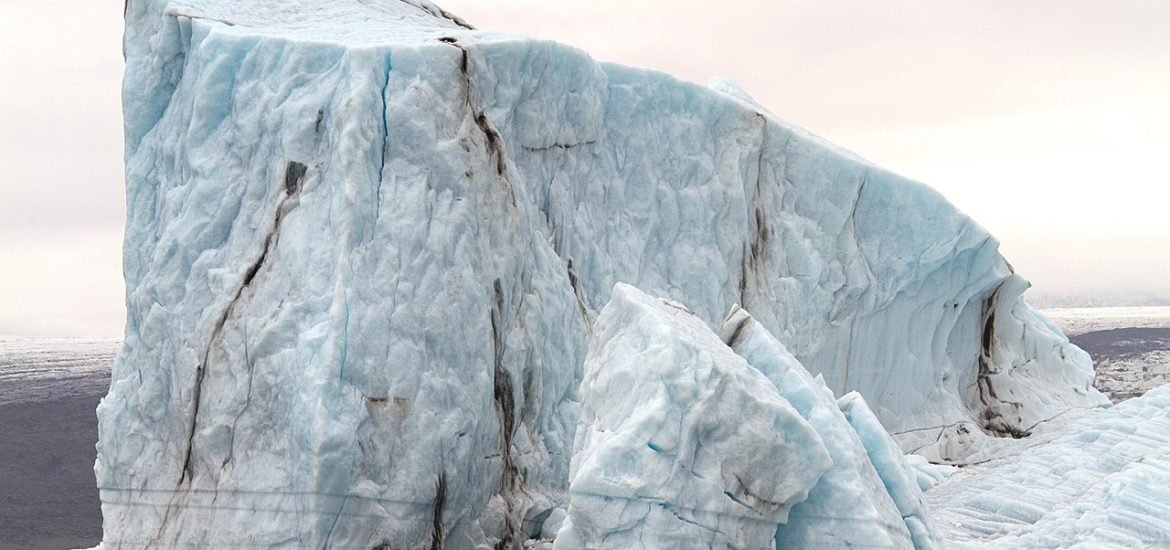
The second case involves the mountain glaciers in Alaska and Asia. Glacier surges and sudden dramatic accelerations in a glacier’s movement can be highly dangerous, threatening communities and infrastructure. Predicting them has historically been very difficult. “Glacier surges are a dangerous phenomenon in many parts of the world, and predicting them is complicated,” said lead author Dr Taylor Smith from the University of Potsdam. “With our method, we can now test how stable a glacier is and document predictions of surges multiple years in advance.”
The potential applications stretch well beyond glaciers. Dr Smith is optimistic about the broader reach of the new tool: “It can be widely used to assess how different Earth systems are responding to climate change.”
The researchers hope their method will help monitor natural hazards and deepen our understanding of how ecosystems respond to climate change.
Smith, T., Morr, A., Bookhagen, B. et al. Predicting instabilities in transient landforms and interconnected ecosystems. Nat Commun 17, 1316 (2026). https://doi.org/10.1038/s41467-026-68944-w