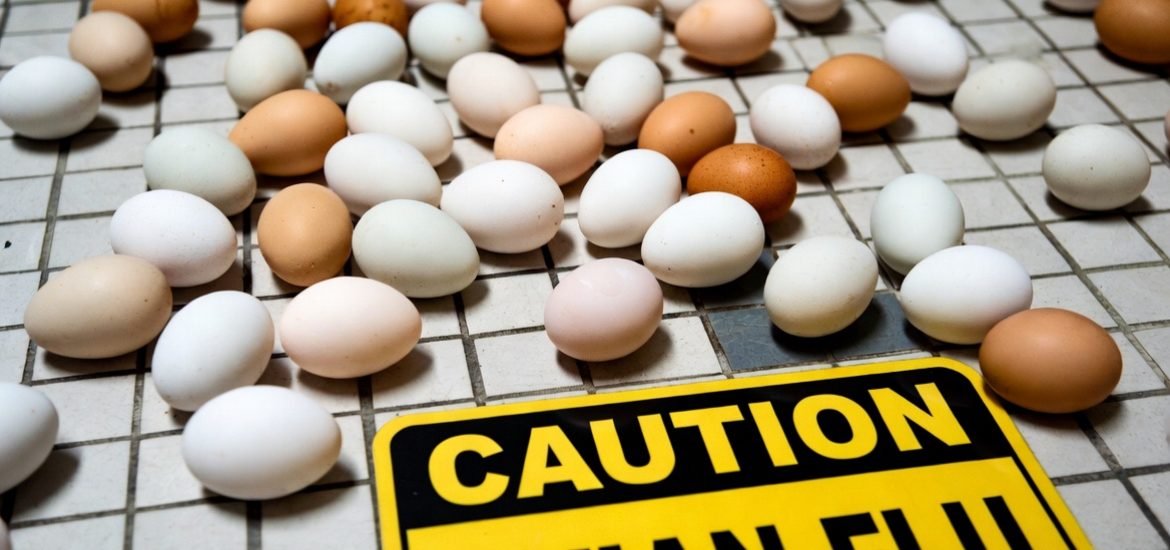
Every month this year, authorities around the world have slaughtered an average of 4.3 million chickens, turkeys, ducks and geese – not for food, but because of the presence or even the threat of avian influenza. Many of them were healthy birds that authorities feared could become sick in the future.
The figures for 2025, though not yet complete, only add to the growing global toll of bird flu, with more than 633 million poultry lost, whether infected or healthy, since 2005.
We often soften this reality with technical language, calling it “depopulation,” “culling,” or “stamping out.” But these terms obscure the underlying reality where healthy animals are lost not because they are sick, but because systems have failed to prevent disease.
What makes these losses all the more difficult is that effective vaccines exist, yet they remain largely unused in most poultry flocks worldwide. The uncomfortable truth is that this is mostly not due to scientific uncertainty or negligence, but a result of decisions driven by outdated trade policies.
Vaccinating against bird flu, can, and usually does, lead the governments of countries importing poultry to immediately ban imports from a vaccinating country. This can devastate farms, rural communities and economies. So, facing a stark but rational choice, countries choose to cull flocks when outbreaks occur in order to preserve trade market access.
The reason vaccination results in import bans is that vaccinated birds are currently indistinguishable from infected birds, which means importing countries halt trade to minimise the risk.
But this strategy is failing. Despite mass culling, bird flu outbreaks continue to rise, and the disease is spreading to both more places and more species.
Outbreaks of bird flu in mammals more than doubled from in 2024 compared to 2023, reaching Antarctica for the first time and increasing the risk of further spread and human transmission.
Human cases of bird flu cause “severe disease with a high mortality rate” but remain rare, for now. Continued spread amongst animals creates a risk of new strains that may spill over more widely.
Countries can simply no longer afford to let trade concerns prevent our ability to vaccinate. Governments must focus on ending the barriers that stop the use of prevention before the costs to animals, people and economies escalate further.
Vaccination doesn’t have to be an all-or-nothing strategy. There’s a middle ground in which vaccines are used strategically to limit the spread of bird flu, while avoiding risk to uninfected countries.
For example, allowing egg-laying chickens to be vaccinated would help increase protection against bird flu without impacting the export of broilers or poultry meat.
At present, trade restrictions apply if any poultry – whether egg-laying chickens, turkeys, ducks or broiler birds – in an exporting country is vaccinated against bird flu. But in many countries, most eggs are consumed domestically, so the need to distinguish an infected chicken from a vaccinated chicken for cross-border movement is not necessary.
Vaccination also need not trigger nationwide trade bans. When used in defined areas to contain outbreaks with strict surveillance, trade can continue from unaffected regions. This regionalization approach is already used for diseases such as foot-and-mouth disease.
Another way to limit the spread of bird flu is to vaccinate only specific species. France protected its poultry sector by vaccinating ducks with “DIVA” vaccines that allowed vaccinated animals to be distinguished from infected ones. This facilitated certification protocols with trade partners and enabled trade to continue. The vaccination program cost €105 million, nearly 15 times less than the €1.4 billion in losses during the 2021–22 bird flu crisis.
Containment through biosecurity and culling measures alone is failing. Trading partners must begin working together to address the barriers that prevent vaccines from being used, and to enable at least partial, targeted vaccination in the short term while longer-term systemic reforms are addressed.
Bird flu has already caused enormous losses to poultry producers and global food supplies – whether measured in animal lives, farmer income, or public expenditure for culling or farmer compensation. But the toll will rise exponentially if the disease continues to mutate and jump species, putting human health, food security and animal welfare at risk.
Existing strategies have so far been insufficient and resulted in the unnecessary losses of millions of animals. On the other hand, vaccines are proven tools for preventing disease and can be used both at scale and with precision, but only if countries agree on how they can be deployed without shutting down trade.
We have the tools to change the current trajectory. What’s missing is a system that allows them to be used. Until then, the cycle of outbreak and culling will continue.
Further reading
“Europe’s Growing Dengue Threat” – Interview with Dr. Eduardo Bittencourt
The Wang study : A 7 years analysis to end emotional era on GMOs ?
Preventing extinctions is too important to rule out genetic engineering
This post is also available in: FR