The enthusiasm for expensive mitigation measures for climate change appears to be waning. President Donald Trump, for example, has publicly rejected the scientific consensus on climate change, at times calling climate science a “hoax.” Accordingly, during his second term, there has been a rollback of climate policies, denial or minimization of climate science, withdrawal from international climate agreements, and prioritization of fossil fuel expansion.
However, the evidence that global warming is not only continuing but accelerating is overwhelming, coming from multiple independent lines of observation and sources, including NASA (1). Surface temperatures have risen by more than 1.1°C since pre-industrial times, and the past decade includes the hottest years on record. Atmospheric concentrations of CO2 persist at levels unprecedented in millennia and continue to rise. The oceans — which absorb more than 90% of the excess heat trapped by greenhouse gases — are at record heat content, driving thermal expansion and rising sea levels. Ice sheets and glaciers worldwide are losing mass, contributing to sea-level rise, while the extent of polar sea ice remains below long-term averages.
These indicators collectively demonstrate that the climate system continues to warm in ways that threaten ecosystems, infrastructure, and human well-being globally.
Reducing greenhouse gas emissions — the root cause of warming — remains the most fundamental and critical response. However, even optimistic projections suggest it may take decades to reach net zero globally – especially given the February 2026 withdrawal by the U.S. EPA of its “endangerment finding,” which had concluded in 2009 that greenhouse gases such as carbon dioxide and methane “endanger public health and welfare.”
Thus, temperatures will continue to rise and impacts will worsen. Against that backdrop, scientists and policymakers are increasingly exploring complementary approaches that could temporarily ease temperature rises, buying time for emissions cuts and carbon removal to take full effect – assuming that they are pursued.
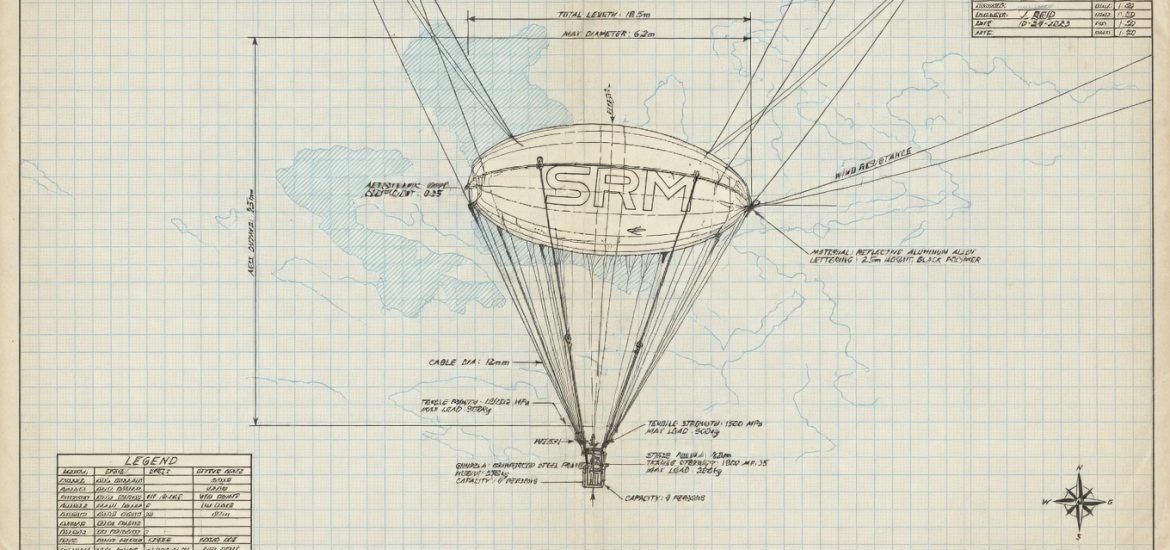
One such strategy is solar radiation management (SRM) — essentially, shading the planet — and among the proposed methods, global shading via arrays of large, high-altitude balloons offers a feasible, potentially lower-cost and reversible approach.
Why Warming Will Continue Even with Mitigation Efforts
The core physics underlying climate change is straightforward: Greenhouse gases like CO2 trap heat in Earth’s atmosphere, raising global temperatures. CO2 persists for centuries; as long as more is added than removed, temperatures will continue to rise. According to climate models, even with maximal deployment of electric vehicles and renewable energy technologies, temperatures could still surpass 3°C above pre-industrial levels by the end of this century. This means more intense and frequent heat waves, heavier rainfall and flooding, intensified storms, and widespread ecological disruptions.
This stark projection helps explain why the idea of manipulating Earth’s energy balance — not just greenhouse gas concentrations — has moved from fringe speculation toward serious scientific inquiry. Solar radiation management (SRM) does not remove greenhouse gases but instead aims to reflect a portion of incoming sunlight before it warms the Earth’s surface, reducing the effective heating of the planet. This concept is rooted in well-understood physical phenomena: Large volcanic eruptions, such as Mount Pinatubo in 1991, injected huge amounts of sulfur aerosols into the stratosphere and temporarily reduced global temperatures for one to two years.
Global Shading with High-Altitude Balloons: A Conceptual Overview
In a 2024 analysis, we discussed (2) a form of global shading based on an array of large high-altitude balloons deployed in the stratosphere. The core insight is deceptively simple: If even a small fraction of incoming sunlight is blocked or reflected, global temperatures can be lowered in the near term. We estimated that if current greenhouse gas emissions continue unabated, global surface temperatures could rise to roughly 3.3°C above pre-industrial levels by 2100 — more than double today’s increase. We made the case that traditional mitigation efforts alone, even if rapidly scaled, would be too slow and too expensive to prevent substantial warming within the lifetimes of people alive today.
The balloon-based approach seeks to mimic some aspects of the volcanic sulfate aerosol mechanism but without injecting reactive particles into the atmosphere. Instead, an array of large, controlled balloons—each hundreds of feet in diameter—would be flown at high altitudes to block a small percentage of incoming solar radiation. We outlined a “global shading” strategy in which such balloons would be deployed across a belt near the equator, where solar heating is greatest, maximizing cooling per area of shade provided. According to rough calculations, shading on the order of a few tenths of a percent of sunlight could reduce global average temperatures by approximately 0.5°C or more, effectively turning back the “climate clock” by decades and giving climate mitigation strategies time to take full effect.
The concept emphasizes reversibility, scalability, and practicality. Balloons could be increased in number, repositioned, or brought down entirely if unintended effects occurred, and their effects could be limited to a circumscribed area. Unlike some other SRM proposals, the balloon system would not introduce large quantities of chemical aerosols into the stratosphere that could cause adverse environmental or health effects.
How the Balloons Would Work
In practical terms, the balloons would be massive — roughly 300 feet across in the baseline scenario — but far smaller than some of the engineered structures proposed elsewhere (like huge space mirrors “about the size of Brazil (3)”). For comparison, the Hindenburg zeppelin was over 800 feet long. Positioned at altitudes above commercial aviation (around 80,000 feet), they would be largely invisible from the ground. Each balloon’s cross-section would shade an area directly proportional to its size; if balloons were distributed around the globe such that shaded area amounted to about 0.25% of Earth’s total surface, the resulting reduction in radiant energy could translate directly to surface cooling.
Because solar radiation is strongest around the equator, clustering balloons in an equatorial belt would make them more effective per unit deployed. In this configuration, the estimated cooling could significantly delay the worst impacts of warming, potentially keeping temperatures within thresholds like 1.5–2.0°C above pre-industrial levels for longer than models currently project. This “peak shaving strategy (4)” aligns with broader SRM discussions in the climate science literature, which often analyze how temporarily shading the planet could limit the highest projected temperature overshoot while longer-term emissions reductions and negative emissions technologies scale up.
Comparison to Other Solar Geoengineering Approaches
The balloon shading concept is one among several proposed forms of solar radiation management. The most studied alternative is stratospheric aerosol injection (SAI), which would deliberately inject fine reflective particles — such as sulfur dioxide or engineered minerals — into the stratosphere to scatter incoming sunlight. SAI has natural analogs in volcanic eruptions and has been shown in climate models to reduce temperatures and even slow ice loss. However, it carries significant uncertainties and potential side effects, including possible disruptions to regional precipitation patterns, impacts on stratospheric chemistry, and governance challenges due to its global scope.
By contrast, high-altitude shading balloons could avoid the environmental and chemical risks associated with aerosol injection. The balloons themselves serve only as physical barriers to incoming radiation, with no deliberate release of particles or gases. This could make the balloon strategy environmentally more benign and logistically simpler to regulate internationally, although airspace sovereignty and coordination issues would remain.
The balloons can be sent to whatever location is desired, as has been shown by Google’s Project Loon (5), and would be recoverable, thus resulting in no environmental debris. Managing fleets of millions of balloons should be feasible using artificial intelligence and might allow the balloons to have enhanced effectiveness by clustering them over areas that absorb the most sunlight and by shifting them south of the equator during winter in the northern hemisphere. They may have other benefits as well; they are essentially low-flying satellites and could be equipped with sensors that monitor crop health and assist during emergencies such as large wildfires and floods. And if certain chemicals were included in their payload, they could potentially assist in cloud formation, further multiplying their effectiveness.
Benefits of Global Shading by Balloons
1. Rapid Effect
One of the most compelling arguments for any form of SRM is its ability to reduce global temperatures quickly. Unlike greenhouse gas reduction, which requires decades to show full effects, shading strategies could produce measurable cooling within months or years of deployment. This rapid response could be critical if warming continues to accelerate toward thresholds associated with catastrophic impacts on food systems, water security, and global health.
2. Scalability and Flexibility
Balloon arrays can be scaled incrementally— adding or removing balloons as needed — and localized strategies might initially focus on regions experiencing the worst heat stress. National or regional deployment could provide benefits without waiting for global coordination, although equitable global outcomes would be preferable.
3. Lower Cost and Technical Simplicity
Deploying fleets of controlled balloons may be significantly less expensive than large space-based sunshades or continuous aerosol injection. According to cost projections in the conceptual analysis, tens of billions of dollars could achieve substantial shading effects — a fraction of the hundreds of trillions projected for feasible mitigation alone.
4. Reversibility
Another important factor is that balloon shading can be reversed quickly by bringing balloons down. This reversibility reduces the risk of unintended long-term consequences and provides policymakers with control over the degree and duration of shading.
5. Other Advantages
If shading with balloons were successful in one country, and others became interested in implementing it, the production of the balloons could become a source of revenue for companies making them.
Criticisms, Risks, and Ethical Considerations
Despite its potential, global shading via high-altitude balloons (and SRM more generally) is not without controversy. Solar geoengineering does not reduce atmospheric greenhouse gas concentrations and thus does not address ocean acidification or other CO2-driven changes to the Earth. It merely masks some of the warming effects. The Intergovernmental Panel on Climate Change (IPCC) (6) has emphasized that SRM should not be considered a substitute for emissions reduction or carbon removal but could, at best, complement them.
There are also governance and equity issues. For small-scale pilot projects, balloon shading has the advantage of unilateral application; approval by other nations, let alone wide consensus, would not be required. At vast scale, however, deploying a planetary shading system could significantly alter global radiation exposure, and the benefits and risks would not be distributed evenly. Some regions could experience altered rainfall patterns, disruption to agricultural cycles, or other climate shifts. Without internationally agreed governance structures, unilateral deployment could lead to geopolitical tensions and ethical concerns about who controls the climate. However, because the balloon arrays are dynamic, Artificial Intelligence may be able to manage weather effects, possibly preventing localized droughts, floods, and heat waves.
Furthermore, a reliance on shading systems could create a “moral hazard,” reducing political will to cut greenhouse gas emissions if policymakers believe SRM can buy time indefinitely. This underscores the importance of framing shading as a temporary supplement — not an alternative — to robust mitigation.
Conclusion: A Bridge, Not a Replacement
Humanity faces a climate crisis with physical evidence of warming that continues unabated. While the ultimate solution must lie in rapidly reducing greenhouse gas emissions, real-world timelines suggest that warming — and associated damage — will continue at least for decades even under ambitious mitigation scenarios. Against this backdrop, innovative ideas like global shading using high-altitude balloon arrays deserve serious scientific and policy consideration.
Shading has the potential to buy time, to dampen the most extreme near-term temperature rises, and to reduce immediate risks to vulnerable ecosystems and human populations. But it also poses risks that must be carefully studied, regulated, and governed. If viewed not as a fix but as a bridge that complements mitigation and adaptation strategies, global shading could become an important tool in a comprehensive climate response — one that recognizes both the urgency of the moment and the complexity of the global system we seek to protect.
1 https://science.nasa.gov/climate-change/evidence/?utm_source=chatgpt.com
3 https://www.rand.org/pubs/commentary/2022/10/why-not-space-mirrors.html
4 https://www.next-kraftwerke.com/knowledge/what-is-peak-shaving?utm_source=chatgpt.com
5 https://x.company/projects/loon/?utm_source=chatgpt.com
6 https://www.ipcc.ch/report/ar6/wg3/
Further reading
“Germany’s Nuclear Mea Culpa: Too Little, Too Late – The Harm Is Done” – C. Semperes (interview)
“Whoever masters plastic will dominate the world” J. Tayefeh (interview)
“The EU’s climate laws sacrifice our GDP and our freedoms” V. Benard (interview)
The World as Probability: Why Bayesian Thinking Matters More Than Ever in Science
How to Reverse Global Warming: We Ask the New Expert – and the Answer Isn’t What You Think