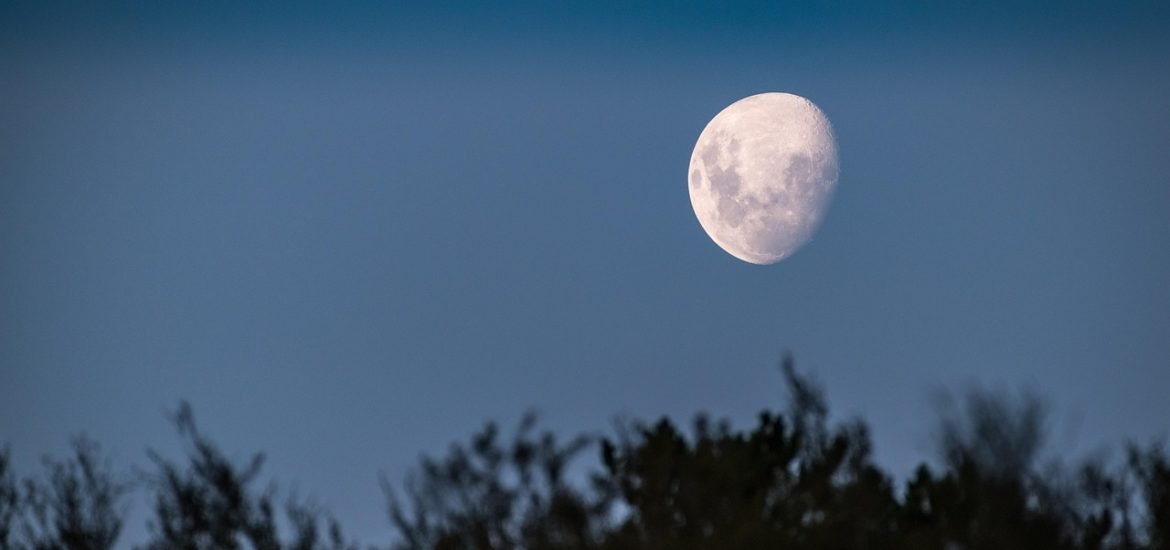
A new study from Lund University in Sweden has revealed that the red-necked nightjar, a migratory bird that breeds in southern Europe and winters in West Africa, organises its entire life around the phases of the moon, according to a study published in Science Advances, The authors found out that, when the moon is bright, the bird thrives, but when darkness falls, it goes into a kind of mini-hibernation just to survive.
What Is the Red-Necked Nightjar?
If you’ve ever been in the Spanish countryside at night and heard a rhythmic “kjotok-kjotok” tapping sound echoing through the darkness, you may have already crossed paths with this bird. The red-necked nightjar is a nocturnal creature and it hunts, travels, and raises its young under the cover of night.
Unlike bats, which use echolocation to navigate in total darkness, the nightjar depends on light to catch insects. That makes moonlight absolutely essential to its survival. “Unlike bats, the nightjar lacks the ability to navigate effectively in total darkness. This is an animal that lives with small margins. Without moonlight, the energy balance simply doesn’t add up,” said Anders Hedenström, professor of biology at Lund University.
A Bird on a 29-Day Schedule
The moon completes a full cycle from new moon to full moon and back again roughly every 29 days. According to this study, the nightjar’s life follows that same rhythm with striking precision.
During a full moon, the bird can hunt insects for much of the night, building up energy reserves. But when the moon fades and the nights grow dark, hunting becomes nearly impossible. To cope, the birds sit still for long stretches and do something very unusual for a bird: they lower their body temperature to save energy, almost like pressing a pause button on their metabolism.
“The most surprising thing was how clearly the dark nights trigger this energy-saving strategy. They shut down regularly every month,” said Gabriel Norevik, biology researcher at Lund University.
Moon Phases Control Migration and Breeding Too
Perhaps the most remarkable finding is that the moon doesn’t just control the nightjar’s daily feeding, but it controls the bird’s entire annual calendar.
The nightjar’s spring migration from Africa back to Europe doesn’t begin on a set date on the calendar. Instead, it begins only when the bird has enough energy to make the journey — which typically happens around two weeks after a full moon, once food supplies have allowed it to fuel up properly.
Even breeding is timed to the moon. The birds lay their eggs so that the chicks hatch during periods when nocturnal insects are most plentiful, giving the young birds the best possible chance of survival in those crucial first weeks of life.
Why This Matters
The study is the result of more than ten years of fieldwork at Doñana National Park in Spain. Researchers tracked the birds using specially designed data loggers that recorded flight activity, body temperature, and behaviour around the clock, across all seasons. It’s one of the most detailed long-term studies of its kind.
The findings carry a serious warning for the modern world. Nightjars are already living right at the edge of their energy limits. Any disruption to the light they depend on, from artificial lighting, climate change, or habitat loss, could throw their entire life cycle off balance.
“The next step is to understand how artificial light affects these systems. If we alter the night-time light, we risk disrupting their entire life cycle. This knowledge is vital when it comes to implementing conservation measures,” said Anders Hedenström.
As cities grow and electric lights spread further into natural habitats, the nightjar’s story is a timely reminder of how deeply connected wildlife is to the rhythms of the natural world, rhythms that humans are increasingly changing without fully understanding the consequences.
For the red-necked nightjar, the moon isn’t just a light in the sky. It is a lifeline.
Carlos Camacho et al., Moonlight drives the energy balance and annual cycle of a nocturnal forager.Sci. Adv.12,eaed8204(2026).DOI:10.1126/sciadv.aed8204