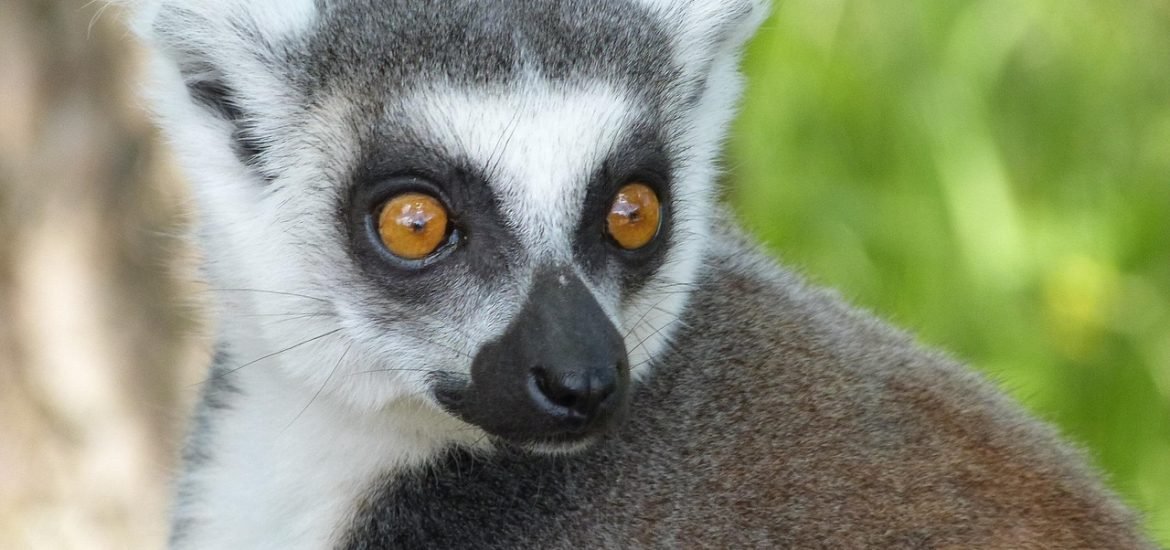
Human influences in Madagascar are causing the loss of large fruit-eating animals and their plant partners with big seeds, according to a study published in Ecology Letters. The authors warn that this may have significant consequences for forest structure and carbon storage.
For this study, a team of researchers from the German Centre for Integrative Biodiversity Research (iDiv) and Leipzig University collated data on more than 2,800 plant species and 48 living and 15 extinct fruit-eating animals, including birds and lemurs. The results show that past human-driven extinctions, as well as current human pressures, are changing seed size across the island.
It turned out that an increased human footprint leads to smaller seed sizes in plants, through selective logging of large-seeded trees, and by depleting populations of large frugivores that would otherwise disperse them.
The sizes of seeds and animals are connected: larger animals can swallow and disperse larger seeds. This means losing large animals inevitably results in the loss of large seeds, which explains why seeds are getting smaller. “Frugivore downsizing has been particularly severe in Madagascar, where all animals with a body mass over 10 kg (megafauna) rapidly went extinct around 1,000 years ago,” said Yuanshu Pu, doctoral researcher at iDiv and Leipzig University and first author of the study. “The loss of large frugivores can lead to secondary extinctions of species with large seeds. Alternatively, large-seeded species can evolve smaller seeds to adapt to the remaining frugivore community.”
The study also shows that several plant species, such as Borassus madagascariensis and Tsebona macrantha, produce seeds too large for any island-dwelling animal to disperse. These “ecological ghosts” reflect interactions with now-extinct giant lemurs and other megafrugivores. “It remains unclear how such plants have persisted, but they may have found alternative dispersers, such as introduced zebu cattle, bushpigs, humans, or water,” said Yuanshu Pu.
Large seeds are found in tree species that grow slowly and live long, and they play essential roles in carbon storage. The problem is that these trees are particularly vulnerable to human activities such as logging. In addition, the slow growth of large trees with large seeds delays their recovery.
Many key plant traits, such as tree height, wood density, and lifespan, influence seed size. These characteristics shape forest structure and control crucial ecological functions, including carbon storage. Changes to smaller seeds could further alter forest structure and ecosystem function.
“The futures of plants and the animals that disperse them are intertwined. Protecting Madagascar’s enigmatic lemurs – many of which eat the fruit and disperse the seeds of plants – is therefore vital not only for animal conservation, but also for maintaining a diversity of large-seeded food plants and the critical ecological functions they support,” concluded senior author Dr Renske Onstein, junior group leader at iDiv and head of the Biodiversity Hotspots research group at Naturalis Biodiversity Center.
Pu Y, Zizka A, Onstein RE. Legacy of the Lost and Pressure of the Present: Malagasy Plant Seeds Retain Megafauna Dispersal Signatures but Downsize Under Human Pressure. Ecol Lett. 2025 Sep;28(9):e70205. doi: 10.1111/ele.70205.