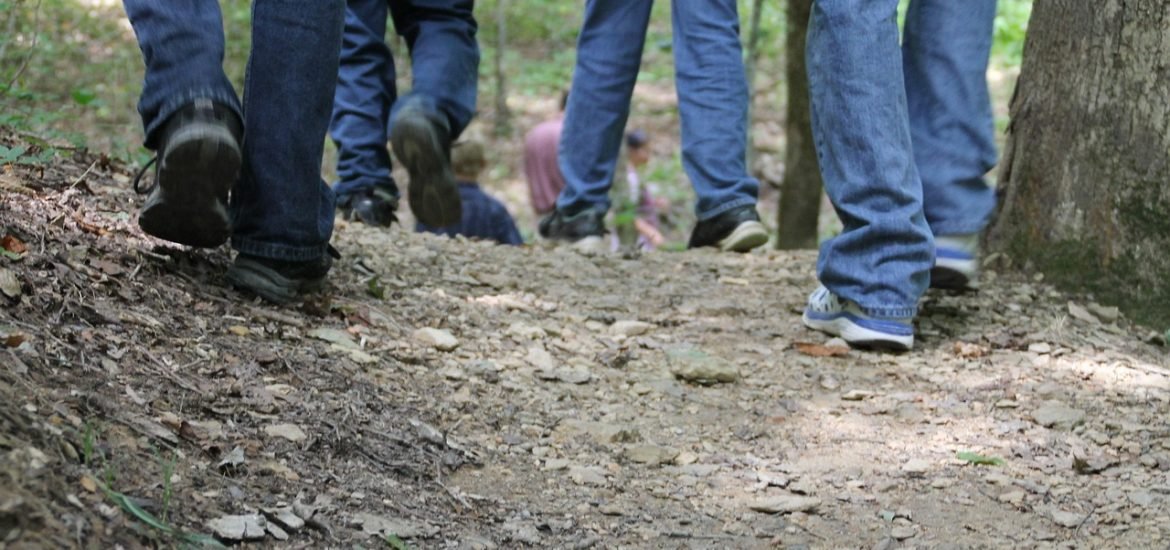
People who regularly go for walks are less likely to suffer from back pain than people who do not walk much, according to a study published in the journal JAMA Network Open. The authors say that volume, not intensity, is what matters.
A team from the Norwegian University of Science and Technology assessed the relationship between walking and the risk of developing chronic lower back problems. The results show that people who walk regularly have less back pain than those who do not walk much. And it is the volume that matters most, not the intensity. In other words, it’s better to walk more than to walk fast. The authors believe the results could help many patients if they follow the provided advice and save the healthcare system significant money.
“People who walk more than 100 minutes every day have a 23 per cent lower risk of lower back problems than those who walk 78 minutes or less,” said Rayane Haddadj, from the Department of Public Health and Nursing at the Norwegian University of Science and Technology. “Intensity also plays a role in the risk of long-term back problems, but not as much as the daily amount of walking,” emphasized Haddadj.
Over 10,000 people participated in the study, which is part of the Trøndelag Health Study (The HUNT Study). Each participant had two sensors on their thighs and backs to measure the volume and intensity of their walking.
Until now, there has been little research on preventing chronic back pain. We know that physical activity prevents a wide range of illnesses and ailments, but this study confirms that simply walking can help prevent long-term lower back problems. “The findings highlight the importance of finding time to be physically active – to prevent both chronic back problems and a number of other diseases. Over time, this could lead to major savings for society,” concluded Paul Jarle Mork, a professor at NTNU’s Department of Public Health and Nursing.
Haddadj R, Nordstoga AL, Nilsen TIL, et al. Volume and Intensity of Walking and Risk of Chronic Low Back Pain JAMA Netw Open. 2025;8(6):e2515592. doi:10.1001/jamanetworkopen.2025.15592