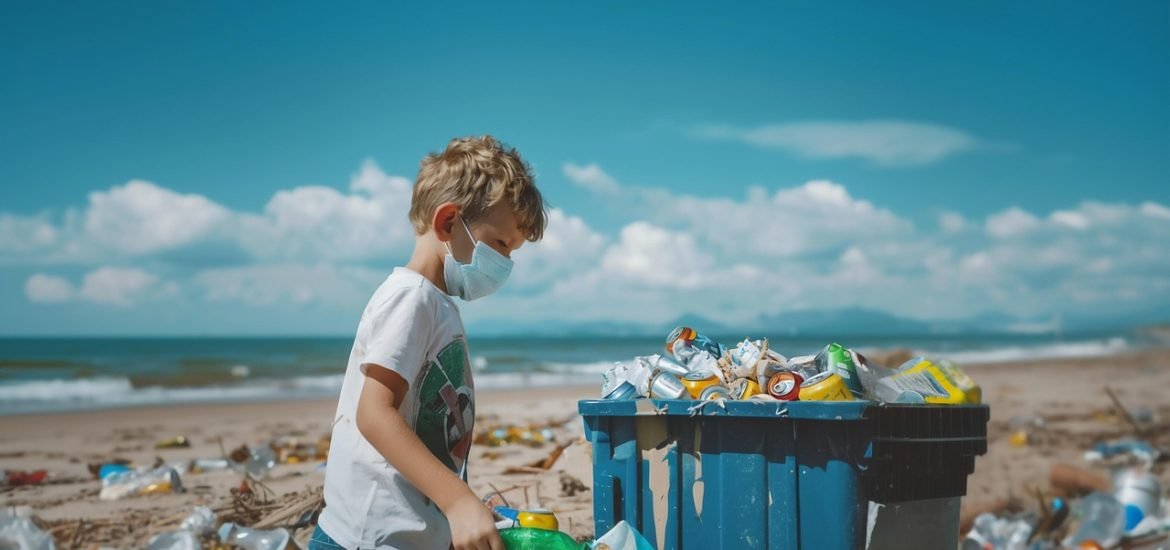
Microplastics are colonised by pathogenic and antimicrobial-resistant bacteria, making them more dangerous than previously believed, according to a study published in the journal Environment International. The authors call for urgent action for waste management and recommend wearing gloves when taking part in beach cleans.
Microplastics are ubiquitous pollutants. Over 125 trillion particles are present in the ocean, and they have been detected in soils, rivers, lakes, animals, and the human body. Worryingly, microbial communities rapidly make their home around the particle surface, forming the “Plastisphere”. These communities may often include pathogenic (disease-causing) or antimicrobial-resistant (AMR) bacteria.
To assess the impact of these bacteria, a team from the University of Exeter developed a method to secure five different substrates (bio-beads, nurdles, polystyrene, wood, and glass) and place them in water at various locations.
After two months in the water, bacterial biofilms from each substrate were analysed, and all substrates had pathogens and bacteria. However, there were significant differences. For example, microplastic biofilms harbored over 100 unique bacterial types, far more than on natural (wood) or inert (glass) substrates. The authors also highlight the potential biosecurity risks posed by microplastics in areas near aquaculture facilities, where filter-feeding organisms may ingest colonised particles containing pathogens and ARGs.
“Following the recent concerning release of sewage bio-beads in Sussex, this timely study highlights the pathogenic and AMR risk posed by microplastic substrates littering our ocean and coasts. By identifying high-risk substrates, we can improve the monitoring of those, or even phase them out for safer alternatives,” said. Dr Emily Stevenson, from the University of Exeter. “This novel research used a specifically-designed incubation structure that helped reduce bias from biofilm communities growing on cages, bags, or boxes used to secure microplastics in traditional studies. Our study fixed these news structures along a transect from the clinic to marine waters, and our findings clearly show the importance of this multiple environment transect. Previous studies have detected AMR and pathogen colonisation in high pollution zones, but we show that other surface waters can harbour communities with a high proportion of AMR. As this work highlights the diverse and sometimes harmful bacteria that grows on plastic in the environment, we recommend that any beach cleaning volunteer should wear gloves during clean ups, and always wash your hands afterwards.”
“Our research shows that microplastics can act as carriers for harmful pathogens and antimicrobial-resistant (AMR) bacteria, enhancing their survival and spread. This interaction poses a growing risk to environmental and public health and demands urgent attention. By tracking a source-to-sea pathway influenced by hospital and domestic wastewater discharges, our study shows how antimicrobial-resistant pathogens colonised all substrates. Protected within their biofilms, each microplastic particle effectively becomes a tiny vehicle capable of transporting potential pathogens from sewage works to beaches, swimming areas, and shellfish-growing sites,” said Professor Pennie Lindeque, Head of Group for Marine Ecology and Society at Plymouth Marine Laboratory.
“Our research shows that microplastics aren’t just an environmental issue – they may also play a role in the dissemination of antimicrobial resistance. This is why we need integrated, cross-sectoral strategies that tackle microplastic pollution and safeguard both the environment and human health,” concluded Dr Aimee Murray, Senior Lecturer of Microbiology at the University of Exeter.
Stevenson EM, Buckling A, Cole M, Hayes A, Lindeque PK, Murray AK. Sewers to Seas: exploring pathogens and antimicrobial resistance on microplastics from hospital wastewater to marine environments. Environ Int. 2025 Dec;206:109944. doi: 10.1016/j.envint.2025.109944