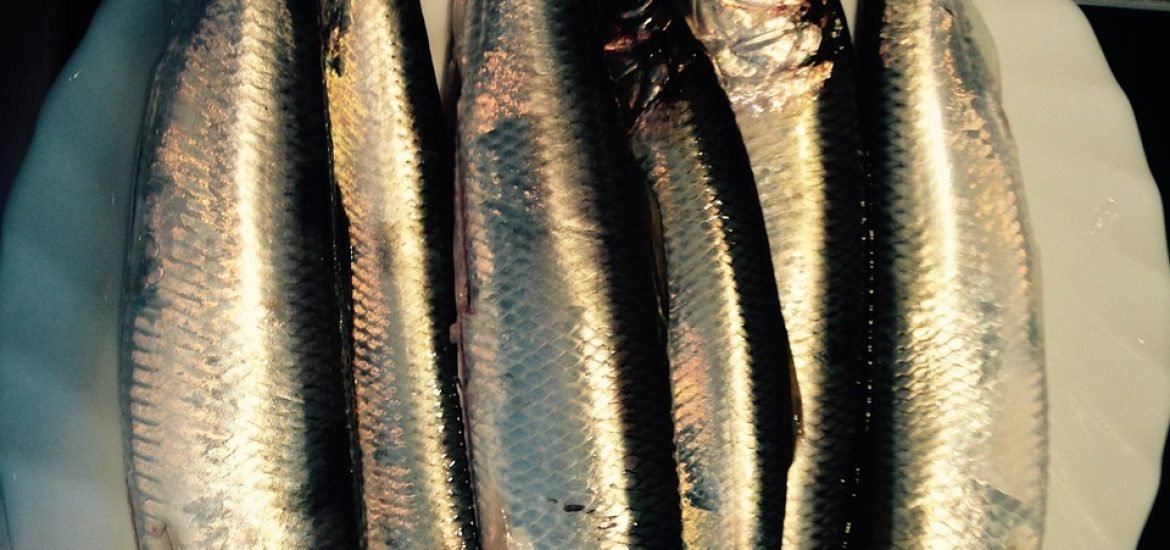
Scientists create a detailed genetic map of herring populations across the Baltic Sea, according to a study published in the Proceedings of the National Academy of Sciences. The authors believe this breakthrough that could reshape how this important fish is managed and protected.
The study, carried out by researchers from Uppsala University, Stockholm University and the Swedish University of Agricultural Sciences, found that herring from different parts of the Baltic Sea are not one uniform group. Instead, they belong to distinct populations, each genetically adapted to the specific conditions of their local environment, such as salinity and temperature.
It has long been known that spring- and autumn-spawning herring are genetically different from one another. But the new study, which used a much larger sample size than previous research, revealed something unexpected. Some herring are hybrids between these two groups, meaning they have crossed between populations that were thought to be separate.
“Despite their striking genetic differences, we were able to identify hybrids between the spring- and autumn-spawning populations, thanks to the very large sample size in our present study,” said Professor Leif Andersson of Uppsala University, who co-led the study.
The researchers believe this mixing happens because, while genetics sets a general window for when a herring should spawn, environmental factors such as water temperature and nutritional condition can shift the timing. “Our interpretation is that genetics sets an optimal window for spawning, primarily spring or autumn, but water temperature and nutritional status influence when spawning happens. This would imply that there is a communication within the school, possibly due to hormones that set the spawning time for the school,” explained Professor Andersson.
The study also revealed that spring-spawning herring found throughout the Baltic Sea are themselves divided into northern, central and southern groupings, with further sub-groupings within those.
One particularly striking example came from the Stockholm archipelago, home to what locals call “wild rose herring”, so named because they spawn when the wild roses are in bloom, in mid-July, when the water is considerably warmer than in spring. Co-lead Professor Linda Laikre of Stockholm University said: “We noticed that the genetic constitution of this population was more extreme than the populations from the Southern cluster. The explanation was that these herring was spawning in mid-July when the water is much warmer than in the spring. A population like this with adaptation to spawning in warmer waters may harbour gene variants of critical importance for future adaptation to a warming sea.”
These findings have direct implications for how Baltic herring are managed. At present, herring along Sweden’s east coast are treated as just two large populations for fishing management purposes. But the new genetic evidence suggests this oversimplifies a much more complex picture. “Our findings showing that herring are subdivided into different clusters and groups are of great importance for management, since herring along Sweden’s east coast are currently managed as two large populations, one in the Baltic Proper and one in the Gulf of Bothnia. The current management does not correspond to the genetic groupings we see,” said Lovisa Wennerström from the Swedish University of Agricultural Sciences.
Professor Laikre called for stronger protections, particularly against industrial fishing. “We would like to see a much more restrictive industrial fishing for fish meal production to reduce the risk that important local populations and the genetic diversity they harbour get lost. Further, our results will constitute a basis for the Swedish Agency for Marine and Water Management’s monitoring program that aims at tracking genetic changes over time in key species such as herring,” she said.
The concern is that if local herring populations are fished without account for their genetic distinctiveness, unique adaptations built up over generations could be permanently lost — reducing the species’ ability to cope with future changes, including warming seas.
J. Goodall, M.E. Pettersson, A. Andersson, I. Dahlin, N. Ryman, G. Ståhl, L. Wennerström, L. Andersson, & L. Laikre, The population structure in the Baltic herring reflects natural selection and local adaptation, Proc. Natl. Acad. Sci. U.S.A. 123 (11) e2526500123, https://doi.org/10.1073/pnas.2526500123 (2026).